
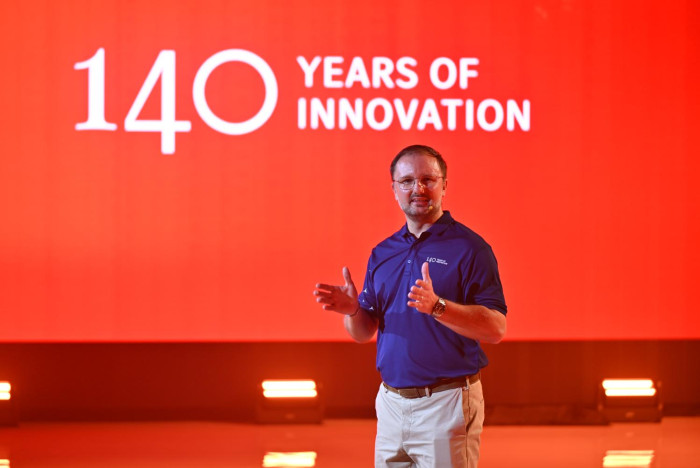
Mercedes-Benz (Thailand) anticipates an ongoing increase in demand for battery electric vehicles (BEVs) due to rising global energy costs and the instability caused by geopolitical conflicts in the Middle East.
Christian Schell, the president and chief executive of Mercedes-Benz (Thailand), stated that new registrations of Mercedes-Benz vehicles in Thailand amounted to 1,949 units during the first quarter of 2026, with overall sales reaching 1,304 units for both passenger and commercial vehicles.
He pointed out that worries about rising oil prices and unrest in the Middle East are shifting consumer attention toward electric vehicles.
Industry experts concur that increased oil prices are encouraging potential buyers to look into battery electric vehicles.
Nevertheless, the automotive industry in Thailand continues to encounter obstacles such as global economic instability, elevated household debt, and postponed buying choices due to slow local economic expansion.
Mercedes-Benz (Thailand) announced a 140% growth in sales during the 2026 Bangkok International Motor Show, as the number of units sold increased from 870 to 2,111 compared to the previous year.
“It has reached a seven-year peak, crossing the 2,000-unit threshold for the first time since 2019. We anticipate 2026 will be a milestone year for BEV sales,” Mr. Schell stated.
Mercedes-Benz reported global sales of 499,700 units during the first quarter of 2026, encompassing vans, along with double-digit growth in BEV sales.
In Europe, the demand for BEVs increased by 107%, fueled by positive consumer reactions to new models like the CLA, GLC, and GLB.
The firm intends to introduce over 40 new models from 2025 to 2027, including BEVs and high-level electrified internal combustion engines.
To celebrate its 140th anniversary, Mercedes-Benz recently launched the Mercedes-Maybach S 580 e Night Series in Thailand, costing 14 million baht, with just 16 units available.
In the meantime, the Federation of Thai Industries has called on auto component manufacturers to postpone price hikes, cautioning that increased expenses might significantly affect production capabilities and vehicle costs.
Manufacturers of components must modify product pricing to address increased material expenses caused by the ongoing conflicts in the Middle East.
Mr. Schell mentioned that Mercedes-Benz (Thailand) has not yet addressed the matter with its suppliers, but highlighted the company’s dedication to long-term collaboration with local partners.
“We remain committed to backing Thai businesses, with over 50% of our manufacturing relying on local materials,” he stated.



 jasdooit
Leave a comment