
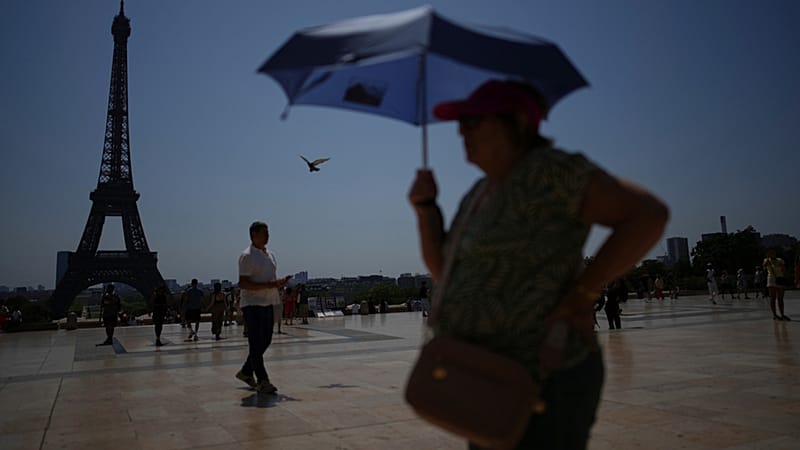
As Europe prepares for arecord June heatwave, with temperatures reaching up to 40°C in certain areas, two studies mentioned by broadcaster France Info emphasize the health impacts of heatwaves in France.
A report by Oxfam regarding the effects of climate change on health suggests that heat contributes to approximately 5,400 deaths annually in the nation. The organization highlights a real “public health crisis” that remains inadequately addressed by the relevant authorities.
Highlighting that the impact of heat extends well beyond dehydration in elderly individuals, Oxfam states that the likelihood of dying from a heart attack increases by seven percent during heatwaves, with death rates being double for women on the hottest days. If such events last more than a week, the risk of acute kidney failure rises by 70 percent.
Disadvantaged neighbourhoods particularly exposed
Oxfam highlights that climate change is increasing disparities. The most vulnerable regions are expected to suffer more, with summer 2025’s additional deaths projected to be 31 percent higher compared to the richest areas. In contrast, people living in the top 20 percent of urban neighborhoods are up to 10 times less at risk from extreme heat.
The Housing Foundation arrives at the same finding in its research on summer energy poverty. The report indicates that approximately two-thirds (66 percent) of people in France experience difficulty with heat in their homes, and 40 percent of residences lack “full installation of shutters, which are crucial to”prevent overheating, and highlights that working-class areas are the most impacted.
In these areas, inhabitants frequently encounter multiple elements that contribute to their risk.vulnerabilityThey reside in highly crowded city areas, characterized by “materials that increase heat,” “insufficient green areas,” and houses referred to as “kettles.”
They are also generally “in worse health” and might have “jobs that involve greater exposure to heat.”
Authorities called upon to enhance the protection of citizens
Considering these results, the two organizations are urging government bodies to accelerate the energy-saving upgrades of residential buildings.
The Housing Foundation is urging the “Zero Kettle Homes” bill, supported by over 150 MPs, to be included on the parliamentary schedule, and suggests initiating a nationwide initiative to install blinds and fans by 2040.
The group is also advocating for a rise in the Green Fund allocated toclimate adaptationin public areas, and the development of “grand chaud” extreme-heat initiatives, inspired by winter emergency protocols, to more effectively safeguard the most at-risk individuals, especially those without shelter.
This text was translated using artificial intelligence. Report an issue: [feedback-articles-en@].




Leave a Reply