

“It’s like fighting to ensure my child has equal access,” says Charlotte Jenner, 27.
The mother and her partner, Charlie Sears, have encountered difficulties that most parents would find hard to comprehend, following their son Ronnie’s diagnosis with a rare genetic condition just before his first birthday.5,000 people worldwide
A primary characteristic of Phelan-McDermid syndrome (PMS), found in 97% of instances, is hypotonia, leading to the two-year-old’s muscles becoming rigid, inflexible, and difficult to move.
Due to this, combined with other neurological and movement difficulties linked to PMS, Ronnie is unable to walk, crawl, roll, or transition from lying down to sitting as his brain’s ability to communicate with his limbs is compromised.
Although he needs to be placed into heavy mobility equipment to move around, Charlotte states that the toddler has been repeatedly refused a Blue Badge because he is not seen as ‘disabled enough’.
Following several months of difficulty in safely parking and retrieving 18kg Ronnie from the vehicle, the project manager submitted a request for a disabled permit to Kent County Council (KCC) in June of last year, but the application was rejected soon after.
“It essentially amounted to a checklist task, with all his diagnoses placed in note boxes,” she states.
Even though Charlotte filed an appeal, presenting evidence from Ronnie’s general practitioner and physiotherapist about his health and limited movement, the family was denied once more.
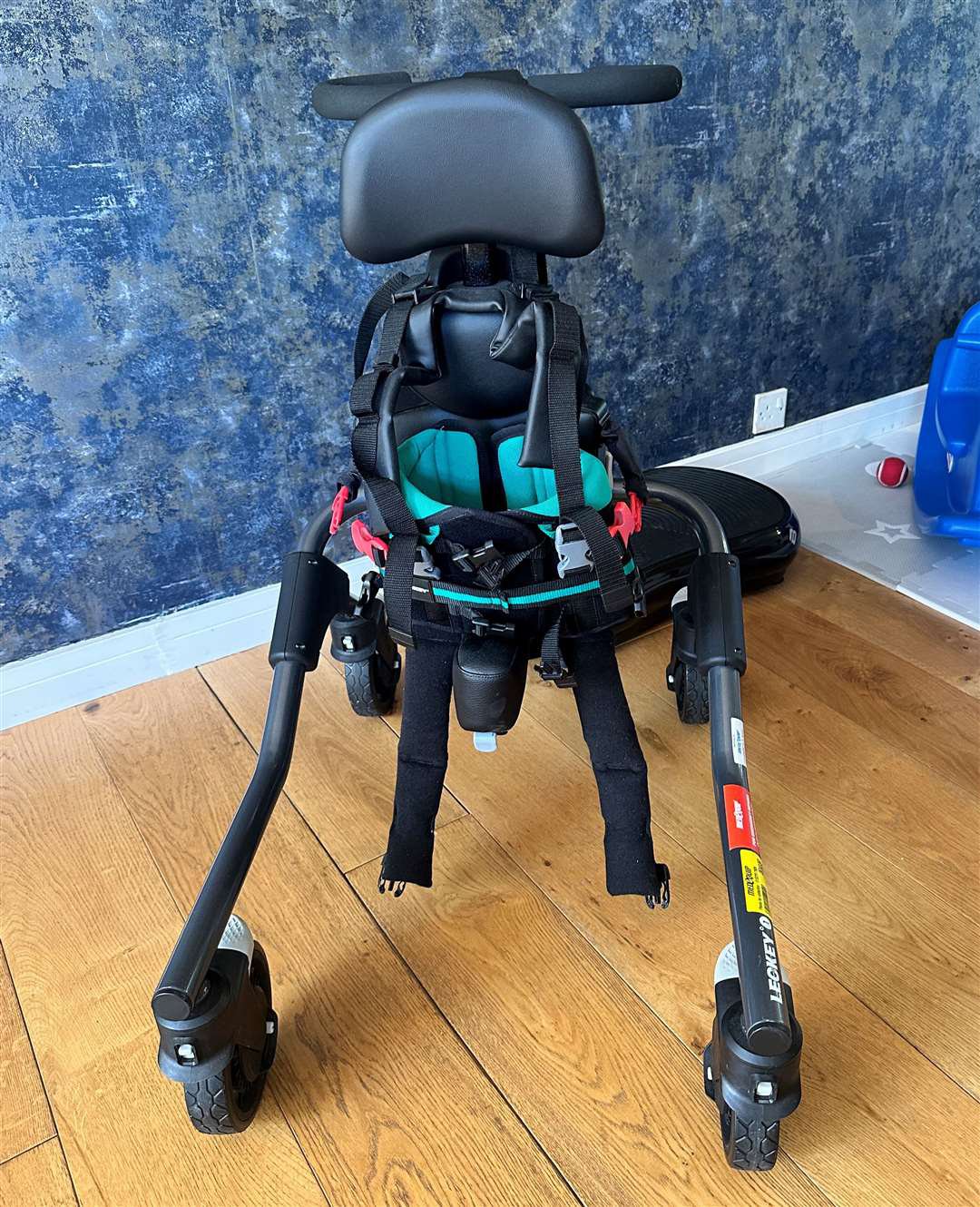
Charlotte mentioned that a member of KCC’s Blue Badge team stated that a child under three years old must be receiving palliative care or utilizing life-supporting equipment like breathing devices or feeding tubes to qualify.
Following the debate on Ronnie’s case, the authority decided to arrange a face-to-face evaluation with an occupational therapist. Charlotte took her son along with a full folder of medical documents outlining more than 100 planned appointments related to his condition and mobility.
As per Charlotte, the evaluator showed understanding towards her circumstances, yet the ultimate choice was determined by a panel, which declined to grant a badge for the third time.
The mother stated she was “completely furious” about the situation, saying, “It basically said that they acknowledge Ronnie’s disability, but he isn’t disabled enough. That’s the whole story. I’m having to battle my local council for fundamental accessibility for my disabled son.”
Understanding Phelan-McDermid Syndrome (PMS)
Phelan-McDermid Syndrome (PMS), is a condition resulting from the absence of the terminal segment of chromosome 22.
This chromosome covers over 51 million DNA units and holds essential genetic information for your growth.
Also referred to as 22q13 deletion syndrome, people with PMS experience developmental delays. Communication challenges are common; many do not speak and may face difficulties with intellectual growth and movement.
They may also be diagnosed with autism spectrum disorder (ASD), which influences how they communicate with others, interpret their surroundings, and acquire new skills, along with having reduced muscle tone in their limbs.
Some actions that a person experiencing PMS might exhibit are:
- Persistent mouthing and chewing
- Aggressive actions such as hitting, biting, or pulling hair
- Grinding teeth or pushing the tongue forward
- A reduced feeling of pain
It is identified via genetic testing, with treatment focusing on addressing the symptoms individually for each patient.
If every medical professional involved in Ronnie’s care states he requires a Blue Badge, what stance can my council take in refusing?
Since Ronnie’s condition is lifelong and cannot be cured, Charlotte contends that he should not be affected by this general refusal policy, and instead should be evaluated on an individual basis, rather than through a simple checklist process.
The problem has resulted in the two-year-old — who regularly visits a pediatrician, community pediatrician, hearing specialist, developmental expert, occupational therapist, and physiotherapist — missing crucial medical appointments, and he is unable to have his walking frame at nursery, which ‘impedes his ability to improve his walking.’
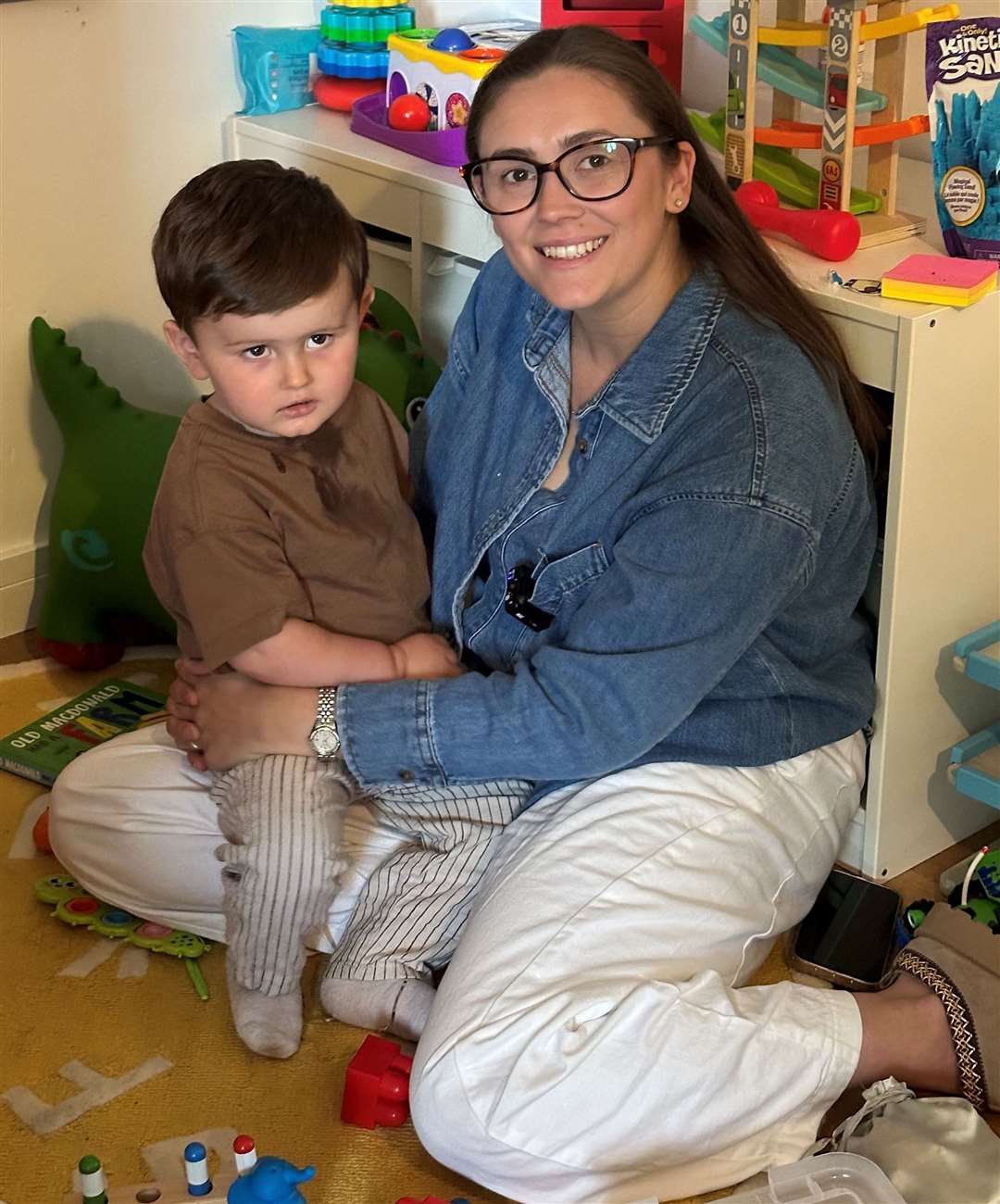
Charlotte, who is employed full-time while also looking after her son, adds: ‘At the moment, my local authority is stopping me from involving him in regular social activities, providing him with the same chances, and helping him feel part of things.’
I should be able to integrate him into society like any other child: dropping him off at nursery, running errands, taking him to an appointment, or going out for the day.
I don’t need to stress and prepare in advance about how secure I’ll be or if I can participate in it.
The family is committed to advocating for Ronnie and other children with disabilities to have access to a Blue Badge. The local authority suggested that the family use parent and child parking spaces, but the couple claim these are not always available, are frequently taken, and do not provide the same level of convenience, like parking on double yellow lines, that a Blue Badge would allow.
The family has been in touch with their Member of Parliament, Mike Martin, a representative of the Liberal Democrats, who called the situation ‘very worrying’.
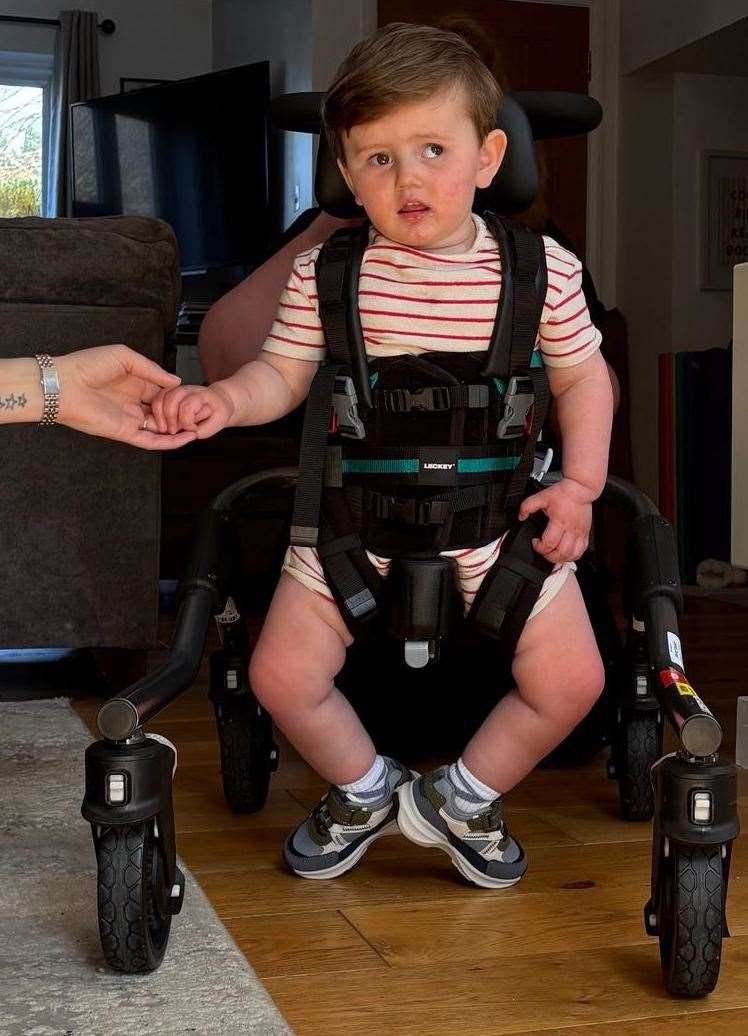
The MP for Tunbridge Wells stated, ‘Families with children who have disabilities should not be forced to endure lengthy struggles just to obtain fundamental access and respect for their kids. I have been urging the council for several months to reassess this situation and introduce a more equitable and empathetic Blue Badge system.’
Regrettably, this implies that until Ronnie reaches the age of three, Charlotte and Charlie will find it challenging to take Ronnie out or engage in specific activities, or even go to the store.
“When I have to go through this evaluation again [when Ronnie is three], my responses will remain the same,” says Charlotte, who is making every effort to provide Ronnie with the same opportunities as other young children.
Ronnie has no say in whether he is disabled or not, as that decision was made by someone else.
Understanding Blue Badges for kids under three
Kent County Councilguidelines state that children under three may qualify if:
- The child constantly has to transport difficult-to-carry medical devices with them.
- Must be close to a vehicle to receive immediate medical care
A representative from KCC stated: “We recognize that the council’s decision may be disappointing. However, KCC is required to evaluate Blue Badge eligibility according to the national Department for Transport guidelines and laws. These guidelines offer a clear set of criteria for children under three, which were not fulfilled during the initial evaluation or the appeal in this instance.”
KCC treats all Blue Badge applications for children below three as unique cases, yet also has an obligation to ensure fairness and uniformity in granting Blue Badges. The existence or lack of any condition does not solely decide badge eligibility regardless of age.
In this instance, the applicant was provided with several evaluations, such as a face-to-face assessment, to make sure that all important details were taken into account, including watching how the family functions. The results of the evaluations are always shared in writing with the applicants.
When children turn three, the eligibility guidelines permit a broader approach to evaluating how children move on their own, and we have recommended that KCC is always willing to reassess children at this age. If the Department for Transport modifies the eligibility criteria, KCC will adhere to the new guidance.






Leave a Reply