
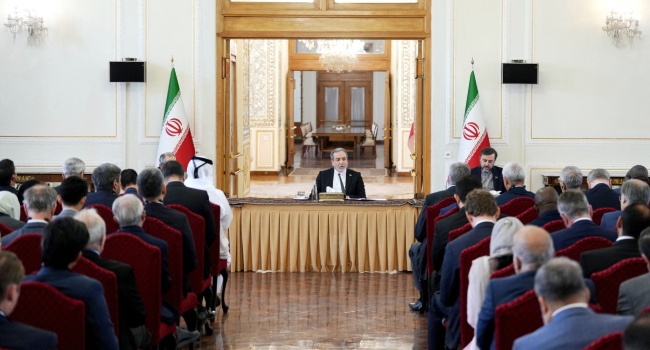
U.S. President Donald Trump criticized opponents of his deal with Iran on Thursday, labeling those who claimed he made compromises to halt the conflict as “fools,” just before talks in Switzerland regarding the agreement’s execution.
Oil prices tumbledFollowing Trump and his Iranian counterpart signing their agreement to conclude the Middle East conflict, with the Strait of Hormuz set to reopen, there are still two months of discussions remaining.
Amid unexpected delays regarding the timing of the agreement reached earlier in the week, Trump signed the document in bold black ink during a candlelit dinner with French President Emmanuel Macron at the Palace of Versailles near Paris on Wednesday.
Macron — who saw the signing at the palace, where the treaty ending World War I was signed, as a major achievement after hosting the G7 summit — exclaimed “bravo” as Trump signed.
“These fools, who believe I haven’t been harsh enough toward Iran, despite the stock market reaching a new peak and oil prices ‘falling,’ are either envious, dishonest individuals, or uninformed,” Trump wrote on social media several hours after finalizing the agreement.
Iran’s President Masoud Pezeshkian also approved the deal, according to Esmaeil Baqaei, a spokesperson for the Iranian Foreign Ministry, who noted, “it is now time to assess how the agreement is put into practice.”
Oil prices dropped over three percent on Thursday, continuing the declines that occurred after the deal was announced over the weekend.
‘Allows for Peace’
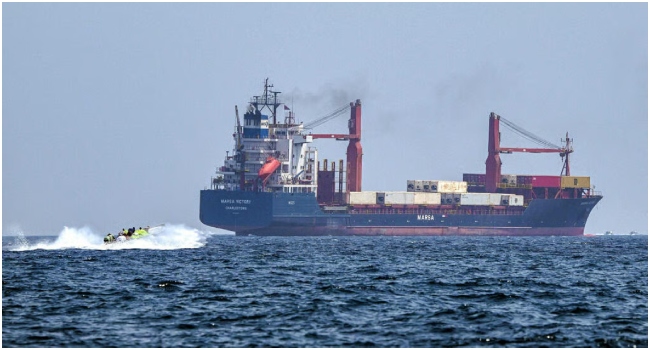
The agreement is expected to conclude the ongoing US-Israeli conflict with the Islamic republic, which resulted in five weeks of full-scale warfare before a ceasefire was established in early April. This conflict significantly limited shipping in the Strait of Hormuz, leading to a rise in energy costs.
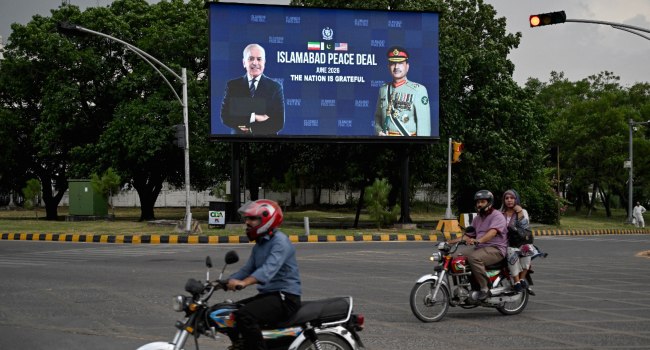
Pakistan’s Prime Minister Shehbaz Sharif, who played a role in facilitating the agreement, stated that “it will come into effect immediately” and that Iran “will promptly reopen the Strait of Hormuz.” He also signed the treaty.
A two-month negotiation phase has started, with everyone focusing on the resumption of operations in Hormuz and whether advancements can be achieved in discussions regarding Iran’s nuclear program, which Washington has long believed is hiding secret weapons development efforts.
Macron praised the agreement, stating it “enables peace, the opening of the Strait of Hormuz without charges, and provides 60 days to finalize a deal regarding nuclear, missile, and regional activities.”
There was uncertainty regarding the following steps, as the agreement was initially expected to be signed at a private mountain retreat in Switzerland on Friday by Iran’s lead negotiator and parliament speaker, Mohammad Bagher Ghalibaf, along with US Vice President JD Vance.
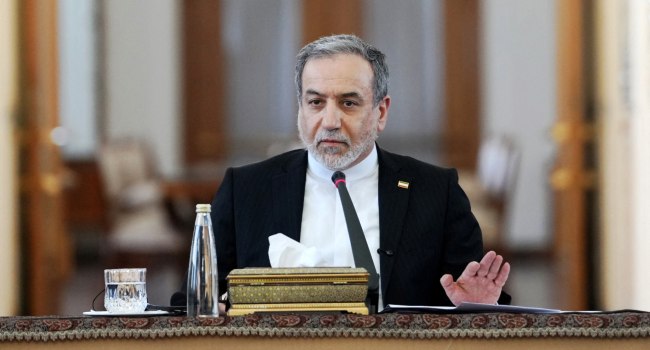
Baqaei mentioned that a physical ceremony is no longer necessary. However, Sharif stated that an official event will occur on Friday in Switzerland, with technical discussions beginning.
Beneath the text, Washington pledges to promptly lift oil sanctions that are harming Iran’s economy.
Furthermore, when a final agreement is established regarding Iran’s nuclear program, the United States will also assist in releasing a $300 billion reconstruction fund backed by regional countries, as stated in the agreement.
The head of the UN atomic agency, Rafael Grossi, informed reporters in Geneva that the organization is prepared to start outlining the “concrete steps” required for executing a U.S.-Iran agreement.
U.S. officials also mentioned that Iran will reduce its enriched uranium reserves, potentially through “on-site down-blending” monitored by the UN nuclear agency.
The agreement did not address Iran’s ballistic missile program, even though Israel has long advocated for its destruction.
“Iranian missiles are meant for use, not for talks. Iran’s military strength will not be addressed in any manner, during any discussion or with any entity,” Baqaei stated.
READ ALSO: Oil Prices Drop More as US and Iran Agree to Reopen Hormuz
‘Foreign Policy Blunder’
Some opposition has emerged from conservative factions in Iran, where the conflict has been referred to as an “imposed war” and drawn parallels with the 1980-1988 struggle against Saddam Hussein’s Iraq.
However, Ghalibaf maintained that the agreement signified a US “failure,” whereas Pezeshkian described it as “historic.”
Trump’s choice to terminate the conflict, during which 13 American military personnel lost their lives and a significant portion of the nation’s ammunition reserves was expended, has caused concern among some of his domestic allies.
It seems Trump had foreseen such backlash, stating at the G7 that he would be willing to “bomb the hell” out of Iran if they breached the deal.
However, US Senator Bill Cassidy from Trump’s Republican Party referred to it as the “worst foreign policy mistake in recent decades.”
“Iran’s nuclear aspirations remain unchecked, and they have discovered that threatening the Strait of Hormuz is effective,” he stated.
Even Fox News, a news outlet typically aligned with Trump, quoted critics who claimed the deal provided Iran with “significant financial advantages” without mandating the destruction of its nuclear program.
Although the agreement states that Lebanon must be included, it remains uncertain if the conflict on that front will be addressed within the next 60 days.
Lebanon became involved in the conflict when Hezbollah launched rockets towards Israel on March 2, backing Iran. In response, Israel initiated a large-scale bombing campaign and carried out a land invasion.
Although violence has decreased in Lebanon after the deal was announced, an Israeli drone attack in southern Lebanon resulted in one death on Thursday, as reported by Lebanese state media.
AFP
The post Trump Calls Critics Of The Iran Deal ‘Fools’ appeared first on Channels Television.

 jasdooit
Leave a comment