
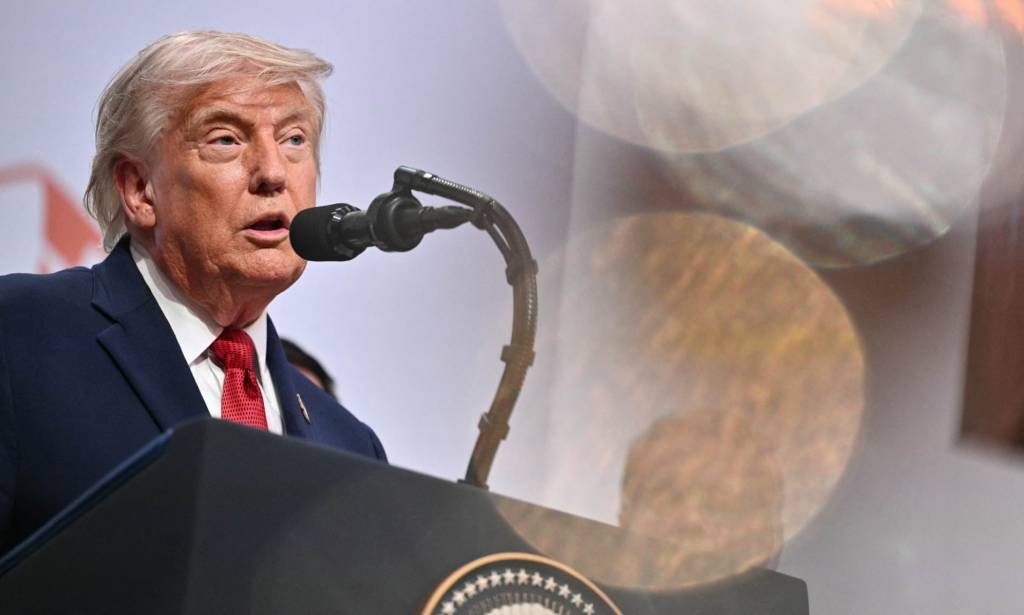
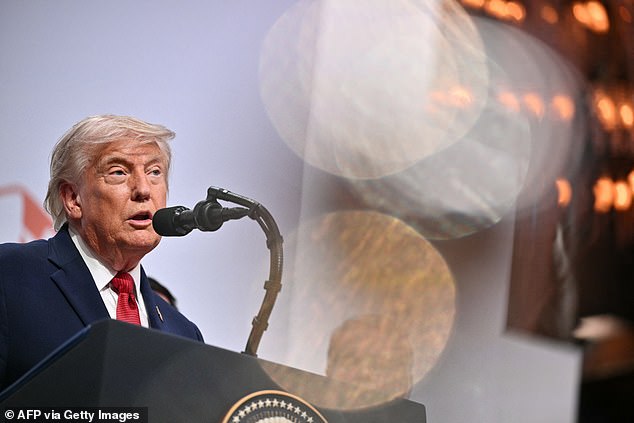
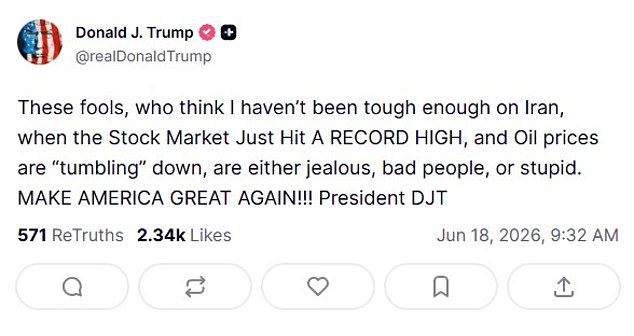
Donald Trumphas responded to critics who claimed he hadn’t been firm enough withIranfollowing the signing of a peace agreement designed to conclude the conflict and restore access to the Strait of Hormuz.
The U.S. President addressed his Truth Social account this morning following warnings from multiple U.S. lawmakers and officials that the U.S.-Iran Memorandum of Understanding fails to limit Iran’s nuclear goals and provides Tehran with a strategic benefit regarding the Strait of Hormuz.
These idiots, who believe I haven’t been harsh enough with Iran, when theStock MarketSet a new record high, and oil prices are “falling” rapidly, those who are either envious, bad people, or ignorant. MAKE AMERICA GREAT AGAIN!!! President DJT, the American leader wrote.
The deal, which came into force immediately last night, also features a proposal for Iran’s ‘rebuilding’ and the United States ending ‘all forms of sanctions’ against Tehran.
Nevertheless, the matter of Iran’s nuclear program—the primary cause for Trump’s military action in February—continues to be discussed for an additional 60 days.
Trump has claimed the peace deal will avert an ‘economic disaster’ but warned he would ‘bomb the hell’ out of Iran if no ultimate agreement was reached.
A portion of the agreement requires Iran to organize measures to enable traffic to begin moving through the Strait of Hormuz ‘without delay’.
It also includes the development of a strategy for Iran’s recovery and economic growth, while securing funding of no less than $300 billion.
The discussions have remained hidden and unclear for several days. US representatives declined to reveal the details even after stating Trump and the Vice PresidentJD Vancesigned it digitally over the weekend.
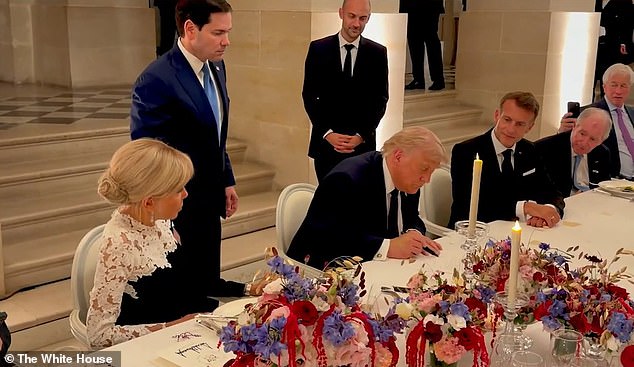
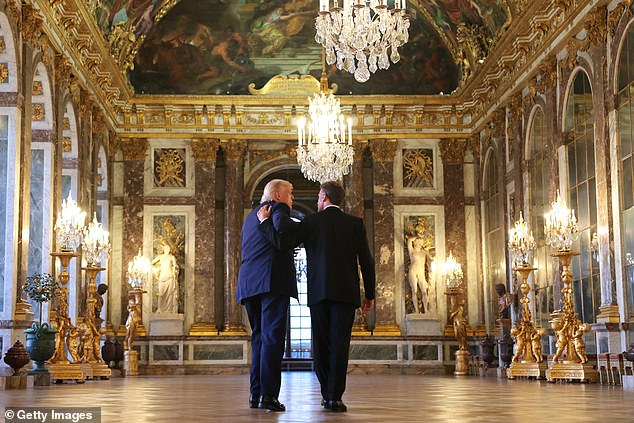
Trump signed a hard copy on Wednesday while having dinner withFrench PresidentEmmanuel Macron in Versailles, the palace where numerous historic accords have been concluded over the years, bringing an end to conflicts or territorial disagreements.
“It’s signed,” Trump remarked as he departed the dinner held at Versailles, which took place after his visit to the G7 summit in France.
In a video shared on the internet by a White House official, Trump was shown sitting at a table beside Macron, signing a physical copy of the deal.
Trump subsequently passed the document and pen to Secretary of State Marco Rubio, with the individuals present in the room applauding.
“This wasn’t simple,” Trump mentioned just before signing it, as shown in a video shared on social media by Macron.
Crude oil prices dropped more than 3 percent following the agreement.
In the United States, leading individuals held differing views on the pact.
Republican Senator Lindsay Graham, a key supporter of Trump, adjusted his stance on the memo following a ‘long and beneficial’ discussion with U.S. special envoy Steve Witkoff.
Graham posted on social media: ‘Following this conversation, I believe that signing the MOU will be advantageous for the United States, as the Strait of Hormuz will start to open, and the conflicts with Iran will come to an end.’
Senator Ted Cruz, however, stated that Trump is receiving ‘very poor advice’ regarding the deal, while Senator Bill Cassidy said ‘Reagan is turning in his grave.
He stated: Iran’s nuclear aspirations remain unchecked, and they have discovered that threatening the Strait of Hormuz is effective, and it is certain they will use this tactic again in the future.
And Susan Rice, a former official from the Obama and Biden administrations, described it as “the most significant national security mistake in recent decades.”
In Israel, the response to the agreement has been mostly unfavorable, with high-ranking officials casting doubt on how earnest Iran would be in talks regarding its nuclear program, following the removal of U.S. economic and military pressure.
Additionally, the memorandum of understanding designed to conclude the conflict was not presented to Netanyahu’s government, according to an Israeli government representative who spoke with NBC News.
Yair Lapid, head of Israel’s opposition party, stated: ‘Netanyahu pledged a historic triumph – instead, we faced a crisis with the Americans, Hormuz accessible to Iranians, funds allocated to the Revolutionary Guards, ballistic missiles directed at Israel, and Israel standing in the corridor like a reprimanded child.’
Nevertheless, certain individuals in Israel held a more optimistic perspective, with Danny Citrinowicz, who previously led the Iranian division of Israeli military intelligence, stating that the agreement demonstrated that reality had ‘ultimately come back to US policy regarding Iran’.
“Prior to events getting entirely out of hand, the US administration withdrew from extreme goals and reverted to a more moderate and practical strategy,” Citrinowicz stated on Wednesday.
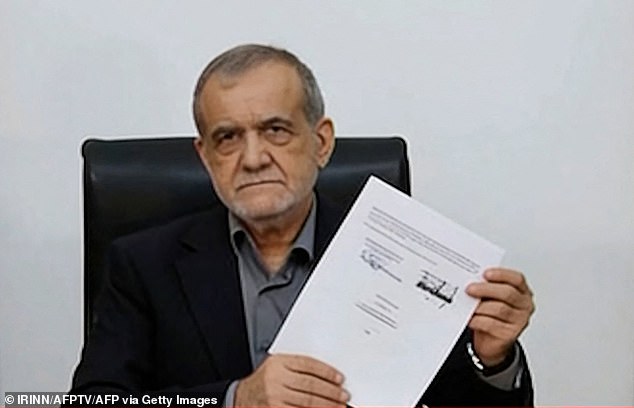
In Tehran, President Masoud Pezeshkian, with a stern expression, signed the agreement on behalf of Iran, as reported by the state-controlled IRNA news agency, which shared pictures of him displaying the document with his signature alongside Trump’s.
Earlier in the week, Iran’s parliamentary leader and main negotiator, Mohammad Bagher Ghalibaf, stated that his nation has its finger poised on the trigger.
“If the enemy is unfamiliar with the language of logic, we will once more use the language of power,” he said to state-run broadcaster Fars.
The terms of the agreement have not yet been officially published. US officials provided draft wording to journalists following several days of secrecy, speaking under the condition of anonymity. Later, Iranian state television released a text that largely matched what the US had disclosed.
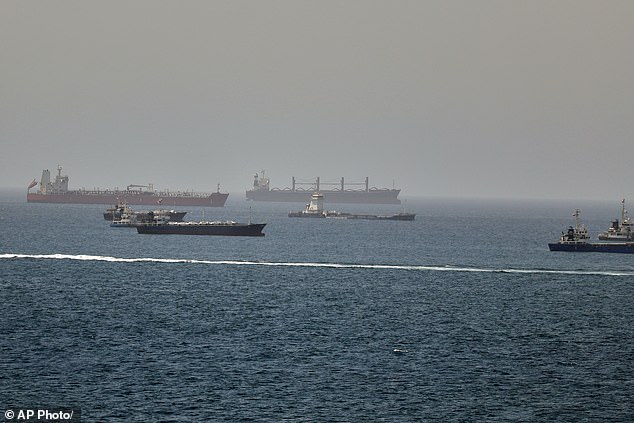
A significant portion of the agreement would bring things back to the situation prior to the conflict, such as stopping fighting, resuming discussions between the United States and Iran regarding Tehran’s nuclear activities, and reopening the Strait of Hormuz, a vital route for global oil and natural gas, whose closure led to a major energy crisis.
The treaty allows free passage through the strait for two months, though it does not rule out the possibility of charges later, as stated in the documents from both nations.
As a response, the US will seek to lift, but not remove, certain broad sanctions imposed on Iran.
The shutdown of the Strait caused global energy costs to rise and led to higher prices for essential items, such as food.
Iran allowed certain ships to pass after paying fees, an action that had not occurred previously in the strait, which has historically been regarded as an international waterway.
The United States later offered military assistance to evacuate other tankers, but traffic never reached the levels seen prior to the conflict.
The agreement also states that the US will remove the restrictions placed on Iranian ports, and that traffic through the strait will resume to its levels before the war within 30 days, while recognizing that Iranian mines might need to be cleared.
The agreement further highlights a dedication to Lebanon’s territorial sovereignty despite Israel’s military action targeting the Hezbollah fighters.
One of the most sensitive aspects of the deal is that Israel has stated it will keep defending itself and maintaining control over large areas of Lebanon.
Iran has stated that Israel needs to pull out according to the agreement, a requirement that Israel has already turned down.
“Without me, Israel wouldn’t exist,” Trump stated at the G7 summit on Tuesday, labeling Netanyahu as ‘crazy’ and openly condemning Israeli strikes in Lebanon.
Too many people have died,” Trump stated, “You don’t need to destroy an apartment building each time you’re searching for someone, as there are many individuals living in those buildings, and not all of them are Hezbollah.
The United States and Israel engaged in conflict on February 28, partly aimed at stopping Iran from acquiring a nuclear weapon.
Trump has mentioned several objectives for the conflict, at times promising it would halt Iran’s nuclear and missile initiatives as well as its backing of Hezbollah and other affiliated groups in the area. He also indicated that it might result in removing the Iranian regime.
The temporary agreement does not meet any of those objectives, but Trump praised it on Wednesday as ‘very strong.’
He also made it possible to walk away from it: “It’s a memorandum of understanding, and if I don’t agree with it, we’ll return to attacking them, dropping bombs.”
The United States’ decision to promptly permit Iran to trade its oil without restrictions, along with the promise to remove all sanctions in the future, marks significant compromises that exceed the conditions outlined in Iran’s 2015 nuclear agreement with global nations.
Trump exited the agreement established during Obama’s time in his initial term, calling it the ‘worst deal ever.’
Iran claims its nuclear program is peaceful, despite being the sole nation that enriches uranium to 60% purity without an associated weapons initiative, as stated by the International Atomic Energy Agency.
The temporary agreement requires the IAEA to oversee the ‘downblending’ of that uranium in Iran, without providing further details.
The agreement is expected to face strong resistance in Washington, and it seems to be a significant blow for Israeli Prime Minister Benjamin Netanyahu, who has been criticized domestically by the media, his rivals, and even some of his supporters as more information becomes available.
Under the nuclear deal with Iran established during Obama’s administration, which Trump withdrew from, Iran committed to limitations on its nuclear activities and pledged not to develop an atomic bomb in return for the removal of financial penalties.
Certain compromises for Iran – such as the complete removal of sanctions and the release of blocked funds – would take place step by step and depend on advancements in the nuclear negotiations, as stated by Pakistani officials.
However, during this period, the United States will grant exemptions from penalties that enable Iran to trade oil without restrictions.


Leave a Reply