
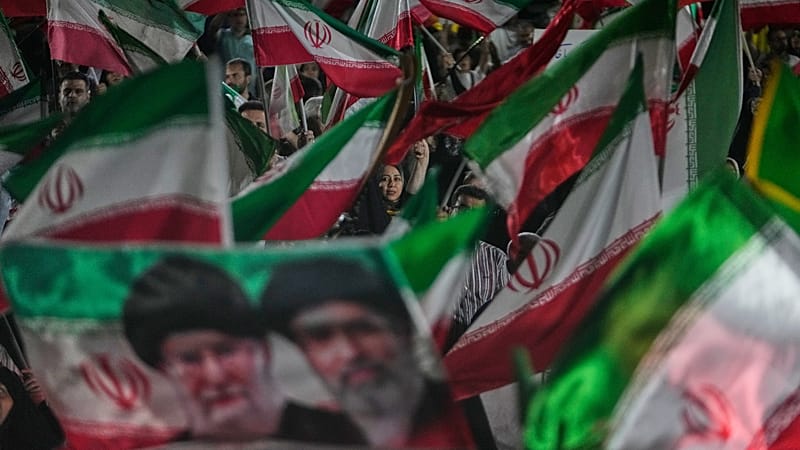
A US-Iran framework agreement aimed at reopening the Strait of Hormuz and returning the two opposing nations to discussions regarding Tehran’s nuclear program was finalized on Wednesday, despite conflicting reports and increasing uncertainty about its details.
Although there had been an earlier statement that the agreement would be signed during a ceremony in Switzerland on Friday, US President Donald Trump affixed his signature to a physical version of the deal while having dinner with French President Emmanuel Macron at the Palace of Versailles.
In Tehran, President Masoud Pezeshkian also signed the document on Wednesday, as reported by the state-owned IRNA news agency, which shared a photo showing him holding the agreement with his signature alongside Trump’s.
In addition to the new oil income for Iran, both parties appear to be returning to their position at the start of this year — prior to Israel and the US initiating their intervention, which led to Iranian attacks on neighboring countries, resulting in thousands of deaths across the region, causing a global energy crisis, and affecting the world economy.
Iran and the United States will now begin a 60-day negotiation phase, with the issue remaining whether Trump can secure a more favorable agreement for the US compared to the 2015 nuclear deal he previously abandoned eight years ago.
In the meantime, Tehran has already obtained substantial benefits, with the Islamic Republic reportedly negotiating an additional financial boost in the form of a $300 billion reconstruction fund.
Here’s what has been disclosed according to information provided by US authorities, Iranian government-controlled media, and independent assessments that compare the available documents and statements from both parties.
Who benefits the most?
The disclosed content of the agreement, assuming its authenticity, indicates that Tehran has gained a more favorable strategic stance from the conflict than what the presentation of the deal might suggest, as per the most recent assessment from the Institute for the Study of War think tank (ISW).
The ISW stated that the reported conditions would provide Iran with substantial economic support, which it is expected to utilize in an effort to revive its missile, drone, and nuclear capabilities, along with its network of regional allies.
The research institute stated it had not noticed any sign that Iranian leaders were prepared to offer compromises on the nuclear matters that must be addressed in a final deal, even with the possibility of additional economic benefits if one was achieved.
Iranian authorities and government-controlled media are primarily presenting the deal as a success that confirms Iran’s military achievements.
Iran’s English-language channel Press TV stated on Tuesday that the signed memorandum signifies “the political codification of a battlefield reality,” as reported by ISW.
Neither Washington nor Tehran has formally released the agreement’s content. Several media sources have published what seems to be unauthorized copies, and ISW warned that its analysis was derived from these unofficial versions.
Restart the flow of oil
According to the agreement, the Strait of Hormuz will be reopened, and the United States will remove its restrictions on Iranian ports — both actions are expected to reduce fuel costs.
Access to the waterway will be free of charge for 60 days, and the agreement does not rule out the possibility of charges afterward, as reported by U.S. officials who spoke anonymously to reveal the draft details, which have not been officially published by Washington.
The shutting down of the strait, where approximately one-fifth of global oil trade occurred prior to the conflict, turned out to be one of Iran’s most effective strategies.
It caused an increase in worldwide gasoline prices, led to higher costs for food and other items like fertilizers, and sparked worries about a potential air travel shortage before the summer vacation period.
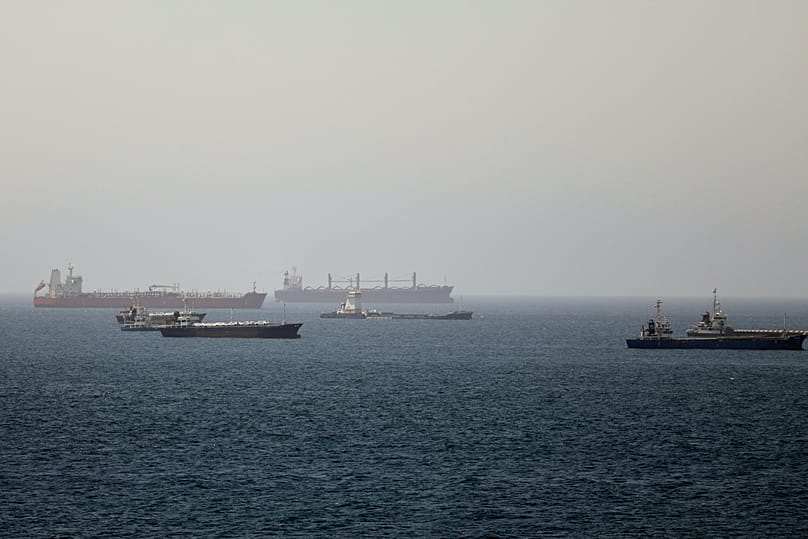
The ISW believed that Iran is expected to take advantage of unclear wording in the deal to retain significant influence over vessel traffic in the strait.
The policy institute stated that the reported text does not clearly prohibit Iran from “overseeing” the waterway, implying that Tehran may still require ships to utilize its traffic separation system within Iranian territorial waters and pay charges to the IRGC Navy — the same setup that Washington has previously deemed illegal.
With the agreement finalized, the Islamic Republic has endured the most significant effort yet by Israel and the United States to overthrow its government, even amid the intense initial attacks of the conflict that resulted in the death of Iran’s Ayatollah Ali Khamenei and other high-ranking officials.
Iran to sell oil without restrictions, ‘downblend’ its uranium
The agreement instantly removes — though it does not erase — the penalties that Trump placed on Iran’s oil exports, enabling it to once more trade its oil in the global market and reestablishing a revenue source worth billions.
Last year, Tehran generated approximately $45 billion from oil exports. However, it had just a single primary buyer, China, and was forced to transport its crude using a covert fleet of tankers to bypass restrictions, which reduced its earnings. Since the blockade began in April, its exports have almost completely stopped.
Thanks to the exemption, Iran is expected to be able to attract more buyers and sell its oil at increased prices.
The proposed agreement requires Iran’s highly enriched uranium to be “downblended” — or made less concentrated — under the oversight of the International Atomic Energy Agency (IAEA), without further details. Discussions regarding additional limitations on Tehran’s nuclear activities are still to come.
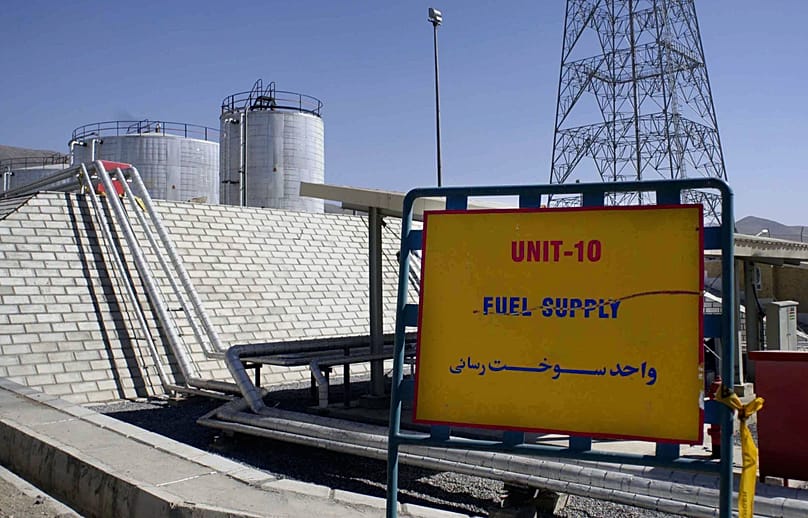
Trump pulled out of an earlier nuclear agreement with global powers, accusing it of providing significant benefits to Iran. The temporary agreement offers even greater advantages if Iran enters into a new nuclear deal.
The first is the complete removal of all international sanctions, which appears to extend beyond the 2015 deal. This previous agreement removed restrictions tied to Iran’s nuclear activities but maintained other sanctions due to U.S. claims about Tehran’s backing of terrorism and human rights violations.
The temporary agreement also includes a $300 billion fund for rebuilding after the war. It remains uncertain where this funding will be sourced — however, Trump has stated that the US will not provide any contributions at this time.
To illustrate the immense size of the fund, the World Bank estimates that Syria, following 13 years of civil conflict, requires $215 billion for rebuilding. The Gaza Strip, heavily damaged in just two years of the Israel-Hamas conflict, requires $53 billion.
The agreement also aims to release billions of Iranian assets stored overseas via a process that both parties will determine, as stated in the document shared by US officials.
ISW also concluded that Iran designed the agreement in a way to restrict Washington’s capacity to apply increased pressure throughout the 60-day negotiation phase, thereby complicating the US’s efforts to secure additional concessions prior to reaching a final deal.
Iran’s missiles and backing of proxies are not up for discussion.
The administration of Trump consistently stated its objectives were to “destroy” Iran’s missile capabilities, “cut off its backing” for militant groups in the area, “eliminate its navy,” and prevent it from obtaining a nuclear weapon.
Seven weeks of US-Israeli bombing are thought to have significantly harmed Iran’s missile stockpile and manufacturing sites, along with other elements of its armed forces.
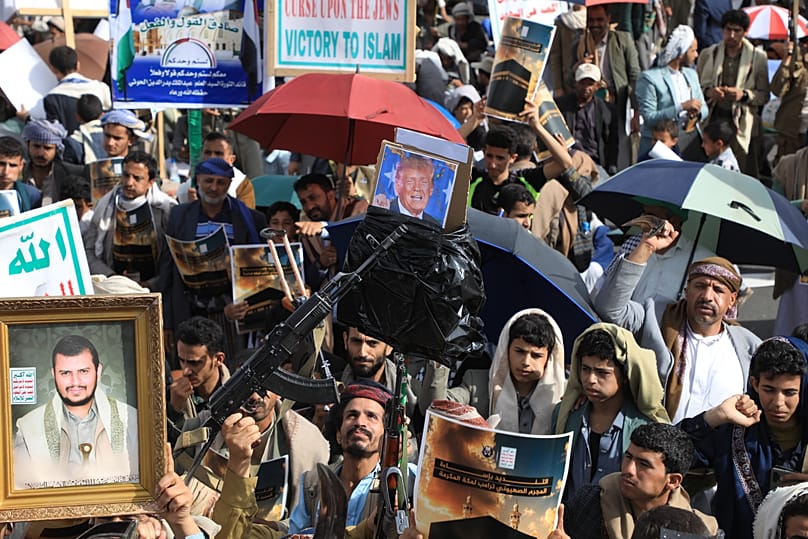
The extent of the damage remains unclear, and Iran has continued to attack Israel as recently as last week. Meanwhile, Iran’s relationships with its militant allies—Hezbollah in Lebanon, the Houthis in Yemen, Hamas in Gaza, and Shiite groups in Iraq—seem stronger than ever.
Neither the missile inventory nor Iran’s backing of its allies seems to be up for discussion in the upcoming talks.
US-Israeli ties strained
The agreement aims to bring an end to the conflict in Lebanon, where Israel has been engaged with Hezbollah.
Nevertheless, Israel and Hezbollah are not involved in the agreement. Iran claims that Israel should pull back from the significant portion of southern Lebanon it controls, although the temporary deal does not specifically mandate this and only guarantees Lebanon’s “territorial integrity”.
The ISW stated that Tehran is understanding the clause calling for a ceasefire “on all fronts” as demanding Israel to stop actions against Hezbollah and completely pull out from Lebanon — a part of a larger Iranian strategy to protect Hezbollah by obtaining what the research institute referred to as Israeli surrender in Lebanon.
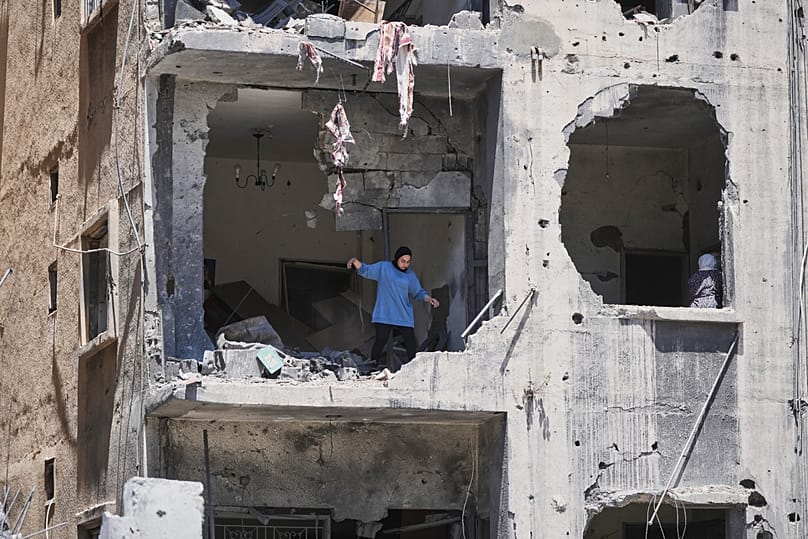
Israel has promised to maintain its military presence in Lebanon, while Hezbollah states it is determined to oppose Israel “until a complete withdrawal occurs.” Conflict between the two sides could disrupt the agreement unless Washington and Tehran manage their respective allies.
Israel was excluded from the discussions with Iran, and Israelis from all political backgrounds have labeled the agreement as a catastrophe, channeling their anger towards Prime Minister Benjamin Netanyahu.
Amidst this, tensions between Trump and Netanyahu have occasionally become public, such as when the US president called the Israeli leader “crazy”.
At this week’s G7 meeting in France, Trump stated that Netanyahu “needs to show greater responsibility concerning Lebanon.”
Netanyahu faces a delicate position as national elections approach later this year. His connection with Trump could necessitate scaling back a military operation in Lebanon that is widely supported within Israel.
A lot is contingent upon the final agreement
The 2015 deal struck under the Obama administration significantly restricted Iran’s nuclear activities for a period of 15 years.
Throughout that time, Iran was limited to enriching uranium at a low level, significantly less than what is required for a weapon.
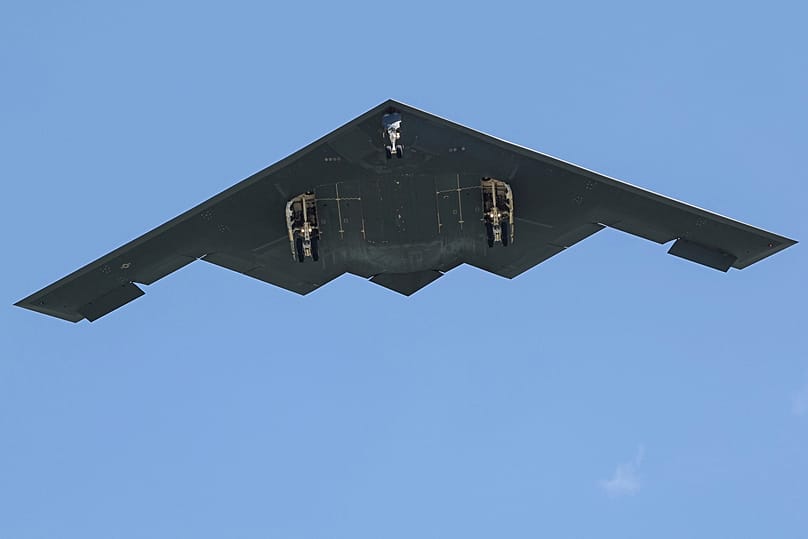
It could only store 300 kilograms of the substance and had to significantly cut down the number of centrifuges used for enrichment. It was also subjected to more rigorous inspections by the IAEA.
A major point of contention was the 15-year restriction, with critics arguing that Iran could swiftly enhance its capacity to develop a nuclear weapon once this period expired. Iran maintains that its nuclear activities are intended for non-military use.
A critical issue now will be whether the US can achieve more stringent restrictions in the long run.



Leave a Reply