
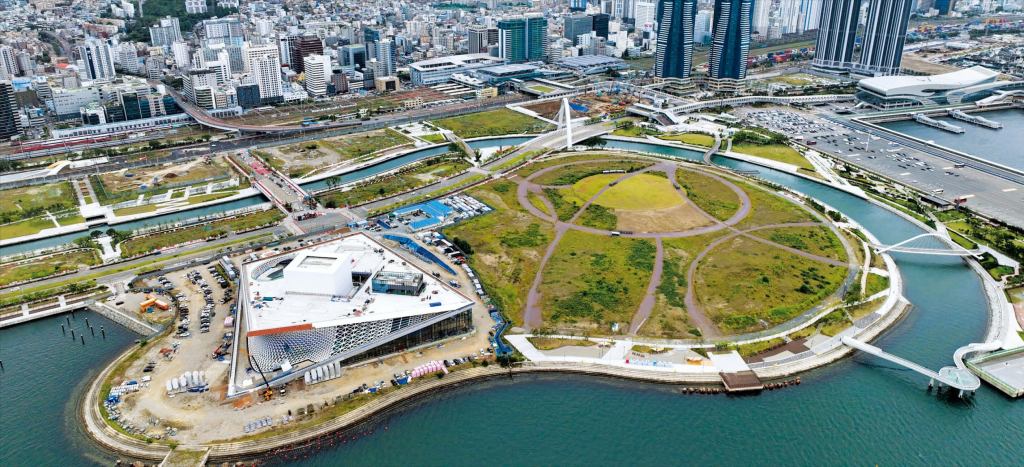
After the election of Democratic Party of Korea candidate Chun Jae-soo in the June 3 Busan mayoral election, plans to construct a dome stadium at the North Port location in Busan are becoming more active. The idea is to build a baseball venue offering a sea view, akin to Oracle Park, which is the home field of the San Francisco Giants in Major League Baseball (MLB). The North Port area is an old port district located east of Busan Station. Development has been ongoing since the port facilities were moved to Gangseo-gu, Busan, and Changwon, Gyeongnam. An opera house is set to open on a portion of the site next September.
The mayor-elect’s commitment in the local election included the construction of a dome stadium in North Port. The proposal involves building a 30,000-seat retractable dome stadium at the North Port Landmark development site. The Fukuoka Dome (Mizho PayPay Dome Fukuoka), which serves as the home venue for Japan’s SoftBank Hawks, is an example of a retractable dome stadium. The 30,000-seat capacity is comparable to Seoul’s Jamsil Dome Stadium, scheduled to open in 2032. This is bigger than the 23,000-seat dome stadium SSG intends to construct in Cheongna, Incheon, by 2028.
The incoming mayor plans to transform the site into a multifunctional dome stadium that includes a K-pop concert venue, a shopping mall, and a hotel.
The construction site for the North Port Landmark, where the incoming mayor intends to construct the dome stadium, covers an area of 113,286 square meters (approximately 34,000 pyeong). Land preparation was finished in 2023. Former Busan Mayor Park Heong-joon revealed in December 2024 plans to secure 4.5 trillion South Korean won in foreign investment to develop an 88-floor landmark tower featuring a hotel and an AI (artificial intelligence) healthcare center. A “North Port Landmark Consortium” was established including Samsung Electronics and Netflix. Nevertheless, two public offerings aimed at drawing private investment did not succeed.
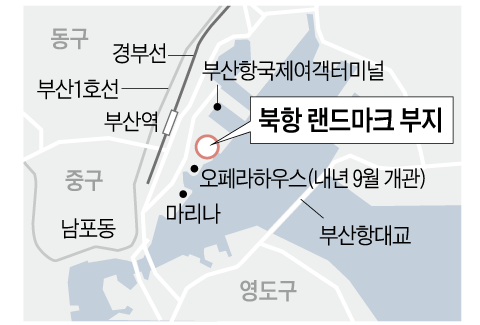
Local views are split: “The stalled North Port redevelopment initiative might finally start moving forward,” and “Is constructing a dome stadium on this valuable land that will influence Busan’s future a wise decision?”
A survey of 500 residents in Busan, carried out by the Local Decentralization and Balanced Development Busan Citizens’ Alliance between June 12 and 15, found that 59% backed the North Port dome stadium initiative. Among baseball enthusiasts, comments such as, “I can ride the KTX to Busan and support away games,” were common. People Power Party representative Kwak Gyu-taek, who represents the North Port area, has also voiced his approval.
The main concern is financial. The newly elected mayor estimates that the dome stadium project will cost around 1.3 trillion South Korean won. During a press conference on the 15th, he stated, “Out of the 1.3 trillion South Korean won, 630 billion South Korean won (44%) for the land cost can be addressed by involving the Busan Port Authority, which owns the property, in the project and granting them shares. The remaining 670 billion South Korean won can be obtained through private funding.” A revised version of the Port Authority Act, which permits the port authority to engage in development projects, was approved by the National Assembly on the 18th.
The incoming mayor said, “We are looking into issuing ‘citizen public offering shares’ to enable residents to take part in the dome stadium project.” Residents would have the opportunity to provide financial support towards the project’s expenses. Hyupsung Construction, a local firm based in Busan, recently mentioned, “If a baseball stadium is constructed at North Port, we will donate 300 billion Korean won by building it at no cost.”
A representative from the industry stated, “It’s uncertain if the port authority, which requires significant funding for the Jinhae New Port project in Gyeongnam, will be able to join the initiative.”
Merchants close to Sajik Stadium, which is currently the home venue for the Lotte Giants, are expressing their dissatisfaction. Yoo Su-won, leader of the Gukmin Market Merchants’ Association, stated, “We depend on the baseball stadium for our survival—do you want us to go out of business?” and pledged to resist the plan to move the stadium.
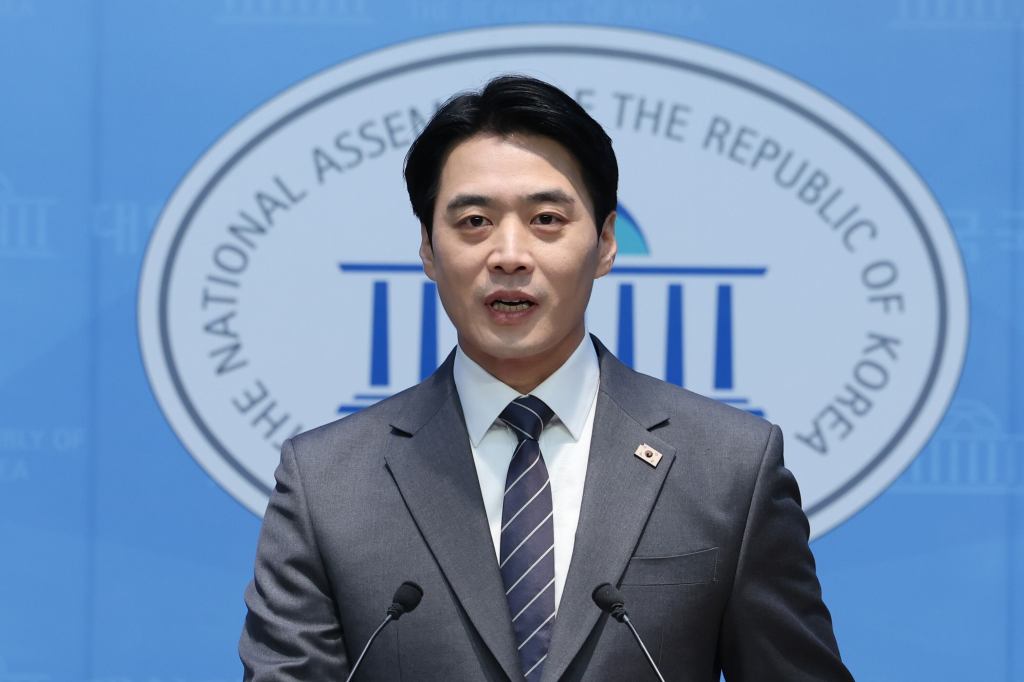
A lawmaker from the People Power Party, Seo Ji-young (representing Busan Dongnae), organized a press event at the National Assembly on the 19th, saying, “Sajik Stadium, which has been part of Busan residents’ lives and professional baseball enthusiasts’ experiences for more than 40 years, should not be torn down based on the desires of a small group.”
In reply, the incoming mayor stated, “Approximately 60 professional baseball matches take place each year at Sajik Stadium, creating a ripple effect of roughly 60 billion Korean won.” He further mentioned, “If Sajik Stadium were to become a lifestyle sports center accessible to amateur athletes around the clock, it could produce economic gains surpassing this figure.”
Constructing a new baseball stadium has been a long-held dream for Busan. Sajik Stadium, which was built in 1985, is in serious need of renovation. In 2010, former Mayor Heo Nam-sik suggested transforming Sajik Stadium into a dome stadium, but the idea was abandoned after it became a topic of debate during each mayoral election. Former Mayor Oh Geo-don promised to create an “open-style baseball stadium” at North Port. The current Mayor Park has focused on rebuilding Sajik Stadium, securing 29.9 billion South Korean won in national funding through the Ministry of Culture, Sports and Tourism’s public sports facility renovation support program. The overall cost is roughly 292.4 billion South Korean won.


Leave a Reply