
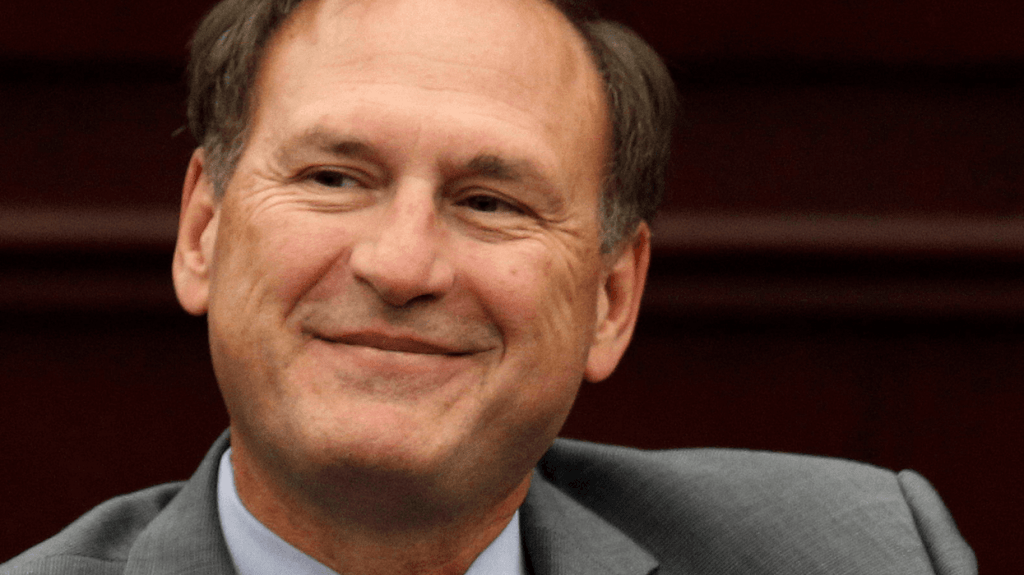
Legal experts and academics are criticizing the U.S. Supreme Court’s conservative justices following another set of rulings.
Posting on social media on Thursday morning, critics criticized a specific decision: President Donald Trump’s choice toblock asylum seekers at the U.S.-Mexico border.
The case focused on the temporary protected status (TPS) for Haitian immigrants, which the U.S. had granted until Trump suspended it in 2021. The law indicates that any noncitizen who is “physically present in the United States” or “enters the United States” is eligible to apply for asylum. According to the Constitution, anyone who declares they are seeking protection has the right to have their claim reviewed.
What the Supreme Court did was exploit the technicality regarding the asylum seekers’ location.
“A complaint was made that the Supreme Court’s conservative majority has decided that courts are unable to examine the Department of Homeland Security’s choice to end temporary protected status for refugees coming from highly hazardous nations,” said.Kate Riga, who reports on the Supreme Court for TPM.
In essence, this implies that thousands of Haitian and Syrian refugees will be returned to areas so perilous that, in the case of Haiti, the State Department advises keeping dental records to assist in identifying bodies,” she stated, later criticizing Justice Samuel Alito’s decision as “racist.
New York Times columnist Jamelle Bouie also criticized Alito by paraphrasing the justice.
“Sam Alito stated that forming majority-minority congressional districts constitutes the most severe form of discrimination, and therefore, we will eliminate the Voting Rights Act. Additionally, Sam Alito said that there is nothing we can do if the president revokes legal status, as he believes the United States is a white nation,” noted Bouie.
It is clearly evident from Alito’s legal decisions that he believes the only genuine form of racism is discrimination against white individuals,” Bouie remarked. “This is essentially a trick of logic. Why does the administration oppose TPS Judge Alito? Why do they deny asylum requests from nearly all groups except white South Africans?
Jerry Edwards, associate professor of law at West Virginia University, stated, “Samuel Alito aligns with Andrew Johnson’s perspective on the Constitution.” Johnson was generally viewed as a white supremacist,the Constitution Center explains.
As Kyle Cheney of Politico quoted, “The SCOTUS majority states there are ‘race-neutral’ explanations for why Trump/Noem ended TPS but acknowledges that their remarks about Haitian immigrants would have ‘shocked the public not long ago.’”
Editor of Lawfare, Tyler McBrian, made a comment, “Every SCOTUS decision these days is like ‘in a 6-3 ruling, the Court decides that doctors can begin prescribing cocaine to children again.’”
Constitutional expert Robert Black wrote, “You know how I’m always saying that when people say ‘I’m not racist,’ what they really mean is ‘I am right about my racist beliefs?’ Well, umm, Supreme Court version…”
A respondent questioned, “Does this mean that courts are required to check if they can come up with an absurd non-racist justification for a policy before deciding against it?”
Edwards responded to the comment stating,Only if the conservatives aim to govern in support of the administration. Not too long ago, Thomas and Alito became extremely upset when the SCOTUS declined to take a case involving race-neutral affirmative action, as they argued that two members of the school board made racist remarks (demonstrating it was an AA policy).
However, Alito was not the only one facing backlash. Justice Clarence Thomas also wrote his own separate opinion regarding the issue.
As appellate attorney Gabriel Malor posted on BlueSkyJustice Thomas, speaking solely on his own behalf, argues that the Fifth Amendment’s due process clause does not ensure equal protection.
He cited Thomas’ remark, stating, “Since the Fifth Amendment does not include an Equal Protection Clause, this Court was incorrect in interpreting equal protection to be part of it in”Bolling v. Sharpe… And even if the Due Process Clause does not prevent certain forms of discrimination, it would not apply in a case concerning immigration status.
Associate Professor Evan Bernick from the University of Illinois School of Law mentioned that he would not engage in extensive criticism of the ruling. Rather, he stated, “I will simply note that the equal protection analysis is largely not backed by references to appropriate legal sources. There is a brief mention of one significant case, followed by a lot of vague reasoning. Nothing in the Constitution or even Supreme Court precedent — at its most questionable — mandates that we consider race in immigration decisions in this manner, and we definitely should not.”
Related Articles:
・The Supreme Court fires a ‘political torpedo’ directly at the Biden administration.
・Disclosed: Supreme Court confused about ways to protect vital agency from latest Trump power attempt
・The highest court considers a fundamental aspect of democracy – and rules in favor of Donald Trump




Leave a Reply