
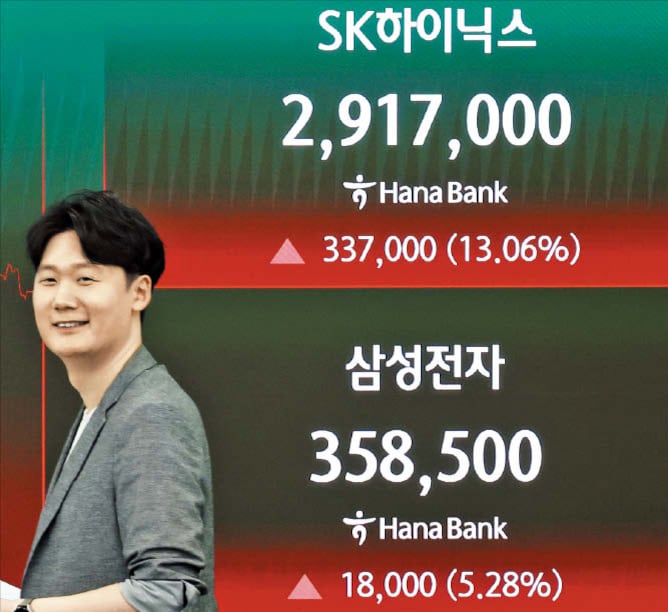
On the 23rd, the KOSPI index dropped by 10%, known as a “Black Tuesday.” Samsung Electronics and SK Hynix both declined by 12%. The concept of an AI, artificial intelligence, bubble resurfaced, causing significant drops in Japanese, European, and U.S. stock markets. On the 24th, the KOSPI index recovered by 3%, yet investor worry stayed high due to the volatile market that experienced sharp declines and rapid increases. On the 25th, Micron, a U.S. semiconductor company, reported an “earnings surprise” (exceptionally strong performance), which significantly eased concerns about peak-out discussions concerning memory stocks and AI bubble issues. That day, SK Hynix increased by 13.1% and Samsung Electronics rose by 5.3%, contributing to a 5.4% rise in the KOSPI index.
◇Rising AI Demand Drives Operating Profit Margin to Record Levels
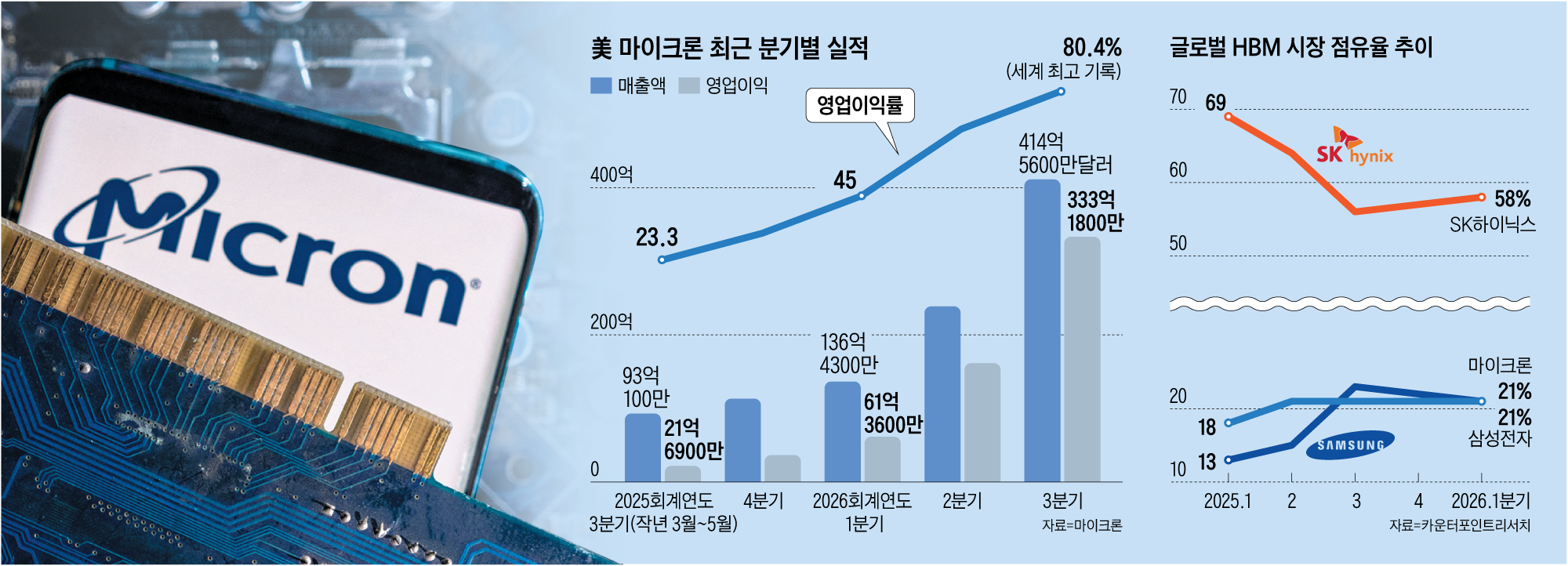
Micron revealed that its revenue for the third quarter of the 2026 fiscal year (March-May) amounted to 41.456 billion dollars (around 63.92 trillion Korean won). This represents a 73.7% rise from the prior quarter (23.86 billion dollars) and more than a fourfold growth compared to the same period in the previous year (9.301 billion dollars). The operating profit for the quarter increased by 107% from the previous quarter and by 1,436% year-on-year to 33.318 billion dollars (approximately 51.37 trillion Korean won). The operating profit margin, which measures profitability by dividing operating profit by revenue, was 80.4%. This implies that for every 1,000 dollars worth of semiconductors sold, 804 dollars were left as profit after subtracting expenses like production, labor, and operational costs. This is the highest among all global manufacturing and service companies. Micron’s stock price rose over 15% in after-hours trading following the earnings report.
Previously, memory semiconductor companies maintained operating profit margins between 10% and 20%. Recently, after SK Hynix, Micron has also achieved operating profit margins within the 70-80% range, sustaining its impressive growth. This is due to major shifts in the semiconductor technology framework driven by the rise of AI. Experts state, “It is challenging for manufacturing sectors to surpass a 10% operating profit margin, yet the AI surge has entirely reshaped the global memory market structure.”
Previously, memory companies such as Samsung and SK produced standardized products like DRAM and NAND flash in large quantities for sale. Even a minor drop in global demand could cause chip prices to fall sharply, resulting in significant drops in profits. Following the rise of AI, demand for high-bandwidth memory (HBM) and enterprise-grade high-capacity storage devices (SSDs) surged, while supply struggled to match, shifting pricing control to semiconductor manufacturers. HBM is more challenging to produce compared to standard DRAM, making it difficult to increase output quickly. Because of these supply shortages, prices increased significantly, which was evident in the high operating profit margins of memory companies.
◇ 25% of Overall Sales Originate from Long-Term Agreements
Another key positive aspect influencing memory companies’ performance this year is the growing number of long-term supply agreements with advantageous terms for firms such as Micron. Following the release of its financial results, Micron stated, “We have entered into a total of 16 long-term contracts with clients, representing 25% of our overall sales.” These agreements, which run from 2026 to 2030, cover roughly 20% of the company’s global DRAM output and 30% of its NAND production. Previously, semiconductor supply deals were usually made on a quarterly or several-month basis, with very few annual contracts. However, as the chip shortage worsened, buyers started signing long-term contracts lasting up to five years to ensure availability. Many of Micron’s long-term contracts feature a “floor price” clause that ensures semiconductor prices do not drop below a specific threshold, even in times of market decline. This arrangement effectively prevents losses or sharp declines in profit margins during economic downturns, as experienced previously.
Sanjay Mehrotra, CEO of Micron, remarked on that day, “The shortage of memory caused by growing AI demand and production limitations is expected to persist through 2027 and possibly longer.” Bank of America (BOA) also mentioned in a report, “A large part of HBM investments is focused on building factories, indicating that mass production probably won’t start until 2028 or later.”






Leave a Reply