
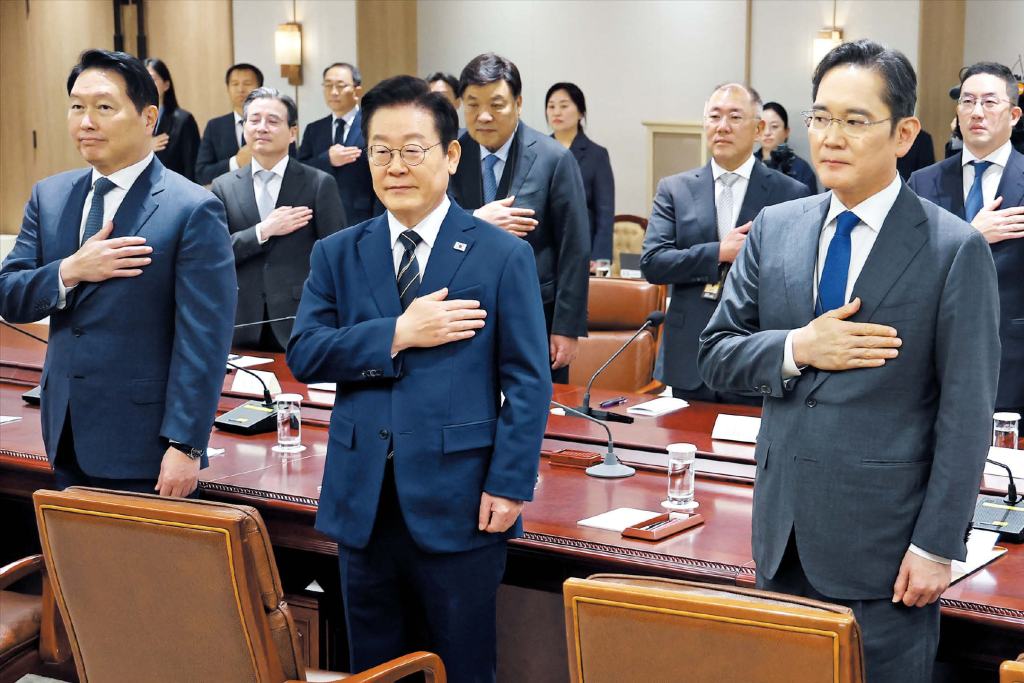
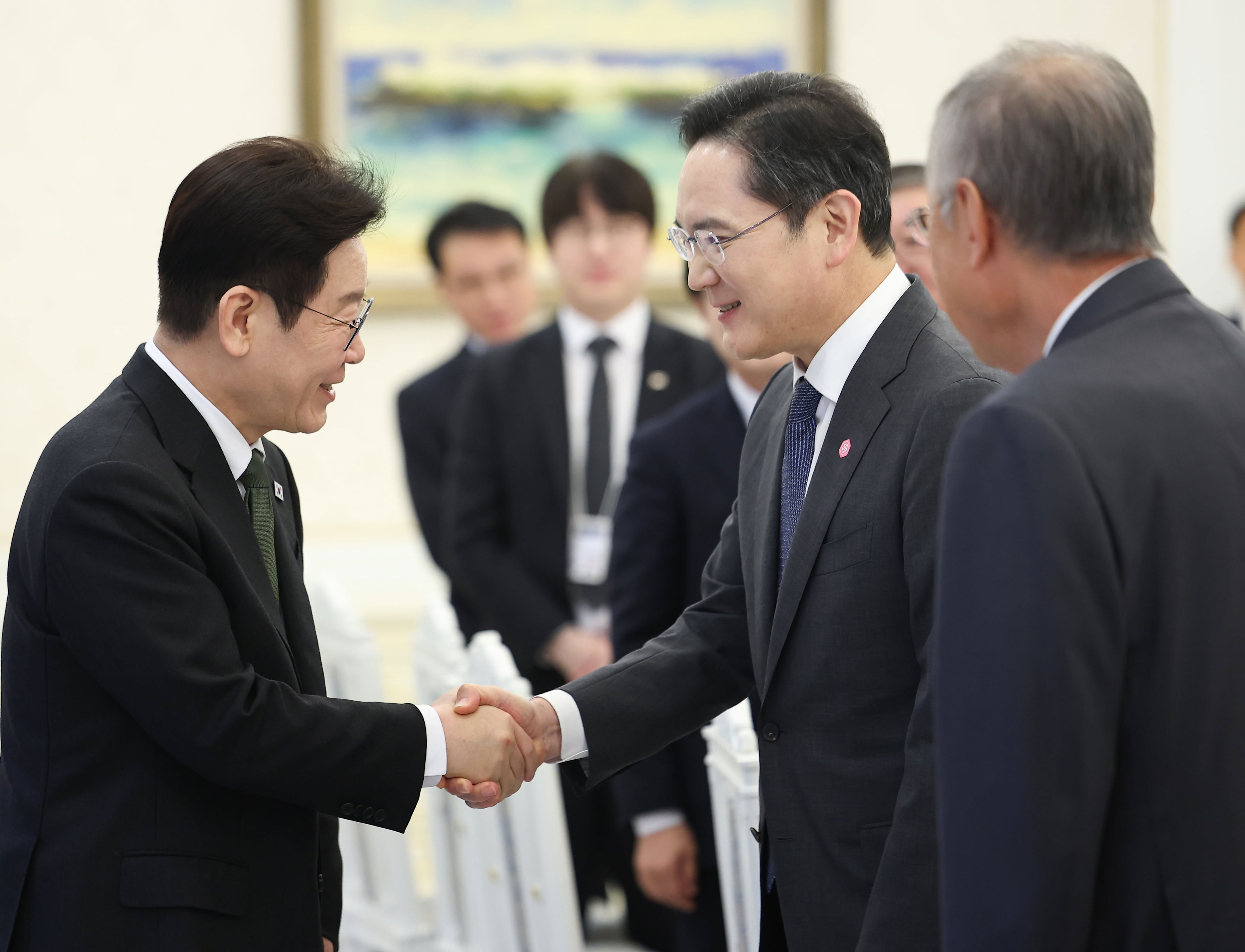
The opposition, including the People Power Party, collectively condemned the Samsung Electronics and SK Hynix semiconductor investment plan in the Honam region—estimated to exceed 400 trillion Korean won—as “regional discrimination” on the 25th. The Democratic Party of Korea described it as an effort to “stir up regional tensions based on unfounded claims.” However, as rumors spread that the semiconductor hub would be established in the Gwangju-Jeonnam area, not the Yeongnam region, protests erupted not only in Yeongnam but also in Gyeonggi’s Yongin, where ongoing projects are taking place, and Jeollabuk (North Jeolla) Province, transforming the issue into a nationwide regional dispute. Industry and business sectors voiced worries that “discussions on a national core strategic project, which should be handled with a long-term view, are being influenced by political logic of ‘regional distribution.’”
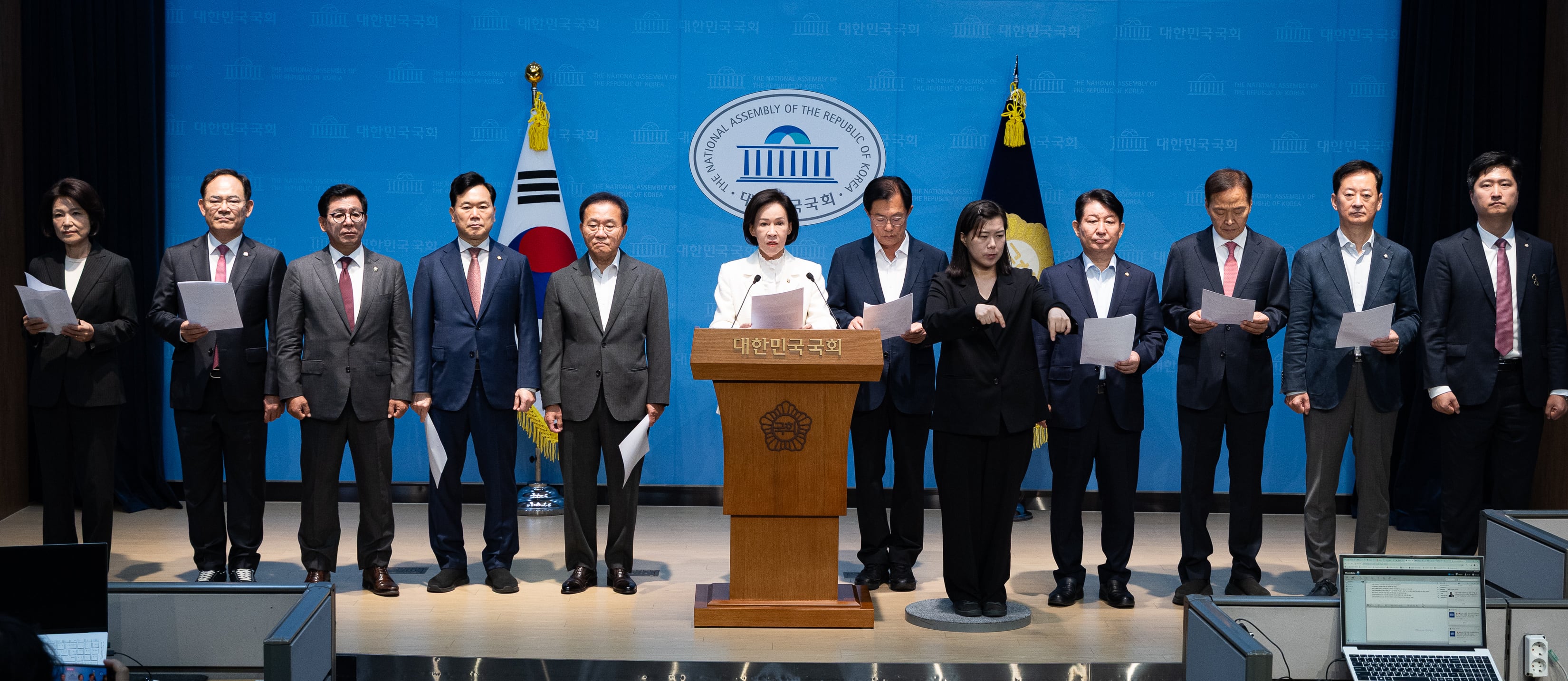
All 25 lawmakers from the People Power Party in the Daegu-Gyeongbuk region held a press event, stating, “The government’s responsibility is to establish a fair environment for companies to make the most competitive decisions. (The Honam semiconductor investment) constitutes reverse discrimination against the Yeongnam region,” and called for a complete reevaluation. Gumi Mayor Kim Jang-ho also introduced a support plan offering industrial land at 1,000 South Korean won per pyeong (3.3㎡) to attract a semiconductor factory. At the press conference, Mayor Kim remarked, “The Gumi National Industrial Complex is the ideal location for the future of the semiconductor industry and balanced national development. At 1,000 South Korean won per pyeong, it’s more affordable than items sold at Daiso.”
The ‘Honam Semiconductor Cluster’ gained significant attention following President Lee Jae Myung’s remarks in December of last year, where he encouraged focusing on the southern areas abundant in renewable energy for future semiconductor investments. The Semiconductor Special Act, introduced and approved in January by Democratic Party legislator Jeong Jin-uk, who represents Gwangju, contains clauses that permit the government to cover up to 100% of water, electricity, and public land costs specifically in non-capital regions. This has sparked criticism that the law was created with the intention of drawing the cluster to the Honam area.
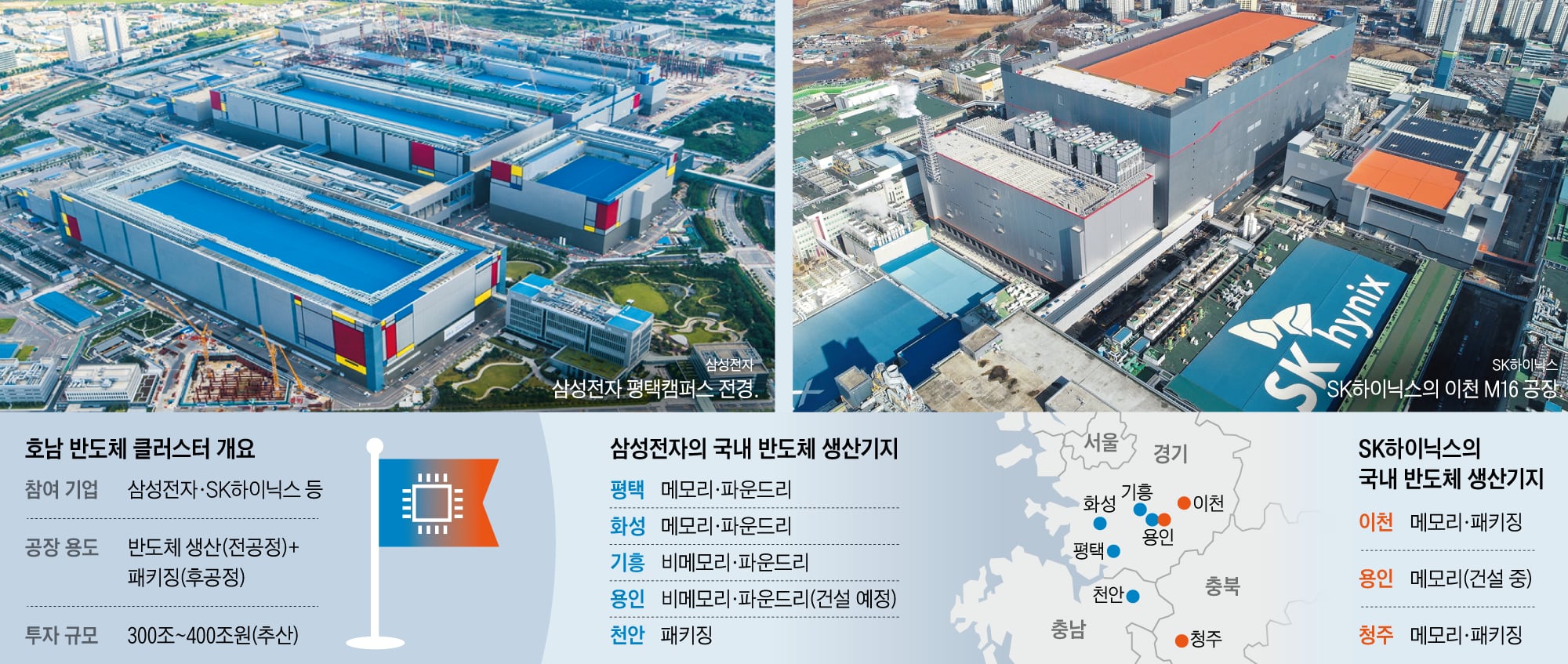
The law is scheduled to come into effect in August, before the Democratic Party’s national convention. President Lee Jae Myung is anticipated to unveil plans for public-private investments in next-generation high-tech industries, such as AI and robotics, on the 30th, which includes the decision regarding the Honam semiconductor investment. Prime Minister Kim Min-seok, a candidate supporting Lee Jae Myung, is also expected to be present. Jang Dong-hyeok, leader of the People Power Party, posted on Facebook, “Give me semiconductors, and I’ll eliminate Jung Chung-rae.” This implies concerns that the Blue House is allocating funds to Honam—a crucial voting group ahead of the national convention for selecting the next party leader—to direct votes towards pro-Lee Jae Myung candidates. Independent legislator Han Dong-hoon remarked, “The choice of location for the semiconductor plant should not be used as ‘ammunition’ in the Lee Jae Myung-Jung Chung-rae leadership contest.” Ahn Do-geol, deputy floor leader of the Democratic Party, stated during a policy coordination meeting, “The People Power Party is fixated on baseless criticism and inciting regional tensions, even transforming voluntary and proactive investment decisions by companies into political tools.”
However, tensions also emerged within the ruling party regarding the Honam semiconductor project. Kim Eui-gyeom, a Democratic Party legislator representing Jeollabuk, stated, “It is essential to spread out the facilities to avoid the ‘Yongin monopoly’ turning into a ‘Gwangju monopoly.’” The day before, nine Democratic Party legislators from Jeollabuk, including acting floor leader Han Byung-do and Unification Minister Chung Dong-young, held a budget policy meeting at the National Assembly and declared, “We will coordinate our responses at the Jeollabuk level.” In the Chungcheong area, there is increasing resistance as rumors circulate that if the Gwangju-Jeonnam region lacks industrial water, it may be redirected from Chungcheong.
The governing party also encountered disputes last year regarding the site chosen for the National AI Computing Center, a project worth 2.5 trillion South Korean won aimed at securing 50,000 GPUs (graphics processing units). During that period, Gwangju, Jeollanam, and Jeollabuk all vied for the location, but it was ultimately decided to be in Haenam, Jeollanam Province. Local political figures from areas that did not secure the center openly criticized the decision. A senior member of the Democratic Party stated, “After the establishment of the Jeollanam AI Computing Center and Hyundai Motor Group’s 9 trillion won investment in an AI-robot hub in Saemangeum, Jeollabuk, the influx of massive semiconductor facilities into Honam has raised major concerns within the party that we may lose the Yeongnam voters in the upcoming general election two years from now.”




Leave a Reply