

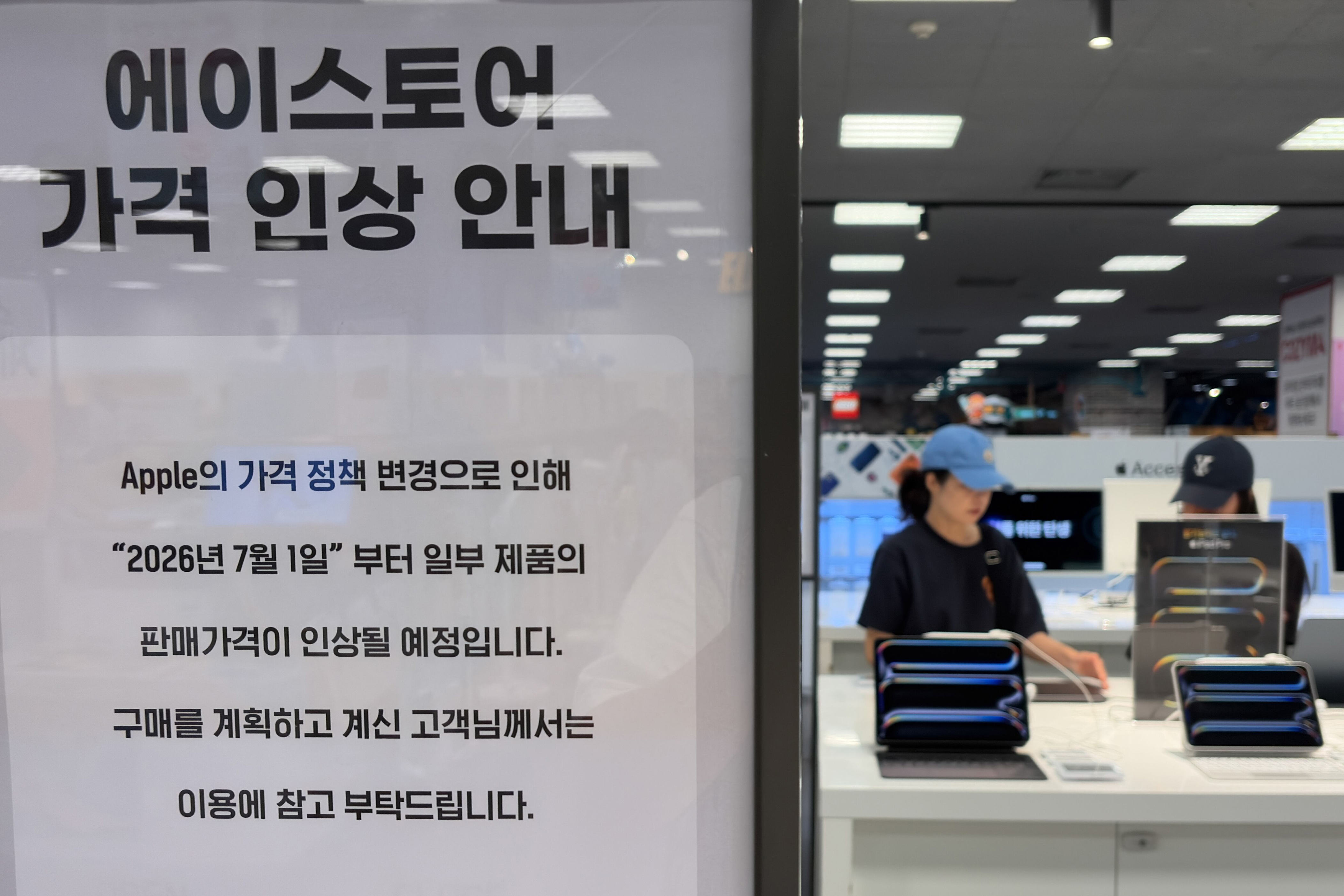
Apple has unexpectedly raised the prices of its top-tier products, such as the iPad and MacBook, by as much as 30%. According to CEO Tim Cook, the explanation provided was, “We tried not to place a burden on customers, but this time it was unavoidable.” The worldwide scarcity of artificial intelligence (AI) chips has led to increased costs for DRAM in smartphones, making this price increase necessary. Although it’s difficult to fault Apple for adjusting prices to prevent losses, the reasoning sounds excessively defensive.
In the last ten years, during the peak of the smartphone industry, Apple made significant profits from customers worldwide. It was criticized as “RAMcruge,” a mix of RAM and Scrooge, for providing less RAM than its rivals while charging high fees for upgrades. Last year, before memory prices went up, Apple upgraded the MacBook Air’s storage from 256GB to 1TB, increasing the price by $400. At that time, Samsung Electronics’ 1TB storage device was available for approximately $90.
This was achievable due to Apple’s longstanding dominance in the electronics sector. Prior to the current chip shortage, memory providers had no choice but to comply with Apple’s pricing demands. Samsung Electronics faced the most significant impact from Apple’s forceful strategies. In times of economic decline, Apple used its enormous order volume to drive down prices for suppliers such as Samsung and Micron to the maximum extent possible. Even when manufacturers were operating at a loss, Apple controlled the advantages of decreasing component costs, allowing its product profit margins to reach almost 40%.
Apple’s decision to raise prices also faced attention. It revealed the increase the following day after Micron shared record profits during the AI surge. By leveraging reports of semiconductor companies’ gains, Apple sought to reduce opposition to its price increase, presenting it as a reaction to “memory suppliers’ excessive pricing and cooperation.”
Semiconductor companies are starting to resist. Micron’s leadership quickly responded to Apple’s statement, saying, “In tough times, major clients like Apple pushed for the lowest possible prices, hindering chip manufacturers’ capacity to invest in future developments.” This revealed Apple’s approach: pressuring suppliers during economic downturns and shifting the impact of resulting shortages onto consumers.
Although there is debate, Apple’s monopoly is expected to remain strong, as devoted users will continue purchasing its products even if they are more expensive. Nevertheless, the “age of Apple’s supremacy,” which was fueled by taking advantage of suppliers during economic slumps, is now beginning to show signs of weakness because of memory semiconductors. In the corporate sphere, no organization can be the everlasting “ruler.”






Leave a Reply