
What needs to be done with the People Power Party (PPP)? This party is always in motion from the moment it starts. Following clashes over the resignation of its leader, it has intensified tensions by advocating for the impeachment of “pro-enemy legislators.” Although citizens, tired of the Democratic Party of Korea’s arrogance and one-sided approach, have refrained from criticizing the opposition party out of fear of being labeled as “picky” and have waited, hoping it would regain its composure, internal disputes within the opposition have become unmanageable.
Loyal conservative supporters, who backed the opposition during the collapse of the Yoon Suk-yeol government, have mostly stayed silent about the party’s internal conflicts, believing that some instability was unavoidable due to the president’s legal issues and the party’s low morale. Disillusioned by the ruling Democratic Party’s misuse of its parliamentary dominance and autocratic methods, citizens provided a last-minute boost to the PPP in the June 3 elections—some even described it as a mechanical breathing aid. However, instead of seizing this final opportunity, the PPP’s internal disputes have only grown worse. There were even efforts to insist that the local elections constituted a “win” for the opposition.
At this stage, the general population can no longer accept the party’s ongoing disputes regarding the leader’s resignation. For the resurgence of South Korea’s conservative faction, the PPP’s continuous internal discord needs to come to an end now. The opposition should swiftly regroup and reorganize to rejuvenate the National Assembly, curb the ruling party’s one-sided approach and authoritarian tendencies, and bring back equilibrium in governance.
In this situation, the PPP should move forward with a confidence vote for its leader. Although party rules do not specify such a process, it is not typical to seek member input on every matter. Nevertheless, due to the party’s existential crisis, this is a critical moment. If the party stands united behind a decision, anything can be achieved. A confidence vote might help the leadership faction strengthen its position, while those pushing for resignation would lose their basis for continued pressure, acting as a middle ground. A mutual agreement would demonstrate the party’s shared determination.
The PPP needs to quickly address the leadership problem in order to get ready for the National Assembly elections scheduled in two years. Since there are no elections until then, the Lee Jae Myung administration and the Democratic Party will strongly promote left-leaning policies, using their supermajority. The PPP, which is already a minority, faces the possibility of being completely ineffective due to internal conflicts. If the party doesn’t regain its strength now, the 2028 elections will be pointless. The ongoing leadership conflict is a sign of the upcoming general election, making the situation even more concerning.
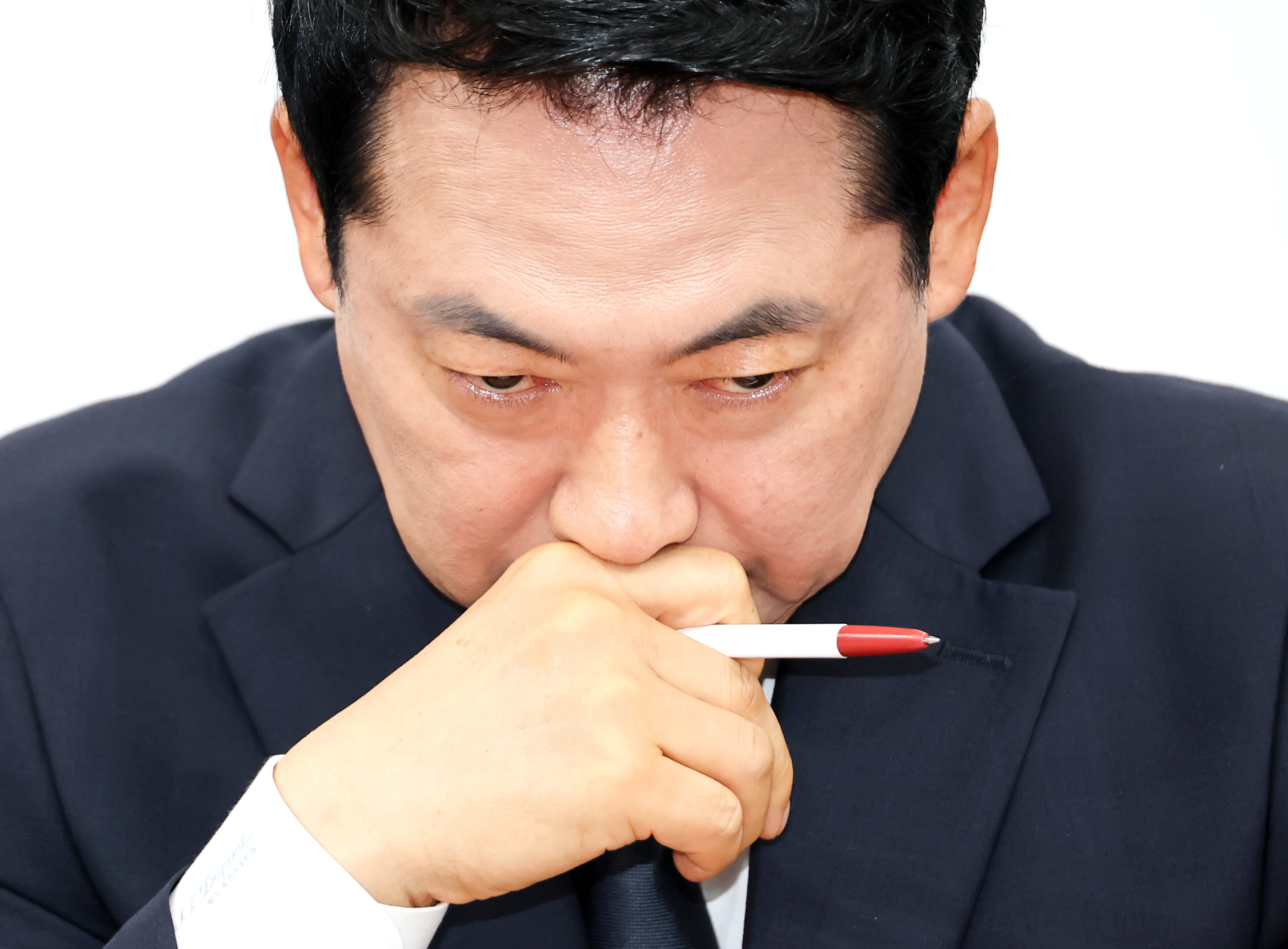
A senior party figure referred to the struggle within the PPP as an early contest over nomination rights leading up to the 2028 elections. He remarked, “The core of today’s conflict involves senior lawmakers, particularly those from the Yeongnam region, assessing who will manage nominations and who should lead in order to support their own campaigns.” This issue is largely unrelated to party reform, revitalizing conservative policies, or expanding public support. Seoul Mayor Oseo-hoon’s suggestion to eliminate the party leadership structure probably arises from this situation. For this to be effective, the process for selecting National Assembly candidates must experience significant transformation. Rather than top-down selections by the central party, a bottom-up primary system where local party members or residents choose candidates should be implemented. Given the challenging battle ahead, the opposition’s inability to make any decisions—let alone address the leadership crisis—is enough to cause public frustration. Some citizens even worry about voting for such a slow-moving opposition.
The opposition needs to go through a period of internal reform. The nation cannot afford to turn into a testing ground for left-wing authoritarianism. The PPP must restore its confidence, not only for itself but for the entire country. It should also urge the ruling party to adopt a more balanced approach in governance. In the end, this is about regaining lost territory in the 2028 elections. Should it fail, there will be only one remaining option.
 jasdooit
Leave a comment