
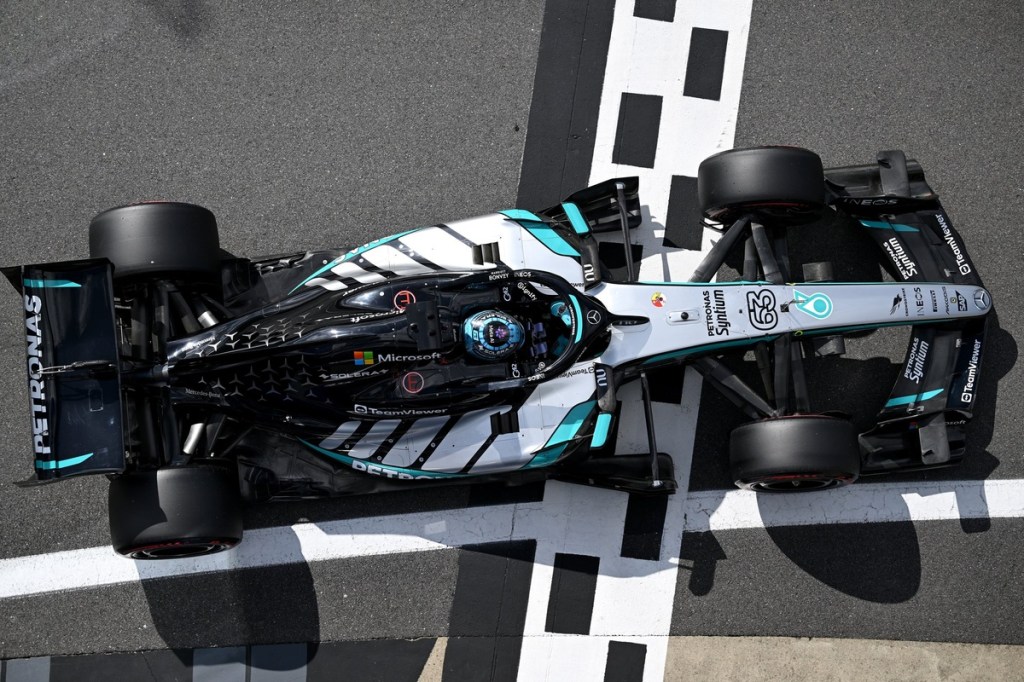
Throughout the qualifying sessions for both races during the British Grand Prix weekend, one unusual point drew attention: bothMercedesDrivers took their foot off the accelerator entirely just a short distance before reaching the finish line. This is an uncommon action, as drivers typically keep the throttle pressed to gain every possible fraction of a second.
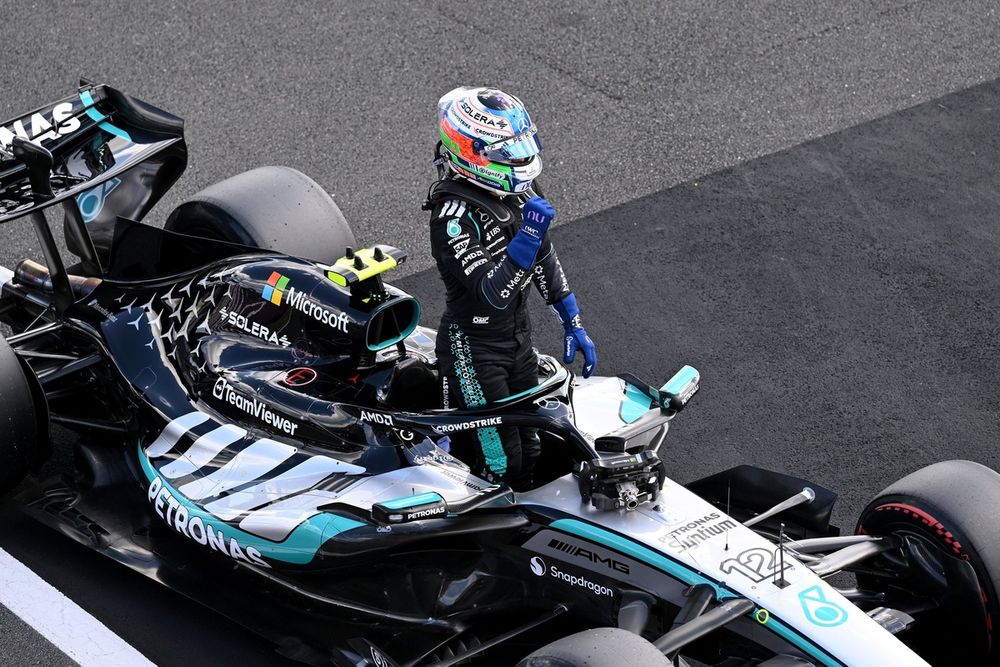
Seemingly contradictory, there are instances where releasing the accelerator before crossing the finish line can offer a benefit by leveraging specific aspects of the rules. Following qualification, Kimi Antonelli reflected on the unexpected nature of his required actions.
“It was not simple,” he remarked.
In Q3 I had to lift off as well, and with these power units it’s always somewhat challenging because there are times when you have to drive in a manner that doesn’t feel entirely instinctive. Occasionally, you need to reapply the throttle later, which means maintaining higher speed through the fast corners and then opening up the throttle afterward.
You could experience a slight loss at the corner exit, but you’ll recover because by postponing when you accelerate again, you have more power available later along the straight.
That’s why the simulator training is so crucial – to ensure these actions become second nature. In the beginning, you might even question why you need to take off at all.
It’s complex, but due to the work we accomplished as a team, everything has become nearly instinctive.
What Antonelli was explaining is a concept that is relevant to all teams. For instance, as early as FridayFerrari had instructed Lewis HamiltonTo maintain higher speed through the Becketts complex, allowing him to delay reapplying the throttle before the Hangar Straight. This approach involves sacrificing a small amount of performance when exiting the corner, but the main advantage is that it keeps the MGU-K active for a longer duration on the straight, where the performance benefits are more significant.
Mercedes’ smart approach in this situation, however, relies on a somewhat different concept – one that is especially intriguing as it demonstrates the complexity of these rules. When the MGU-K is turned off, the FIA mandates that teams implement a gradual power decrease for safety purposes.
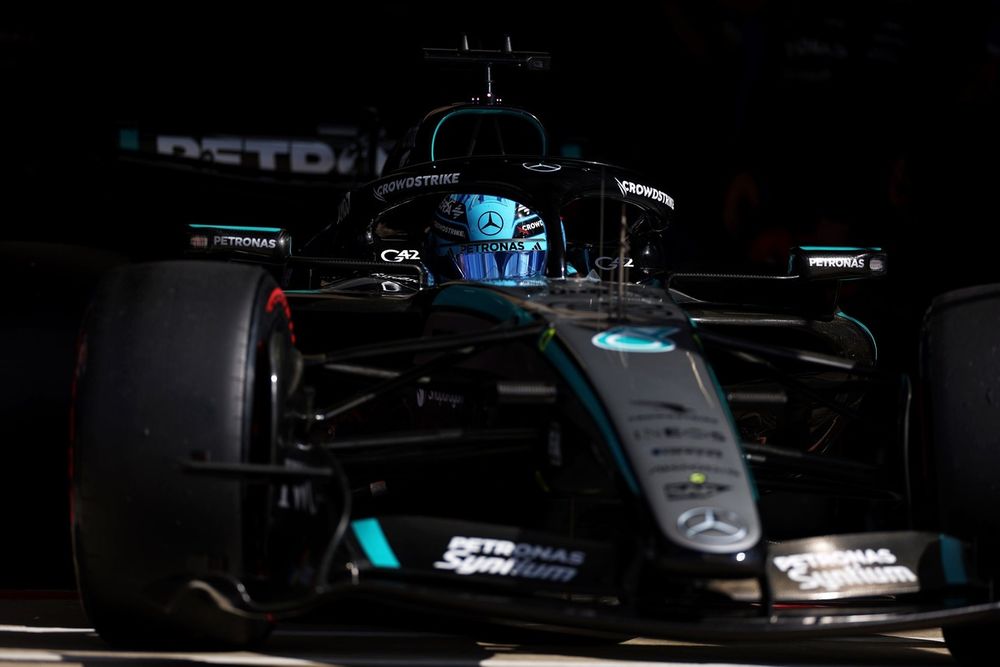
Why does the power reduction slope exist?
Picture a long, straight road. If a vehicle were to abruptly stop its electric motor, going from 350 kilowatts (kW) to nothing instantly, it could pose a danger as the driver would suddenly lose approximately 500 horsepower. Because of this, on high-speed tracks like Silverstone, rules dictate that the power drop must happen gradually, with the maximum decrease rate set at 50 kW per second.
It’s a regulation mainly put in place for safety, particularly in races, where an irregular loss of power might lead to significant differences in speed among vehicles. However, during qualifying, the scenario is different.
During a fast lap, teams aim to harness every possible unit of energy. Early in the season, some teams, includingMercedesand Red Bull, discovered a method to bypass this regulation by initiating the emergency protocol that deactivated the MGU-K.
As this posed a risk of hazardous scenarios—since the MGU-K would be inactive for approximately a minute—the FIA chose to prohibit the use of this strategy for performance reasons during qualifying.
Mercedes has discovered a clever method to produce the same result by interpreting the rules carefully (and completely lawful), enabling the MGU-K’s power to be reduced much faster, although some may claim that the rule was not meant to be applied in this manner.
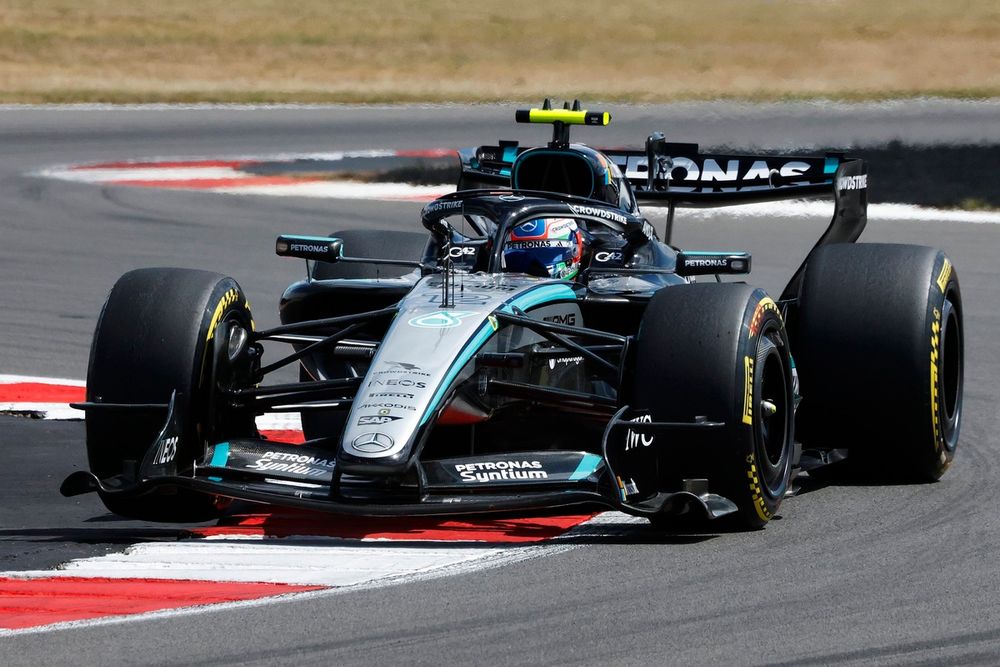
Lifting prior to the final straight to reduce speed rapidly
The main question Mercedes raised was: in what scenarios can the power reduction curve be ignored? The rules outline a few cases where the MGU-K’s output can be lowered more quickly. One such situation arises when the driver fully releases the accelerator: the internal combustion engine no longer needs energy – it actually starts to slow down – and the MGU-K must adjust accordingly.
If the electric motor kept providing power even when the driver fully released the accelerator, the vehicle would not slow down as expected. This is precisely the concept that Mercedes utilized so effectively.
It has set up the electronic control unit in a way that, based on the car’s location on the track as calculated by the distance covered, it would not adhere to the standard power decrease curve. Rather, it would maintain the MGU-K providing full power.
The drivers only needed to ease off the accelerator a few meters prior to crossing the finish line. Before the battery’s energy was completely used up, the MGU-K could immediately stop its power supply instead of slowly decreasing it, while still fully adhering to the rules.
It’s a remarkably smart approach, although it seems entirely opposite to what a driver would expect – which is why it requires thorough practice in simulations, and why other teams have not implemented it yet.
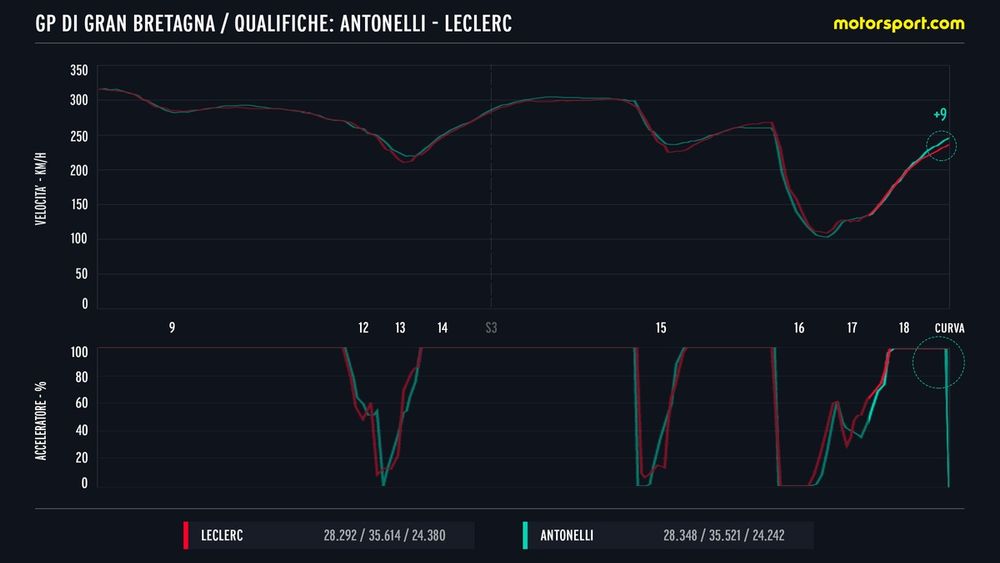
At Silverstone, this technique can be especially useful for two main reasons. Firstly, the stretch from the last corner (Club) to the timing line is fairly brief, allowing the driver to ease off just before crossing the line. Secondly, during both the final chicane (Vale) and its exit, the FIA rules already offer multiple chances to cut power rapidly and save energy for the final sprint down the straight.
Undoubtedly, such a system needs to be coded with high accuracy, both from the driver’s perspective and inside the electronic control unit. The software should not only recognize when the battery is nearly empty but also precisely determine the car’s position on the track, enabling it to direct the MGU-K to keep delivering energy at full power rather than initiating the standard power drop.
Commenting following Saturday’s qualification session,McLarenTeam principal Andrea Stella stated that he had been taken aback by his observations.
“When we first observed it yesterday during the sprint qualifying, as Antonelli was doing it, it came as a bit of a surprise to us because it wasn’t something we had talked about,” he said.
I’m not even certain it’s accessible to us, as it likely needs some extra components to utilize the power unit in that manner.
As I’ve mentioned previously, there are definitely technical conversations happening with HPP to ensure we are maximizing all that this power unit can provide, as it’s an exceptional piece of engineering. There’s significant performance within it, and a lot of that depends on the specifics of its application.
We are currently awaiting clarification on whether we can adopt the most recent specification and if this could prove beneficial in this context. It is expected to be solely a reliability update, so I don’t believe this is the main concern.






Leave a Reply