
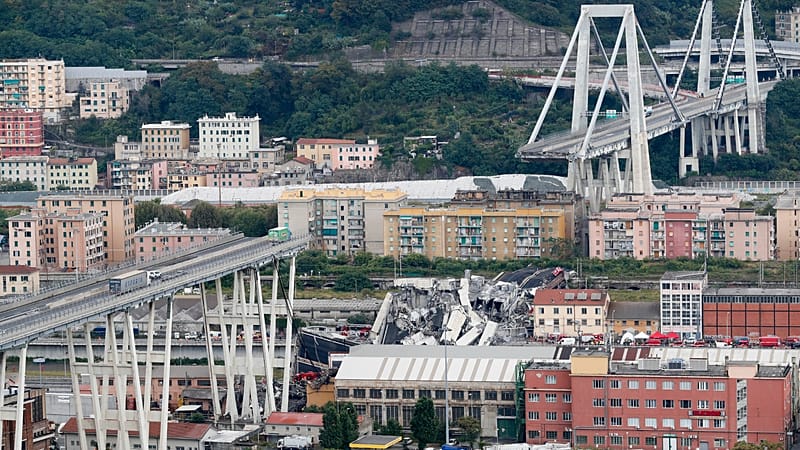
A court in Italy on Thursday handed down a 12-year prison sentence to Giovanni Castellucci, the former head of Autostrade per l’Italia (Aspi), the country’s leading highway company, for his role in the 2018 collapse of Genoa’s Morandi Bridge.
One of Italy’s most severe infrastructure catastrophes was the disaster, claiming 43 lives.
Prosecutors had requested an 18-year and six-month prison term for Castellucci. He is currently serving a completed six-year jail sentence related to the Avellino coach accident.
A total of 32 individuals were sentenced, with terms varying from 1 year and 11 months to 12 years. Some were declared not guilty, while others faced charges that had expired due to the statute of limitations.
Other individuals convicted included Michele Donferri Mitelli, the former head of maintenance at Autostrade, who received an 11-year prison sentence. Antonino Galatà, the former CEO of the SPEA engineering company, was given a five-year and six-month term.
Defendants were charged with negligence leading to the collapse and manslaughter due to failures in maintaining the bridge, which was a key route connecting northern Italy to the French Riviera.
Relatives of the deceased celebrate the decision
“I lost my sister, her two kids, my brother-in-law, and even their small dog. That’s where my resolve stems from — to ensure they get justice and that their deaths weren’t in vain,” Egle Possetti, who leads a group dedicated to remembering the bridge victims, said to journalists near the courthouse.
I believe it is crucial that accountability goes beyond the upper echelons. Autostrade, SPEA, and the Transport Ministry all had parts to play. I hope the state’s responsibility becomes clearly evident.
Nevertheless, Guido Carlo Alleva, the attorney representing Giovanni Castellucci, the former head of Aspi, labeled the decision as “incorrect.”
“They have looked for a scapegoat instead of taking accountability. Castellucci was found guilty even though he is innocent. His only ‘crime’ is being innocent,” he said.
I think this decision is deeply incorrect. We will file an appeal,” Alleva said. “I always have respect for judicial decisions and will thoroughly examine the court’s rationale for a judgment that I strongly disagree with.
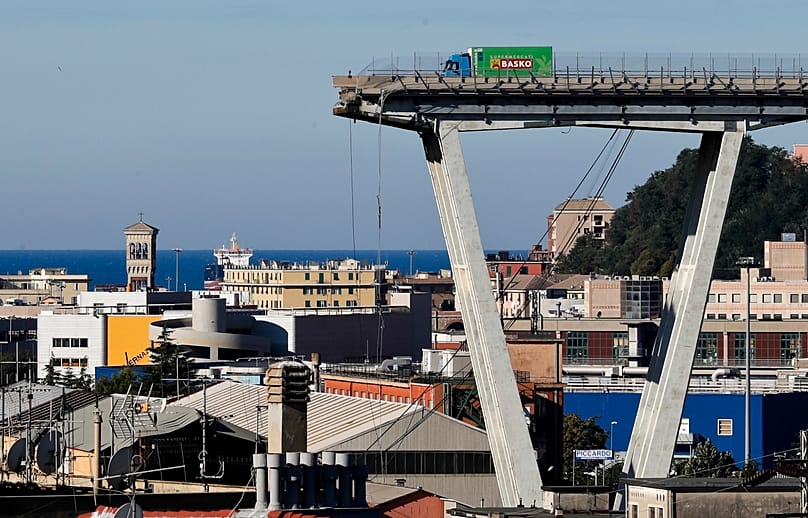
The decision was made eight years following the Morandi Bridge disaster.
The Polcevera viaduct, commonly referred to as the Morandi Bridge, was created by engineer Riccardo Morandi and became operational in 1967.
It fell at 11:36 a.m. on August 14, 2018, amid a severe storm, causing vehicles and trucks to fall to the ground. Forty-three individuals lost their lives, and 566 residents were forced to leave their homes.
As per the prosecutors, the collapse was due to a plan by Aspi’s senior leadership to reduce maintenance expenses and increase profits, with the Ministry of Infrastructure not performing sufficient supervision.
The defense claimed that the collapse resulted from a structural issue in the viaduct — an unseen problem within the stay cables, which link the bridge deck to its supports — that was impossible to identify beforehand and caused rusting and the failure of pier 9.
The court case, which started on July 7, 2022, included numerous witnesses and a significant volume of evidence.
During the four-year process, the court listened to 282 witnesses during the same number of hearings. The case also resulted in over 24,000 pages of transcripts, 10,000 pages of documents, and a 5,000-page closing argument from the prosecution.
The present head of Autostrade, Arrigo Giana, offered a public apology on Thursday through an open letter featured in leading Italian newspapers.
Giana, who became CEO of Autostrade last year, stated, ‘The actions and choices of certain individuals have created lasting wounds.’ ‘Providing the apology that was lacking at the time is, for us, a moral duty that extends beyond merely addressing legal accountability and the pursuit of justice in the quest for truth.’



 jasdooit
Leave a comment