
Opulent poppies – thousands of them – spread across the field like a red carpet, gently moving with the summer wind.
A vast Norfolk sky stretches above, adorned with fluffy clouds.
It’s a spectacular sight.
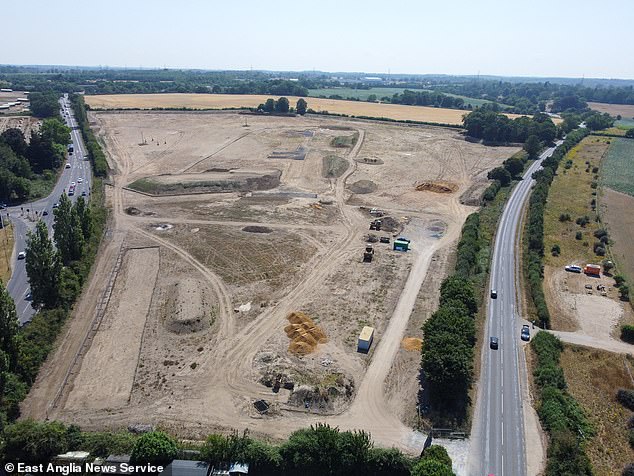
But jump ahead six years, and the situation has changed completely.The area has been completely cleared and flattened—changed from a peaceful countryside scene into an open stretch of dry, sun-scorched earth.
Close to the village of Keswick, south of Norwich, the agricultural land is being transformed into a new, more profitable sector:artificial intelligence.
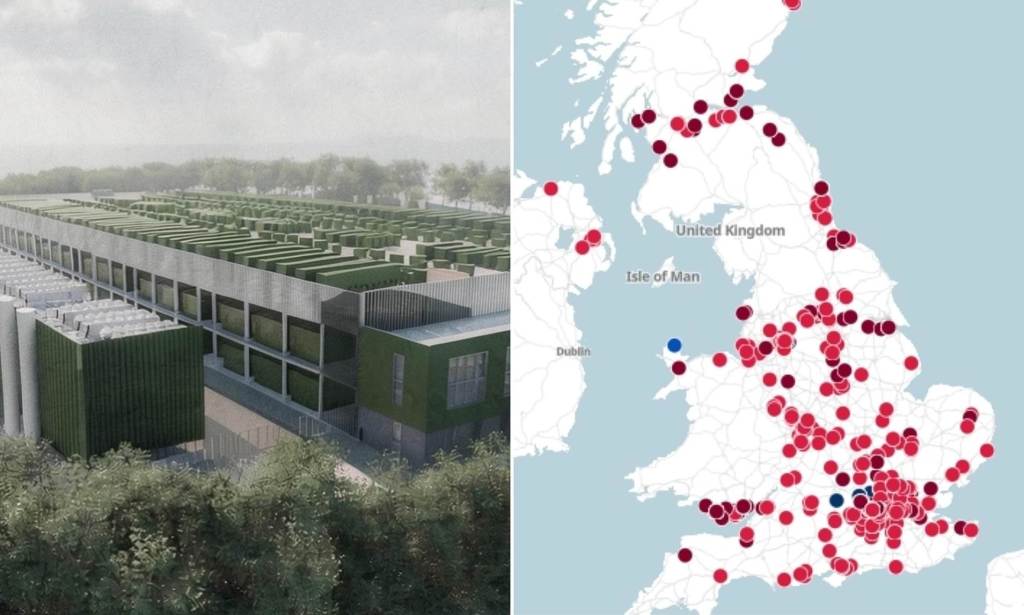
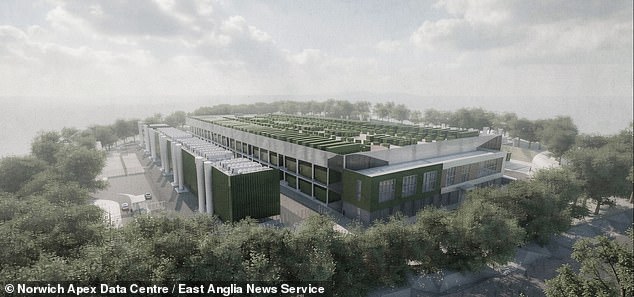
Spanning seven acres, the Norwich Apex Data Centre is poised to emerge as one of the biggest data centres in the UK, filled with cutting-edge technology operating continuously to support the Government’s goal of a sophisticated, AI-focused economy.
However, the proposals encounter a major obstacle in the shape of 7,000 local residents who have signed a petition against the new location – including BBC presenter Jake Humphrey.
They claim the data center—visible in architectural designs as a mix of a warehouse and a multi-level parking structure—will damage the region’s rural atmosphere, negatively impact wildlife, and lead to unacceptable noise and congestion.
The website will generate enough energy to supply 10,000 households and utilize nearby water sources for cooling, even though the builders claim it will function with a ‘closed-loop’ water recycling system that, when fully operational, won’t require any additional water.

Rather than just a local matter, the conflict represents the latest stage in a broader struggle between AI supporters—backed by the Labour Government—and a group of residents, local authorities, and activists who are protecting their idea of the British countryside.
To the ears of Americans, this will all seem rather routine.
Having given rise to the technology giants thatdrive the world’s most advanced AI systems, the United States has been experiencing a data center construction surge for at least four years, with over 1,500 data centers in different phases of development.
This has triggered a significant grassroots reaction, uniting Americans from all political backgrounds in demanding a halt to new developments.
High-ranking politicians, who typically support AI, have been compelled to pay attention, and the topic is anticipated to be a key focus in the upcoming midterm elections.
Data centers are not uncommon in the UK, which ranks third in the number of operational facilities, according to certain metrics, following the US and Germany.
However, the number of projects remains significantly behind that of America, and data centers have not yet emerged as a political issue as they are in the Atlantic region.
This could soon undergo a change. In addition to the UK’s approximately 477 current data centers, an additional 100 are in the development stage, with the majority expected to be constructed within the next five years – as reported by market research company Barbour ABI.
Due to their requirement for land and significant energy supplies—exceeding what some densely populated city power networks can offer—data center builders prefer remote areas.
Thus, we come back to the Norfolk village of Keswick, where plans for the 150MW Norwich Apex Data Centre have faced significant resistance following a public consultation.
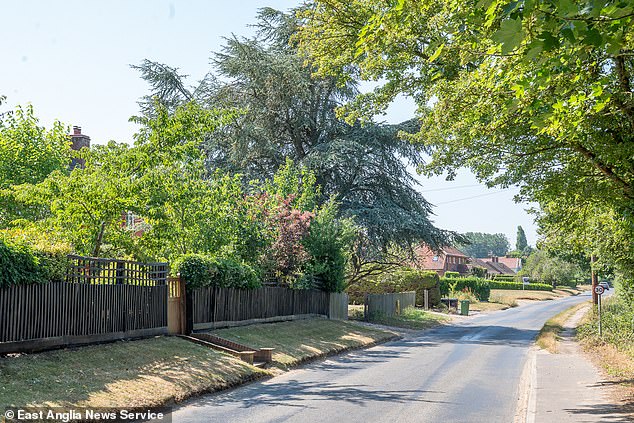
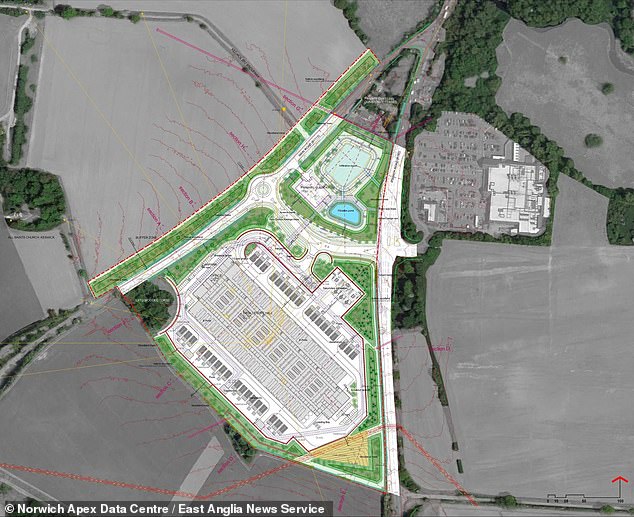

The project is near Marston Marsh nature reserve, a 64-acre area of floodplain and grazing marsh that is full of water voles, wetland birds, dragonflies, and otters.
Residents are also worried that it will damage the countryside feel of their neighborhood and cause it to be ‘drawn’ into urban Norwich.
Jake Humphrey, once a CBBC presenter and now the host of BBC Sport’s Formula One broadcasts, is the most vocal opponent of this development.
He said to the Daily Mail: “This area is valuable because it is one of the few places where Norwich still emerges softly.”
It is countryside, it is peaceful, and it possesses an untouched nature that has developed over the years. That is why a data center seems completely out of place in this area.
A large, secure, and energy-intensive industrial complex is not suitable next to wetlands, river valleys, historic churches, and countryside residences. No matter how it is presented in planning terms, it would significantly alter the character of this entire region.
It would introduce size, commotion, illumination, barriers, transformer stations, power generators, traffic, and a feeling of ongoing industrial development in south Norwich, which is now characterized by openness, natural surroundings, and heritage. And after that is lost, it will be lost forever.
A 47-year-old father of two, Mr. Humphrey, stated he was not ‘against data centers’ but rather aiming to preserve a cherished local scenery.
You can’t inform future generations that we safeguarded Norfolk if we permit this. This isn’t a debate against technology.
It is a case for placing items in the correct location. A data center might be needed somewhere, but it is entirely inappropriate here. This area is too rural, too historic, too delicate, and too valuable to be compromised.
A site is being suggested for a center on a triangular plot of land next to the A140, near Ipswich and Norwich, across from a major Tesco.
The region initially received approval from South Norfolk Council to be developed into an industrial park, with plants removed and initial construction work begun, only for the project to halt abruptly several years ago.
Developers claim the facility will create “highly skilled employment opportunities” and back “the digital services that people rely on daily.” They have also pledged actions to minimize noise and conceal the location with vegetation and trees.
No application for planning has been made so far, but numerous residents worry that local resistance will be overlooked and the project will be approved by the Government.
These worries are not baseless. Last week, residents in Southfleet, Kent, received letters in their mailboxes about plans to construct the Ebbsfleet AI Data Centre, which willrest on 145 acres of old agricultural land located just beyond the village.
Although many intend to protest, they might discover their concerns are ignored once the project is classified as ‘of national importance,’ enabling the developer Clearstone Energy to directly approach ministers for permission rather than obtaining approval from the local council.
The designation, previously reserved for essential infrastructure like highways and rail systems, it aims to reduce the processing time for data center applications by as much as a year.
Simon Rothwell, the project manager overseeing the Ebbsfleet AI Data Centre Campus, mentioned that residents in the area would be involved at each phase of the project and pledged a ‘community benefit package’ to make the proposal more appealing.
What developers cannot be criticized for is attempting to cut costs. A substantial amount of money from investment companies and technology giants such as Google and Microsoft ensures these projects are adequately financed, with £3 billion allocated specifically for the Southfleet site.
Substantial figures are also being proposed for the alleged advantages that data centers will offer to the broader economy.
A company named Xlinks states that a data center and battery storage facility it is set to build in Devon is expected to add £3.6 billion to the national economy and generate between 600 and 1200 employment opportunities.
Residents of the nearby town of Great Torrington aren’t convinced. They argue that these advantages are being overstated and will be significantly surpassed by the expense of losing an impressive 850 acres of rural land.
Xlinks – which was previously hidden behind aproject to introduce renewable energy to the UK from Morocco using underwater cables – stated that the data center buildings would occupy just one-third of the area.
Matt Whittaker, having participated in a public gathering, promised to resist.
Everyone is outraged, but we are handling it in a smart manner,” he said. “We are motivated by feelings, but we aren’t led astray by our emotions. It won’t just ruin the town, it’s much more significant than that.
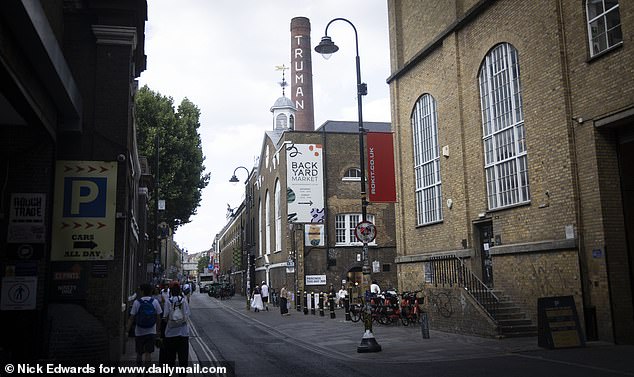
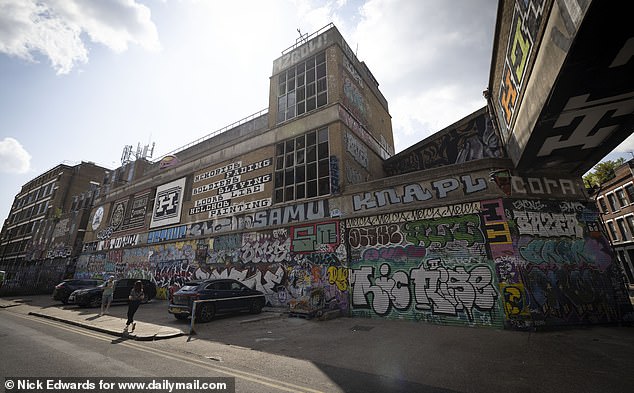

Many new data centers are located near London and the Home Counties. While the largest proposed sites are typically found in rural areas, some are situated in urban locations.
One such site is scheduled for the former Truman Brewery located in the center of London’s famous Brick Lane.
Famous for its curry restaurants and lively night scene, the area might soon have an unwelcoming new neighbor – a data center spanning 56,682 square feet that handles high-frequency financial transactions in the City.
Documents indicate the center will employ only 15 full-time staff, leading residents to claim it will “contribute nothing” to the region.
Jonathan Moberly, a local resident and part of the Save Brick Lane campaign, stated: ‘This is located in the heart of central London, where there’s a social housing waiting list of 31,000 individuals.’
Having 15 employees working amidst rows of computers, how could this possibly help the local community? It definitely won’t.
The suggestions indicate that the data center’s maximum capacity would be 5.2MW, which opponents claim could supply power to approximately 15,000 households.
The Tower Hamlets Council turned down the £500 million project. HoweverHousing Secretary Steve Reed ‘involved himself’ with the application, giving him the ultimate decision.
Jamal Khalique, born in Brick Lane in 1970, advised him to turn down the proposals.
We are a tightly connected community here – no one wants the additional noise and vibrations from this center,” he said. “It will have very few people working there, so there won’t be any benefit from customer traffic for local businesses.
The lively streets of East London might appear to have little in common with the rural landscapes of Norfolk, Kent, or Devon, yet the conflicts emerging are remarkably alike.
Will the supporters of AI emerge victorious? Or will local communities manage to hinder the momentum?
No matter what happens, it will influence Britain’s future for many decades.




 jasdooit
Leave a comment