
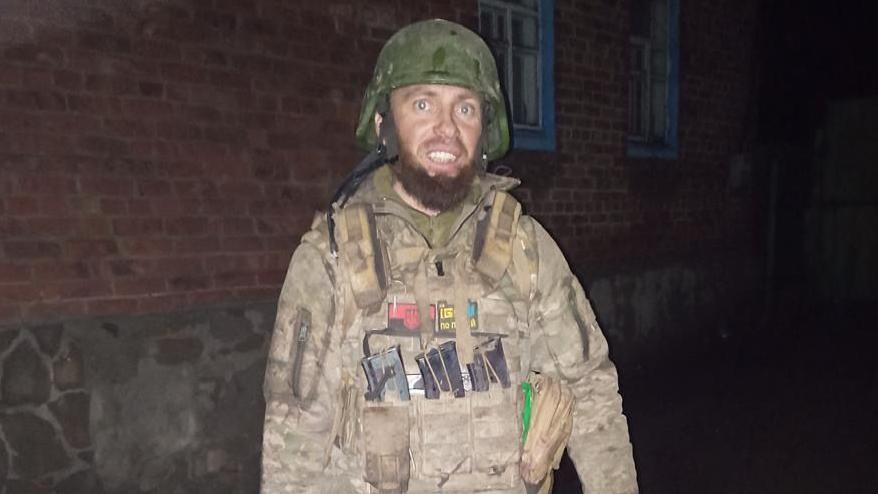
Vasyl Krupych is familiar with the experience of battling for Ukraine.
He recounts harrowing scenes from conflicts in the eastern Donbas area, where, at times praying and at others weeping, the machine gunner somehow endured the relentless attacks by Russian forces.
However, in December of last year, while he was stationed in the rear, Krupych was attacked by his own fellow countrymen while on a mission to find draft evaders.
He mentions that two individuals disregarded requests to present their identification and ran away. When his team pursued them, Krupych suffered severe injuries from a crowbar. He remained in the hospital for six weeks.
“He shattered my rib, I was lying there and couldn’t take a breath,” the veteran remembered during a recent conversation.
What were we fighting for, if soldiers can now be defeated?
Surge in violence
The military ombudswoman of Ukraine states that these strikes have become “routine” and “a significant issue” as the nation faces challenges in recruiting men to combat in the fifth, exhausting year of Russia’s large-scale invasion.
It’s not a subject that people here are keen to talk about extensively, cautious about supporting Russian propaganda.
However, the most recent report from the National Police Service indicates over 600 attacks on recruitment personnel so far, and highlighted that the violence has grown “more alarming.”
The first major incident occurred in April, when several recruiters were attacked, one of whom died. This month, in Lviv, around 200 demonstrators encircled officers trying to arrest a suspected evader of conscription and damaged and overturned their vehicle.
The uprising grabbed attention as President Volodymyr Zelensky criticized aggression towards active-duty troops.
His disputed choice since thento dismiss Defence Minister Mykhailo Fedorov– following a conflict between individuals and the head of Ukraine’s military – indicates efforts to resolve the conscription issue will face delays.
Yet the fury that recently erupted in Lviv indicates that the demand is pressing.
‘Busification’
The causes seem to vary from simple fear of the front lines—now everyone is aware of someone who has been hurt or lost their life—to a hesitation to join a conflict that shows no sign of ending.
The sole burst of excitement following the initial push to the front line occurred in late 2023, when Ukraine initiated a counterattack to reclaim land in the southeast.
It didn’t last.
That is when the “brutal mobilization” phase started, as stated by opposition MP Oleksandr Honcharenko.
He attributes the backlash to that.
The member of parliament states, ‘These officers are searching for individuals on the streets and occasionally employing highly aggressive tactics.’
Violence breeds more violence. It is a significant issue that is expected to deteriorate further.
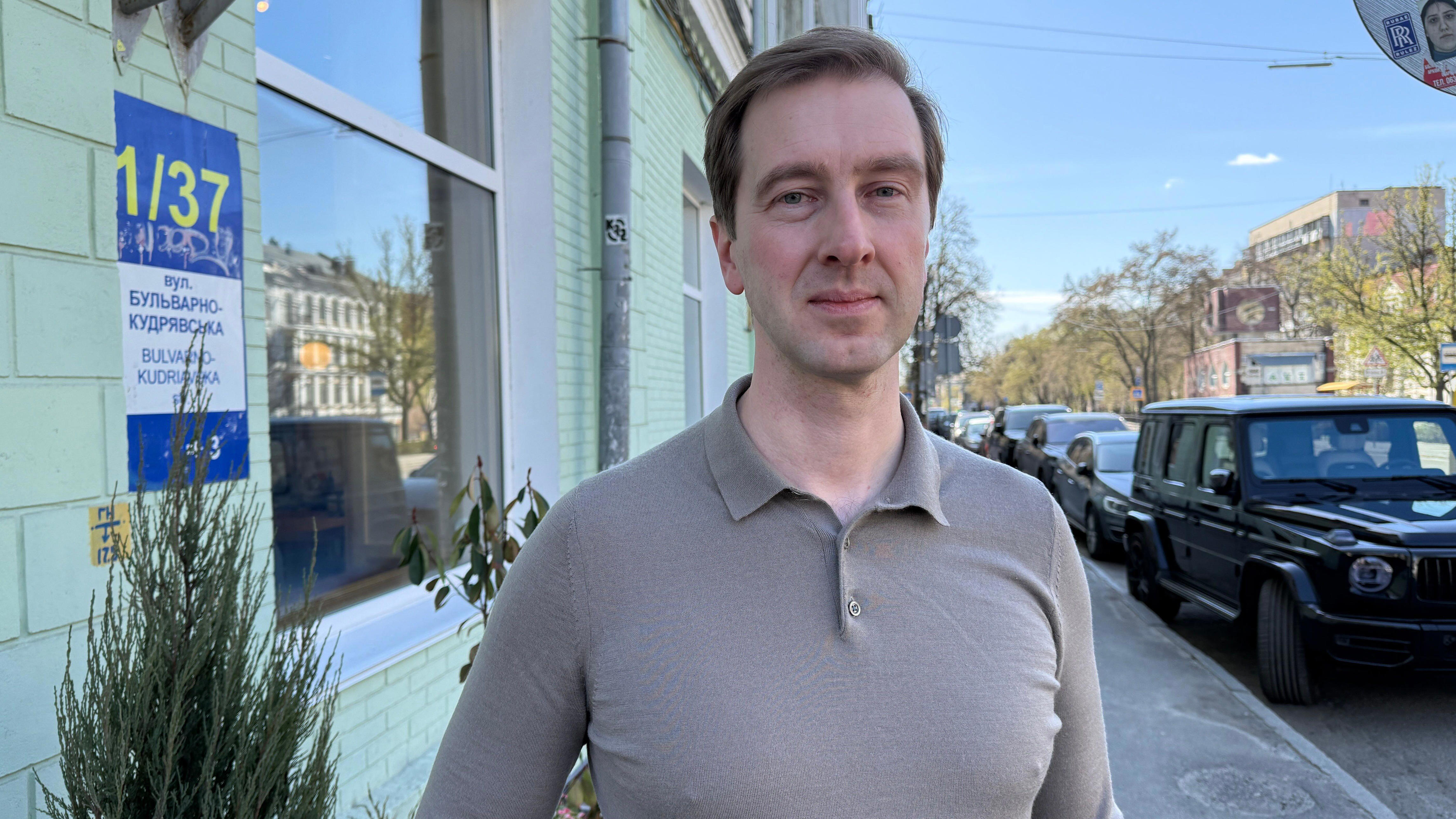
Military expert Ivan Stupak agrees.
We experienced a shortage of personnel on the front lines, with continuous casualties,” he remembers. “Ukraine’s top command had to address these losses, so they initiated busification.
This is the term used by Ukrainians to describe mobile patrols that result in men being loaded onto buses and sent off to serve.
When they require an additional 5,000 soldiers, they begin to take them – and if anyone resists, it leads to confrontations in the streets.
The professor’s story
Therefore, for each tale of a draft officer being assaulted, there are reports of violence committed by recruiters.
The Human Rights Commissioner of Ukraine documented over 6,000 such complaints in the previous year—twice the number reported in 2024. These cases involve allegations of mistreatment and illegal detention, along with substandard conditions at recruitment centers.
Kyrylo Ogdansky still feels distressed when he discusses the events that took place in Dnipro last November.
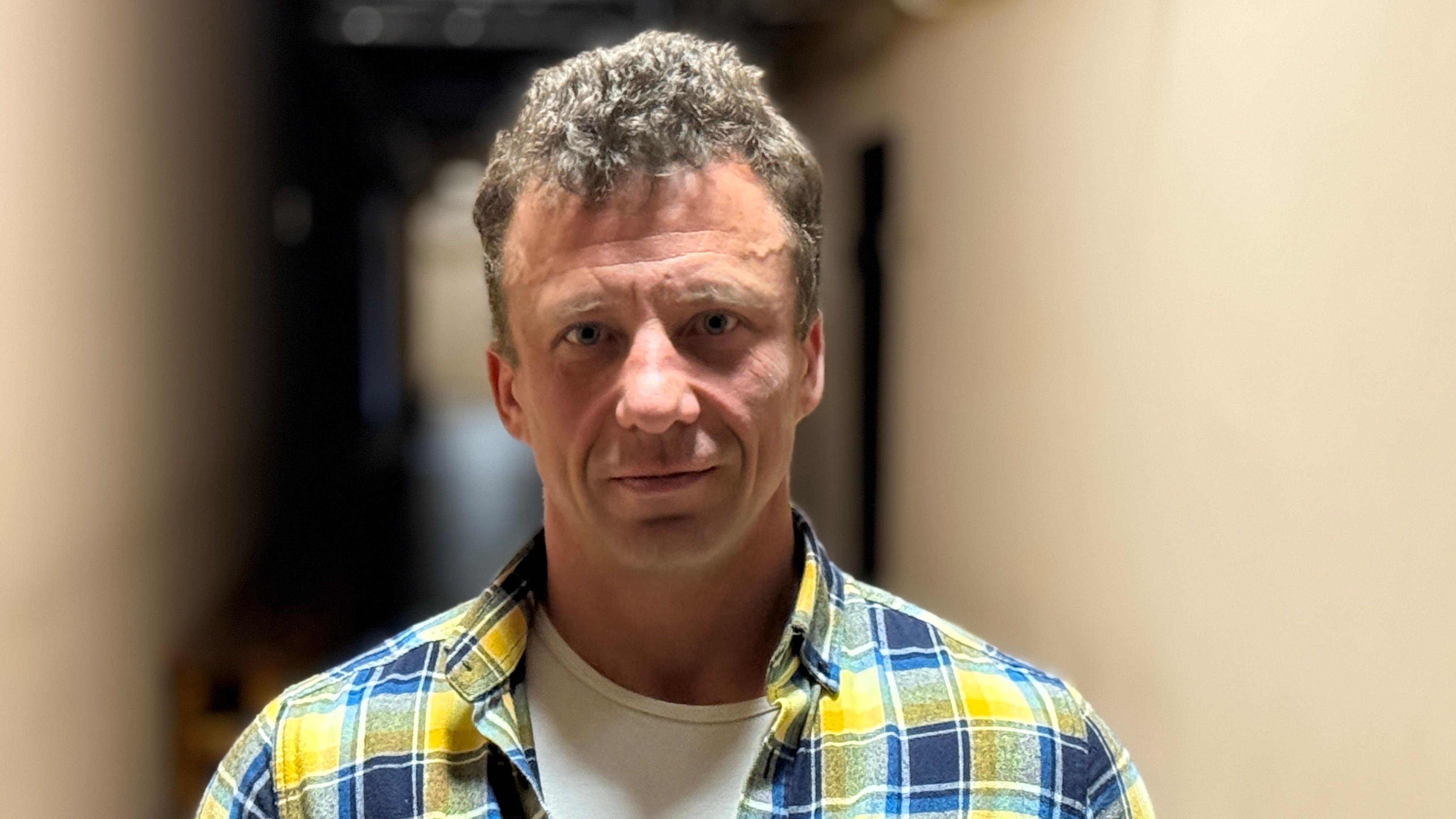
A university professor, who is exempt from military service, was stopped on the street by a man dressed in civilian attire seeking to verify his conscription status.
There are guidelines regarding these patrols, such as requiring the presence of law enforcement officers, which is why Ogdansky raised an objection.
Then he was assaulted.
“One of them knocked the phone out of my hand, while two others pushed me into the bus from behind. When I asked what was going on, one of them began hitting me on the head. He struck me in the nose several times,” Ogdansky tells me.
He recalls the warning to send him directly to the frontline. “He said, ‘I can contact the commander and you’ll be sent to Pokrovsk.’”
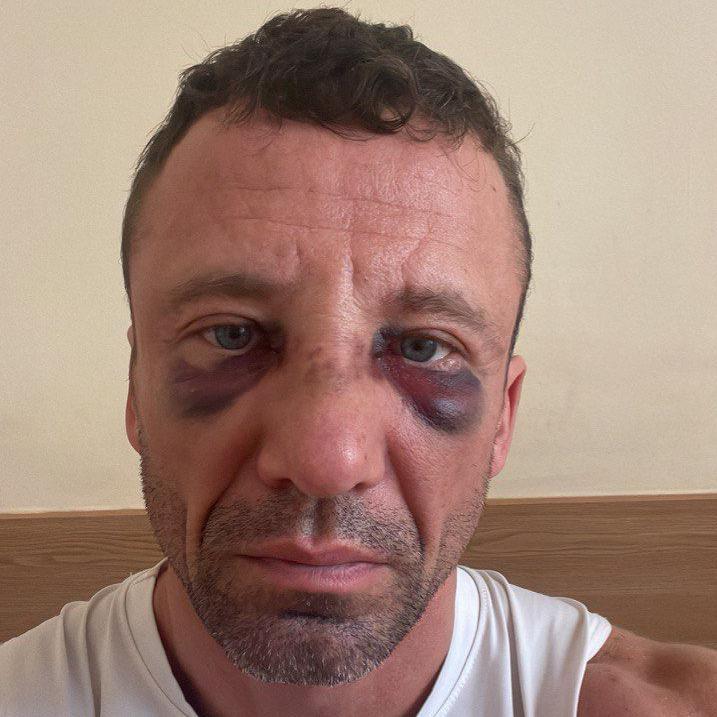
Alternatively, the professor remained in the hospital for two weeks due to a possible neck injury, accompanied by large purple-black bruises under his eyes.
He has submitted official complaints but was reluctant to speak out publicly, recognizing that such issues could reflect poorly on Ukraine during the ongoing conflict.
“Russian propaganda makes extensive use of such elements. However, this issue does exist,” Ogdansky explains his choice.
If all people remain quiet, then why would it come to an end? I recognize the issue with compulsory service, but no official should have the authority to behave in this manner.
Vasyl’s story
It is evident that Vasyl Krupych endured terrible experiences during the war.
He offered his services from the beginning and has endured some of the most brutal conflicts.
Krupych is proud of his military service — a tattoo on his neck reads “Glory to the Ukrainian Armed Forces” — yet he experiences nightmares.
When his vehicle was struck by an FPV drone, he sustained serious injuries but managed to pull one friend to safety. He witnessed two others being killed in the fire.
Now, when we talk about the rise in attacks on draft officers, his statements are filled with pain.
It’s not solely about his own experiences: that case is still being processed in court. It’s also the wide gap between what he has gone through and those who are doing everything they can to prevent similar suffering.
We are fulfilling our responsibility. We have fought, we have protected our people – and now they are attacking us.
I ponder what he believes could encourage individuals to volunteer, rather than forcing them, and he brings up increasing wages.
But then he shrugs.
“It’s not possible to do it any other way, it really isn’t. Our boys need to be replaced. However, no one steps forward,” he says.
Everyone experiences fear when it comes to death.
What to do?
During his six-month tenure as defense minister, Mykhailo Fedorov initiated measures aimed at addressing the escalating crisis.
He started by implementing strategies designed to increase the appeal of military service: fixed-term agreements for new enlistees, allowing them to delay additional service, along with improved wages, particularly for the most hazardous positions.
However, it was an initial draft in development, and revising the conscription system remained on his agenda until he was dismissed.
Suggestions have involved transferring draft patrols to the police, who have a reduced personal stake in the duty. There is also discussion about providing adequate training for officers, along with psychological evaluations.
Ukraine openly acknowledges that it faces a new issue.
But it now has only an acting defense minister, and no resolution yet.
 jasdooit
Leave a comment