
“One, two, one, two.”
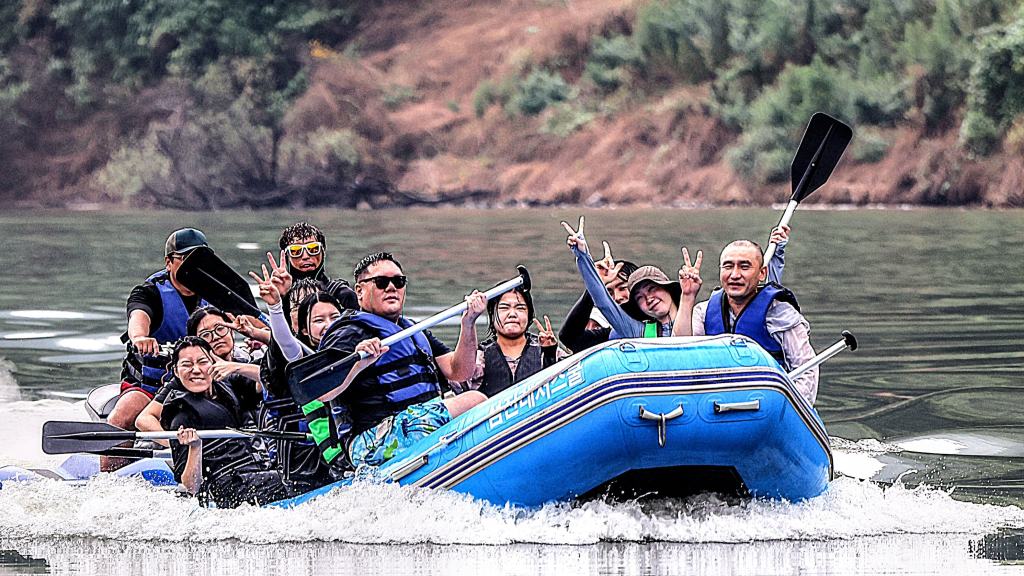
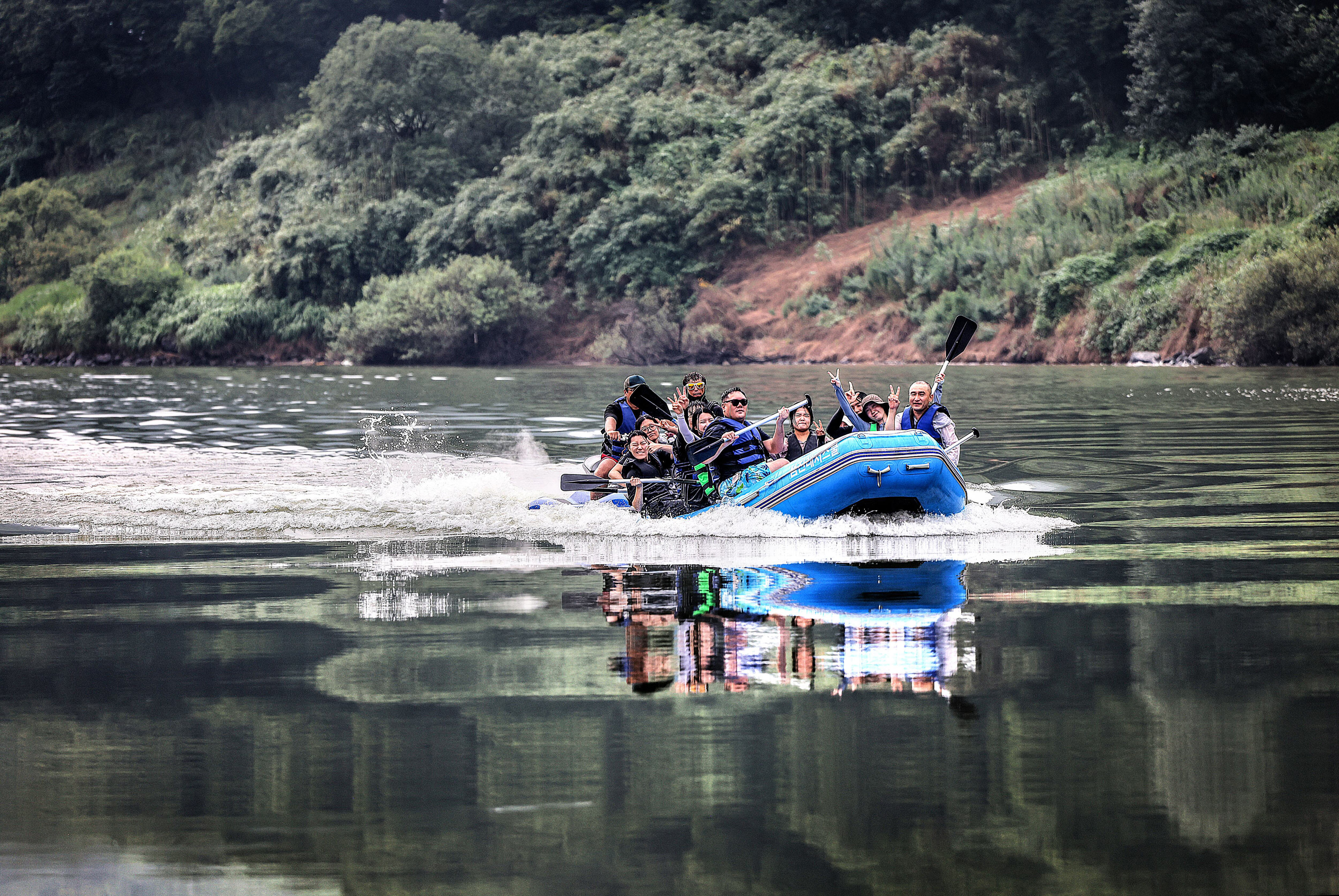
Around 2 p.m. on the 18th, at a tributary of the Seomjin River in Gurye, Jeonnam-Gwangju, eight men and women in their 20s and 30s, equipped with life jackets and seated in a rafting boat, paddled together in sync. In areas where the boat suddenly accelerated due to rapids, expressions of “Wow” were heard. The most memorable part of the one-hour and 20-minute rafting trip occurred 30 minutes into the journey. Dark clouds gathered in the already cloudy sky, rain started to fall, and fog covered the foothills of Jirisan along the river. Despite the hot weather and the effort of rowing, the participants instead said, “It’s romantic” and “It’s beautiful.”
Although it looked like a typical summer rafting activity, this was actually a temple stay program arranged by Ssanggyesa Temple in Hadong, South Gyeongsang Province. Monk Neungseok, who guided the participants from the front of the boat, recited the opening lines of the *Cheongsanga* poem composed by the late Goryeo-era Seon master Naong: “The blue mountains tell me to live in silence, and the vast sky tells me to live without blemish.” The participants closed their eyes and entered a brief moment of quiet.
Kwak Eun-hee, 36, an office employee who traveled for three hours from Busan with her boyfriend, remarked, “When will I have the chance to go rafting in the rain again?” She also mentioned, “This is my second visit to a temple stay, and the experience has been so rewarding that I plan to join again with my Japanese friends next time.” The first day of the two-day temple stay at Ssanggyesa Temple ended around 9 p.m. following dinner, evening prayers, and a tea session with the monks.
◇ Loved by people of all ages… Stay at the Temple as part of K-culture
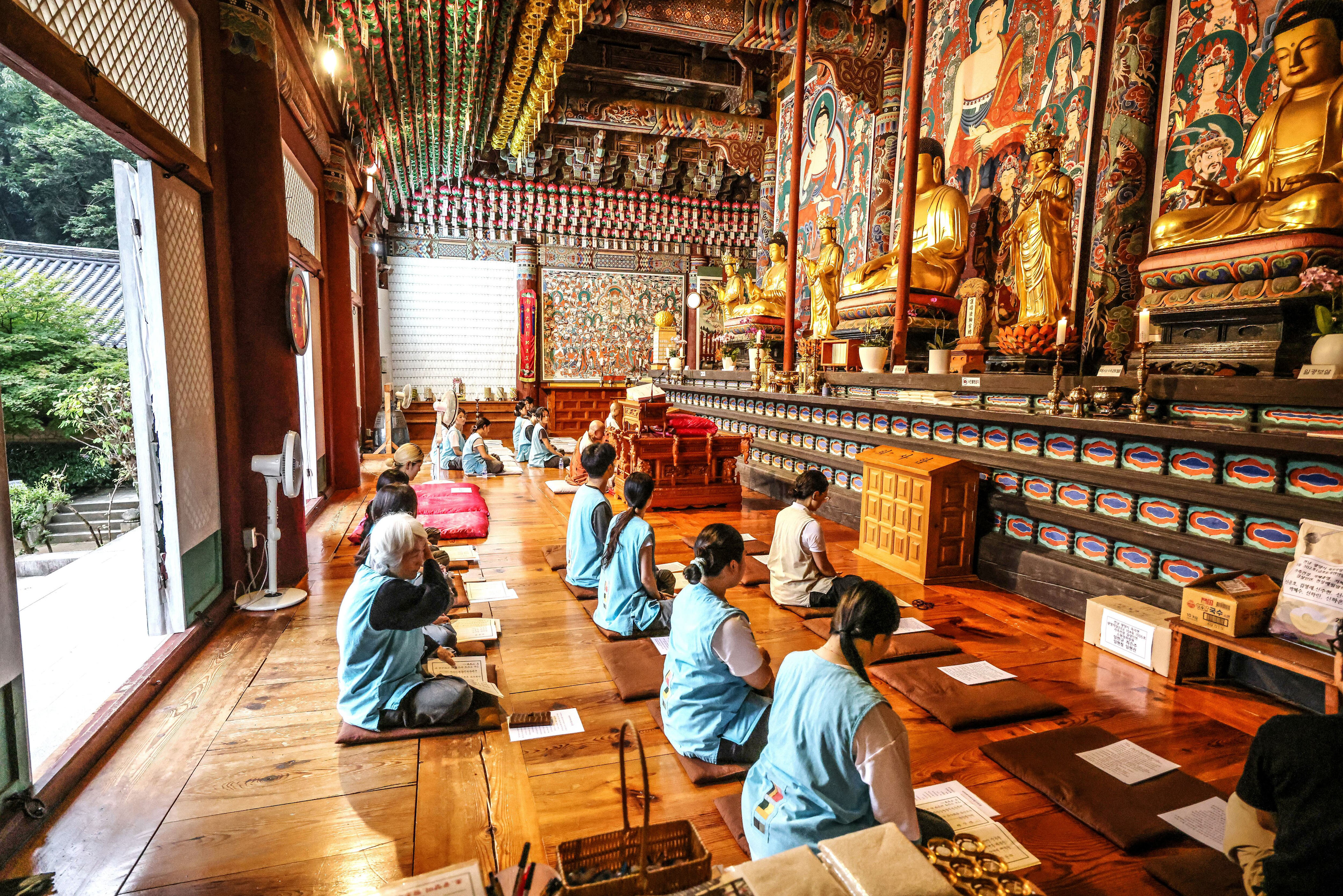
A temple stay program, which started in 2002 before the Korea-Japan World Cup, is celebrating its 25th anniversary this year. Initially introduced to solve accommodation issues by using temples across the country and to present traditional Buddhist culture to international visitors, it has now evolved into a key “K-culture” initiative where both residents and tourists can immerse themselves in temple life and find inner peace. According to the Korean Buddhist Cultural Business Unit, which manages the temple stays, 80.6% of those surveyed last year reported they were familiar with the program.
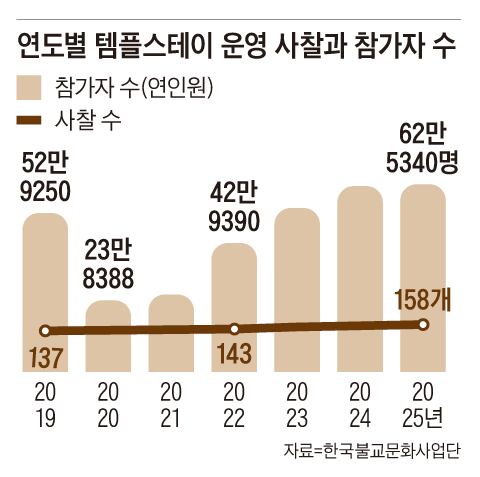
The participants come from a wide range of age groups, not restricted to any particular generation, and the number of families taking part has continuously risen. In the first year, 11,714 individuals took part, while last year’s figure reached 625,340. Foreigners made up 14.1% (88,454 people), indicating approximately one out of every seven participants. The number of temples providing temple stays increased from 33 in 2002 to 170 this year.
The program’s widespread appeal comes from various reasons. Lee Ye-rim, a 25-year-old office employee who participated in the Ssanggyesa Temple stay with two high school friends, mentioned, “I applied to ease work-related stress. It’s appealing that for 90,000 Korean won per person, you can go rafting in summer, engage in temple culture through prayers and meals, and spend the night.” A representative from Ssanggyesa stated, “Temples are seen as secure, and the comfort they offer draws participants ranging from single women to the elderly. A quarter of attendees are over 60, and even though it’s a rural temple, 20% of visitors come from the capital area.”
Temple stay encountered difficulties, however. Following its peak participation of 529,250 individuals in 2019, the program experienced a setback due to the COVID-19 pandemic in 2020. Participation remained around 200,000 for two years in a row. However, as social distancing measures were lifted and interest in “rest,” “meditation,” and “mental health” increased after the pandemic, participation recovered to 420,000 in 2022 and has continued to grow each year since. As of last month, 309,167 people have taken part this year. Satisfaction levels were recorded at 6.56 out of 7 (based on domestic participants from last year), indicating strong approval. Foreign involvement has also risen along with the global K-culture trend.
◇ The temple stay moves out of the temple… to movie theaters and homes
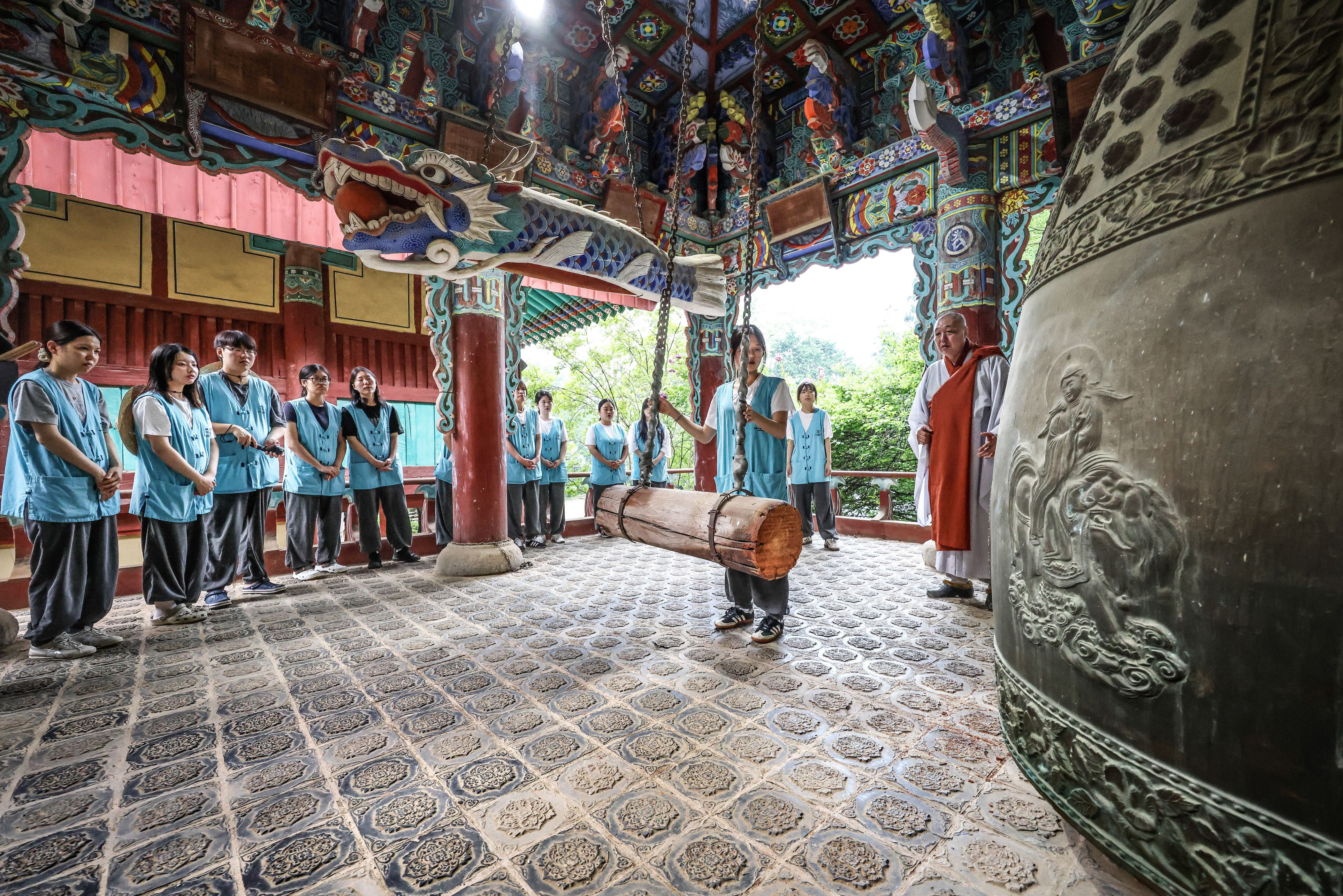
Continued efforts are being made to broaden the scope of temple stays. Last year, the Korean Buddhist Cultural Business Unit introduced “Coming Soonim” (a blend of “coming soon” and “monk”), in which monks visit participants’ homes for a one-night, two-day program. This option is designed for individuals who cannot commit to longer stays. Monks bring tea, bowls, and singing bowls to homes, enabling participants to engage in meditation and enjoy bowl meals similar to those in temples.
With OTT platforms challenging urban cinemas, theaters are now being used for temple stays. Last year, the unit and CGV jointly organized the “Temple Stay in Theaters” program three times. Utilizing the quiet and dark settings of theaters, the initiative turned them into places for meditation. Participants mentioned, “It felt as soothing as a real temple stay.”
Regionally focused initiatives also make a strong impression. Ssanggyesa, utilizing Hadong’s tea traditions, provides “tea sommelier” and “traditional tea ceremony” experiences along with rafting activities. Attendees gain knowledge about traditional tea culture and get to taste local teas. Naksansa Temple in Yangyang, Gangwon—a popular surfing location—offers a three-day, two-night temple stay that features surfing.
◇ Warning: “The fundamental values and philosophy of Buddhism should not be forgotten”
Nowadays, Buddhism is considered “cool” among younger people. The phrase “hip Buddhism” (a blend of “hip” and “Buddhism”) has appeared, portraying the religion as fashionable and modern. Temple stays have played a role in this movement, along with events such as the Jogye Order’s “Buddhist Expo” and the matchmaking initiative “I Go to the Temple,” which appeal to young individuals.
The 2024 Seoul International Buddhism Expo in April at SETEC in Gangnam-gu, Seoul, popularized Buddhism among young people. Comedian Yoon Sung-ho, who performs as “Newjin (NEW進) Monk,” donned robes and DJ’d under the theme “Extreme Happiness (極樂) is Rock (樂).” As he danced in a prayer pose while shouting “Buddha Hands Up” to EDM music, the expo turned into a concert. The video spread online, cementing Buddhism’s “hip” image. Expo attendance doubled from 130,000 in 2024 to 250,000 this year.
” I Go to the Temple” also encouraged young people to engage with Buddhism in a more relaxed manner. Introduced in November 2023 by the Jogye Order Social Welfare Foundation, the initiative replaced the earlier “Meeting Temple Stay” program (2013–2022) as low birth rates and increasing trends of not getting married became more prevalent. Unlike its predecessors, this program is available to individuals who are not Buddhist. The most recent event at Naksansa Temple received 4,225 applicants (1,655 men, 2,570 women) for 10 slots, setting a new record.
As Buddhism grows in influence, experts warn about the risk of losing its core values. Han Jae-hee, a professor in the Department of Buddhist Studies at Dongguk University, stated, “It is crucial to establish an atmosphere where individuals perceive Buddhism as accessible, yet the content should also communicate its teachings and ideas to avoid shallow engagement.”

 jasdooit
Leave a comment