
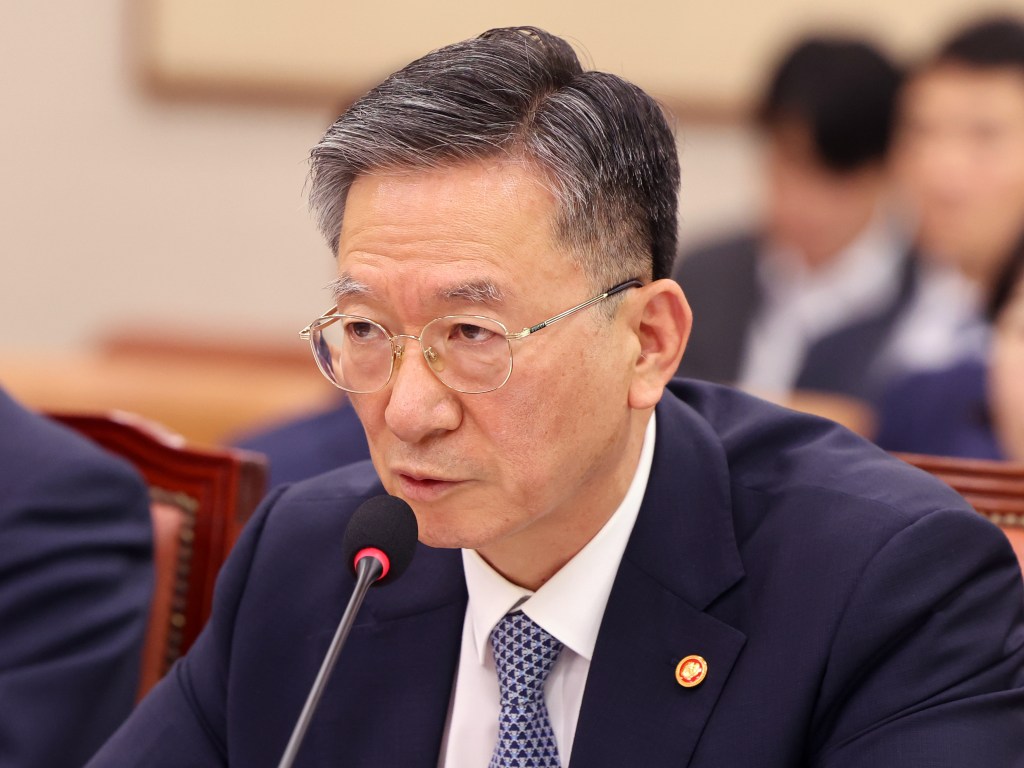
Justice Minister Jung Sung-ho mentioned on the 25th about the demands for his resignation, “I have already expressed my desire to step down via my assistants.”
On the same day, Minister Jung told this newspaper, “I never spoke directly with President Lee Jae Myung, but my decision to step down was communicated through my assistants for some time.”
Minister Jung had repeatedly shown a cautious approach in the past on the prosecution reform advocated by the government and the Democratic Party of Korea. He argued that if the prosecution’s ability to conduct additional investigations is entirely removed, it could lead to negative consequences, such as challenges for victims of crime in obtaining compensation.
Nevertheless, the Democratic Party of Korea announced its full elimination of the prosecution’s authority for additional investigations as a party policy on the 24th, advancing a strict criminal justice reform initiative. The Democratic Party intends to introduce an amended Criminal Procedure Act bill, which would eliminate the prosecution’s right to conduct supplementary investigations, during the National Assembly plenary session as early as the 30th. Within legal circles, there are interpretations suggesting that “Minister Jung is assuming responsibility for not ultimately maintaining the prosecution’s right to supplementary investigations.”
If the updated Criminal Procedure Act is approved, the indictment body scheduled to begin operations in October will not have the authority to ask the serious crimes investigation unit for additional or re-investigations if the number of cases referred by the body is inadequate.

 jasdooit
Leave a comment