
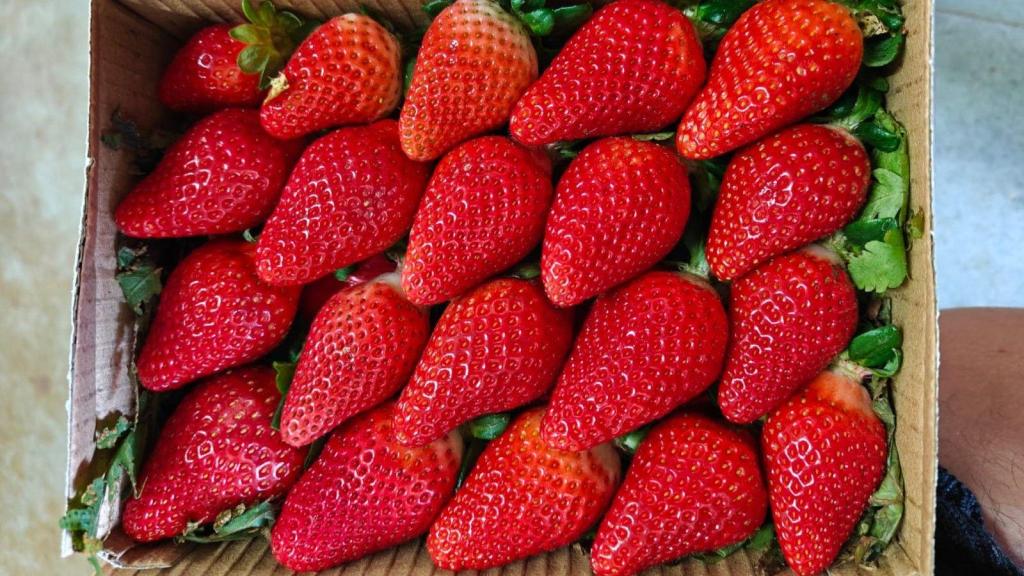
In western India, the mountainous area of Mahabaleshwar hosts the majority of the country’s strawberry farms.
Approximately 85% of India’s strawberry production takes place there.
An elevation exceeding 1,000m (3,280ft) provides the area with an extended cool growing period from November to March.
Furthermore, strawberry farming thrives in light, well-draining soil.
But this doesn’t imply that farmers lead an easy life – it is a demanding and uncertain means of earning a livelihood.
“If a field of strawberries faces unexpected heavy rain, the whole harvest is destroyed, leading to significant financial losses,” explains Sheetal Danavle, who, along with her husband, cultivates strawberries on half of their three-acre farm.
Strawberry plants need to be renewed each season and are not cultivated from seeds. Rather, farmers obtain young plants from vendors. For Danavle, on her small farm, this costs $2,500 (£1,900) annually.
“If the season is successful, you could double your investment. However, the weather makes it a significant risk,” she states.
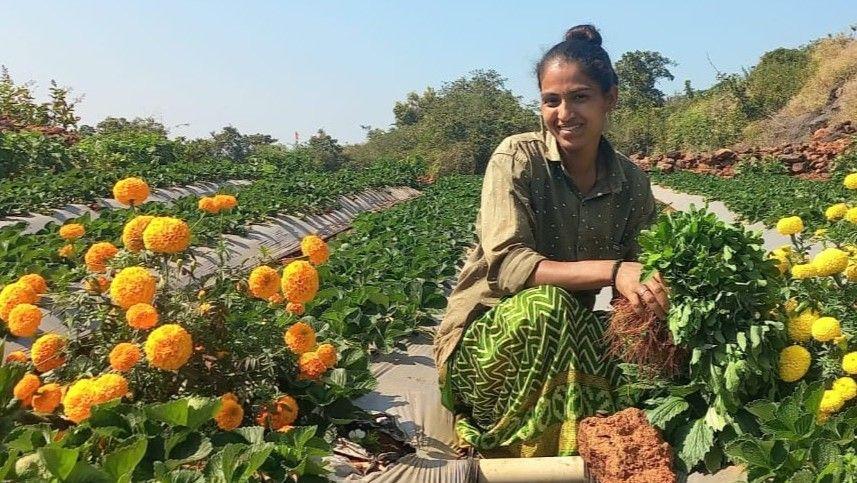
A large number of farmers cultivate strawberries throughout the Mahabaleshwar area, positioning the fruit as one of the most lucrative horticultural products in western India.
Although there has been that success, the industry continues to depend on varieties brought in from California, Florida, Italy, and Spain, as no one in India has created a local strain.
It may require 10 to 15 years for breeders in the United States and Europe to create a high-quality fruit, and they secure patents for their varieties.
“We bring in the certified mother plant from the breeder overseas,” states Nelson Sequeira, the founder and director of Tara Farms Fresh, a licensed strawberry propagator.
After being imported, the plants must undergo a government quarantine before being planted in a nursery. There, the parent plant generates offspring plants, which are subsequently sold to farmers.
“A single imported mother plant turns into a production unit. This single mother plant will produce runners to generate an average of 20 daughter plants – with some experienced growers increasing this number to 30 or 40,” says Sequeira.
It is a sophisticated and accurate process.
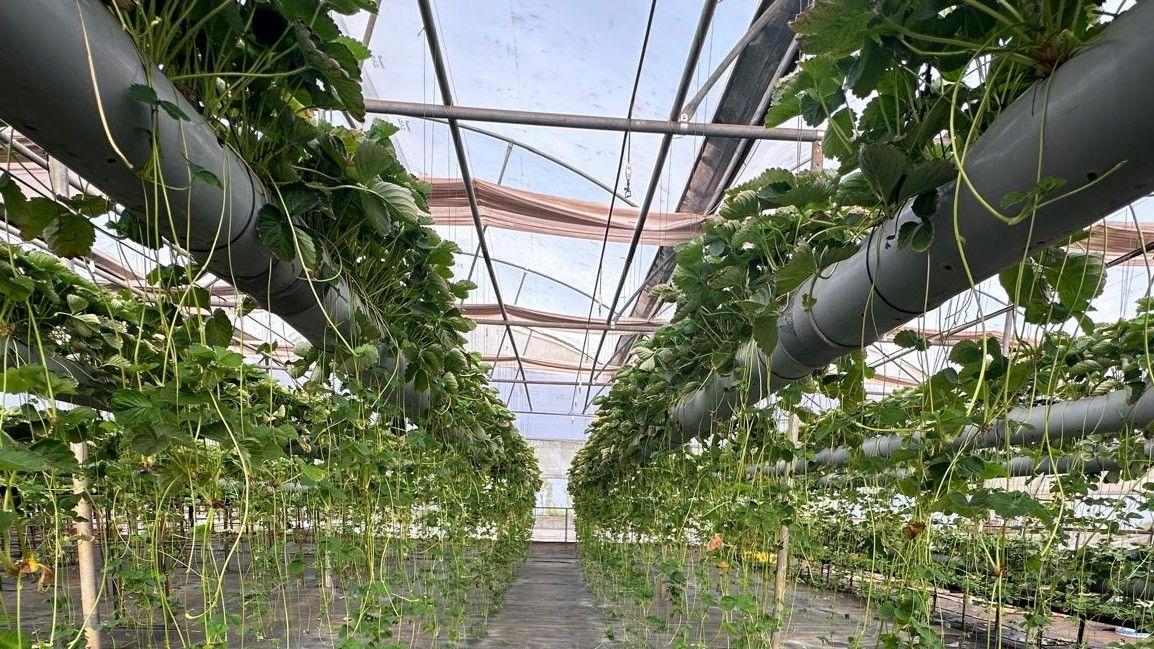
“The vegetation doesn’t come into contact with the soil. We employ massive industrial pipes that are entirely split open to create extended, curved troughs,” Sequeira explains.
Rather than using soil, we fill these containers with a unique coco-peat mixture made completely from coconut husks. We then incorporate an advanced drip-irrigation and misting system to manage micro-climates.
Sequeira and other advocates depend on mother plants from overseas – for the time being.
However, employment at Mahatma Phule Krishi Vidyapeeth (MPKV), an agricultural university located in Maharashtra, could alter that.
MPKV has collaborated with the Bhabha Atomic Research Centre (BARC) for a breeding experiment.
Scientists are employing carefully regulated, minimal-level gamma radiation on plant cells to create consistent genetic changes.
“The objective is to accelerate the creation of India’s first homegrown, climate-resistant strawberry variety that matches the big size and firmness of imported types while naturally enduring Indian heatwaves,” says Dr Darshan Shashank Kadam, assistant professor of Horticulture at MPKV.
He acknowledges that it might take a lengthy period, with outcomes possibly appearing in 10 or 15 years. However, in the short term, they are supporting farmers in different ways.
“We are creating scientific toolkits for farmers. We have already established planting timetables, fertilizer suggestions, and growth regulator applications tailored specifically to the conditions in Mahabaleshwar,” he states.
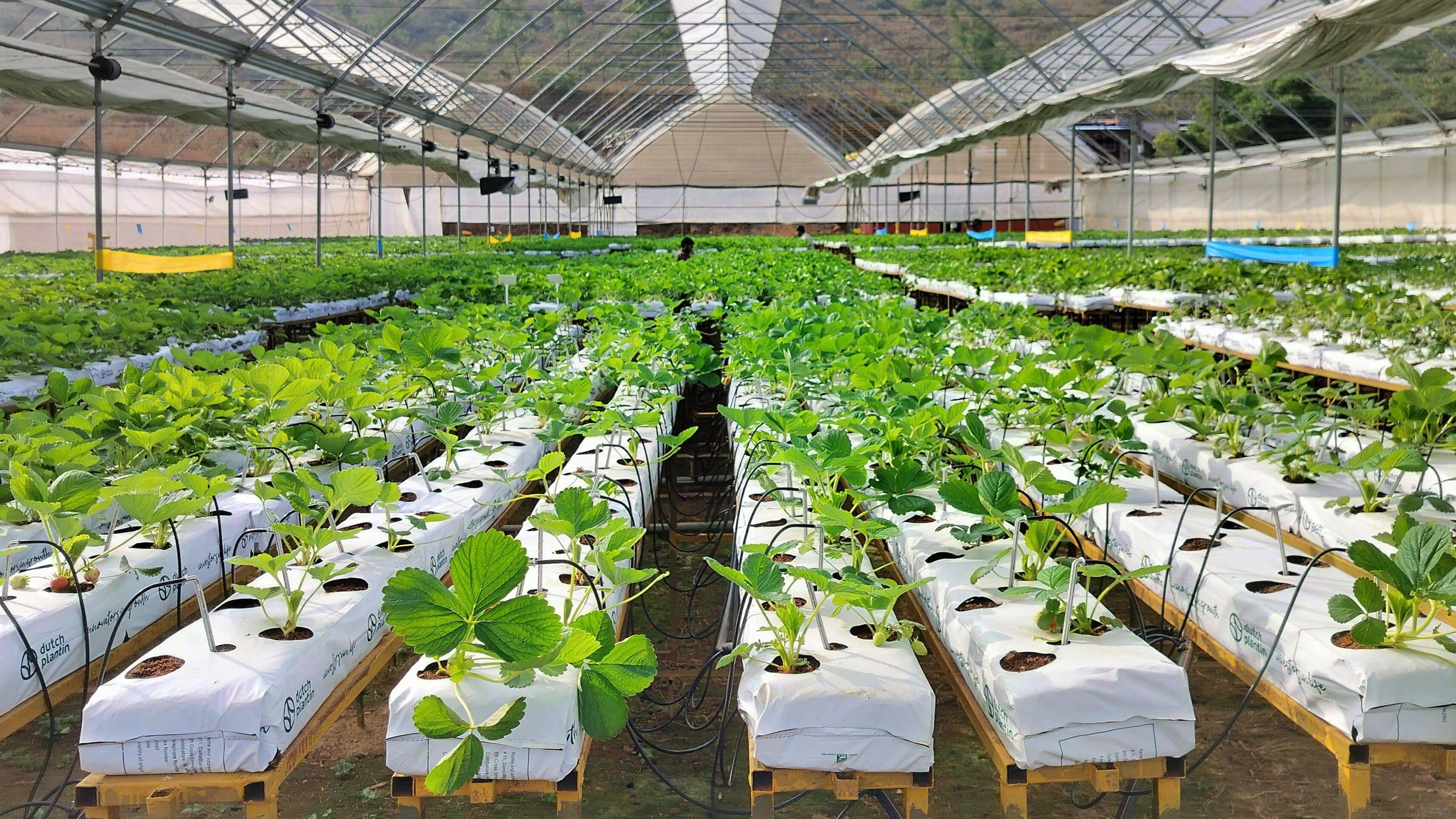
Big agricultural operations with greater resources are adopting innovative technology.
Ketan Yashwant Sodha, the founder and CEO of Berry Fresh Agrotech, began with conventional open-field agriculture but faced challenges due to weather-related losses.
“Over the past decade, it has regularly rained in India during our busiest season – November, December, and the first week of January. When you’re in an open field and your crops are at their highest point, one rainfall can destroy your whole harvest,” he explains.
In 2022, he began exploring hydroponics, a method of growing plants in a controlled environment without soil, where water, nutrients, light, and temperature are carefully managed.
His initial outcomes were not promising.
Sodha says he endured significant losses and experienced several failures.
The soil is lenient; hydroponics is not. If you make an error today, you’ll face a catastrophe the next morning—and recovering from it in hydroponics takes twice as long as in soil.
However, the insights gained from those errors are proving beneficial.
We have tested 19 different types, including rare Japanese ones, and we are the only ones in India testing a particular Dutch variety this season.
Sodha claims that restricting each plant to 750ml of water daily results in “intense, concentrated sugars and fragrances rather than overwatered, tasteless fruits.”
His group also conducts what he refers to as routine “blood tests” on the plants, which includes lab analysis of the leaves and petioles (the stems that connect leaves to the main stem) to determine precise nutrient absorption. This allows him to accurately identify which nutrients and chemicals should be added to the water supply.
By employing a semi-open greenhouse, strawberries can be cultivated throughout the entire year. “For us, it’s not a seasonal fruit,” Sodha mentions.
Now he is prepared to expand.
We have established the trial facility, created the SOPs (standard operating procedures), and developed the farm manual. We are in discussions with investors to scale up to a five-acre site capable of housing 200,000 plants.
The Bhilare family has cultivated strawberries for many years in Mahabaleshwar.
He recalls when the first American types were planted in 1992 and was surprised by the size of the fruit.
Bhilare is affiliated with a Farmer Producer Organisation (FPO) network. They have set up towers at four key points on their land. These towers track weather conditions.
The system utilizes artificial intelligence that analyzes weather information to determine when rainfall will occur. Farmers can then be notified to postpone spraying their crops, preventing costly chemicals from being washed away.
The FPO is also constructing vertical towers, allowing strawberries to be cultivated on a coco-peat medium, with five levels stacked.
“By arranging five pots in a single vertical structure, we can increase our plant density from 25,000 to 125,000 plants per acre. We are essentially expanding our production area by five times on the same plot of land,” explains Bhilare.
However, these investments are either too costly for small farms or pose significant risks.
In 2017, Danavle along with her spouse tried out hydroponic strawberry cultivation.
The experiment was completely successful, and the fruits we cultivated were fully organic. It significantly reduced labor, as workers no longer had to constantly bend over or perform pruning, and it helped us save a considerable amount on medicines and fertilizers.
But they faced bad luck – a powerful cyclone struck Mahabaleshwar that year.
The storm destroyed our whole hydroponic system. After that, we didn’t have the bravery to rebuild it.
Therefore, Sheetal returned to the conventional approach of cultivating strawberries, but with an innovation.
I utilized social media. I shared videos demonstrating how to cultivate strawberries and encouraged tourists to visit my strawberry farm, learn about the process, and pick the fruit themselves. They now purchase directly from the farm. This approach has eliminated the middleman and increased my profits. As a result, I have become an influencer and business owner.




 jasdooit
Leave a comment