
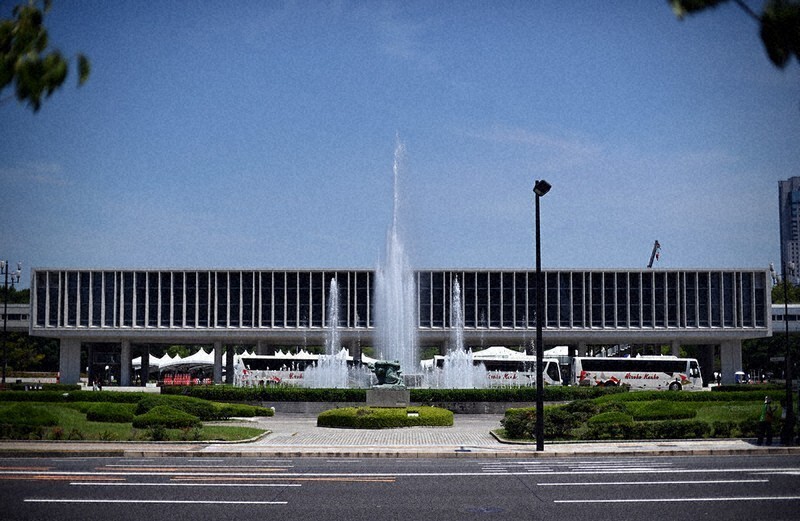
TOKYO — Two television reporters from Hiroshima have transformed their long-term coverage of Japan’s atomic bomb museum, produced by a local station, into a documentary focusing on the preservation of memories from the 1945 bombing.
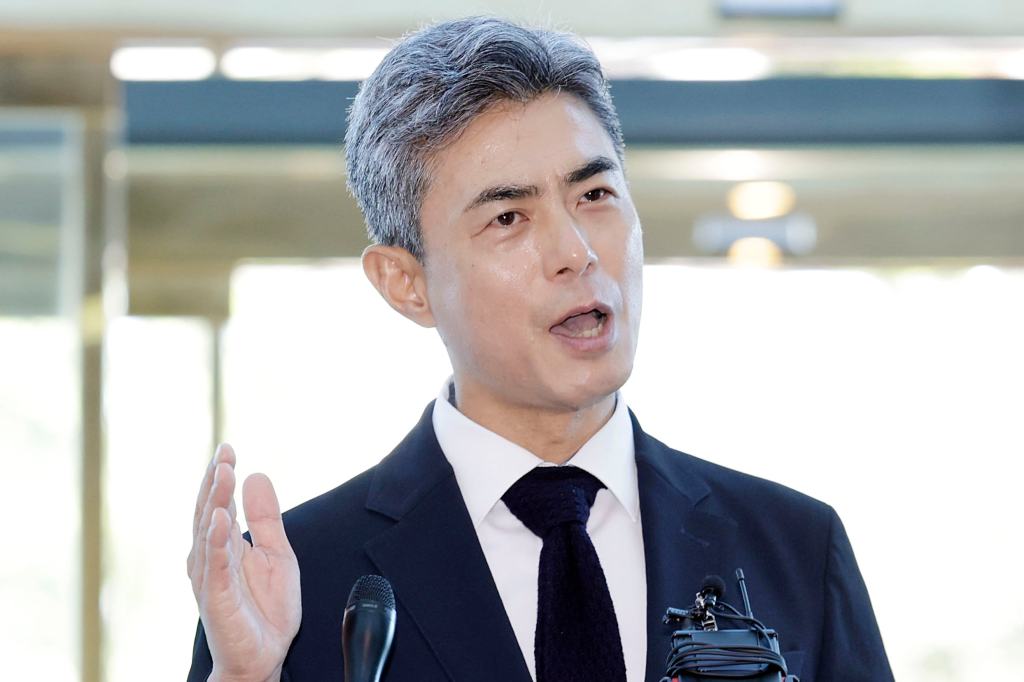
Naoki Tachikawa, 48, one of the film’s directors and producers, discussed the project in a recent conversation with the Mainichi Shimbun. Tachikawa leads the news department at Hiroshima Home Television Co.
The Hiroshima Peace Memorial Museum, which serves as the backdrop for the film, was established in 1955, a decade following the atomic explosion, as a local institution. It contains and showcases over 20,000 artifacts, such as personal effects of those affected by the bomb and common items warped by the heat of the blast. Alongside the displays, individuals who survived the A-bomb, known as hibakusha, occasionally share their experiences at the museum.
The museum stands as a significant location where different perspectives converge, including questions like “How can people deal with the tragedy of atomic bombings that are deeply etched in history?” and “How can people share the lessons learned from these bombings?”
The museum has experienced record-breaking visitor numbers for three consecutive years, with approximately 2.6 million visitors in fiscal year 2025. The visitors consist of children from school groups across Hiroshima Prefecture and beyond, as well as foreign officials who visit Japan and include the museum in their itinerary. As a symbol of Hiroshima, the city that was devastated by an atomic bomb, and as a site promoting the goal of nuclear disarmament, it has made a significant impact.
The movie is called “Genbaku Shiryokan: Kataritsugu mono tachi,” which roughly means “Atomic bomb museum: those who tell the stories.” At the heart of this 101-minute film are clearly “people.” It provides a chronological account of the museum, highlighting the perspectives of its various directors, including its first director, Shogo Nagaoka, who gathered items by hand in the city shortly after the atomic bomb was dropped. Nagaoka died in 1973 at the age of 71. The film does not have a narrator, which emphasizes the power of the voices of the individuals featured in it.
A notable scene features Yoshitaka Kawamoto, who acted as the museum’s eighth director for 10 years starting from 1983, reflecting in 1990 on his position. “These three photographs are all that remain of those from my class,” he says slowly while examining the images. He was present during the atomic bombing in a classroom at what was then Hiroshima First Middle School and was the sole survivor among the 45 students in his class.
“I believe this museum represents a human cry. I hope that people, as individuals, can sense the unheard voices within their hearts. That has always been my desire,” he stated. Kawamoto died in 2002 at the age of 69.
Tachikawa, originally from Yokohama, started working at Hiroshima Home Television in 2001. His mother’s family had their home in Hiroshima. Starting in 2005, he frequently visited the Hiroshima Peace Memorial Museum as a journalist and developed a close relationship with Akihiro Takahashi, who was the museum’s seventh director. Takahashi sustained serious burns during the atomic bombing, and a blackened, deformed nail grew on his right index finger. After Takahashi passed away in 2011 at the age of 80, Tachikawa’s determination to “pass on the story” became even stronger.
When Tachikawa and others examined over 100 hours of footage that had been captured and left at the television station, they discovered raw material that had not been edited into news reports, including Kawamoto’s statement.
They questioned what they should do with the video material. If they intended to create a documentary, a movie instead of a television program would enable people to view it more thoughtfully and also attract audiences beyond Hiroshima Prefecture. With this idea in mind, they started planning two years ago. They decided to focus on the Hiroshima Peace Memorial Museum as the subject, as Tachikawa is convinced that “it was exactly because the museum existed that the world became aware of the atomic bombing.”
Another scene from the movie features Minoru Hataguchi, the museum’s 10th director, leading Fidel Castro, who was president of the Cuban Council of State, in 2003, as Hataguchi reflects on that period.
When Hataguchi discussed his father’s possessions, who perished in the atomic bomb, Castro inquired, “Is your mother in good health?” and “What sort of lives do those who survived the atomic bomb lead?” The incident also clearly demonstrates the impact the museum has on its visitors.
Eighty-one years after the conclusion of World War II, reporting on the atomic bomb that stems from life in the bombed city and conveys the city’s longing for the elimination of nuclear weapons has long encountered the “wall of time.” There are also discussions about dissolving the Japan Confederation of A- and H-Bomb Survivors Organizations, known as Nihon Hidankyo.
Hibakusha are passing away, and there are very few individuals who were teenagers during the bombing and can clearly recount their experiences,” Tachikawa states. “There are numerous challenges, but it is our responsibility to face them, to learn from them, and to share these stories.
Another director of the film, Toshiyuki Saito, 29, reports on the Hiroshima Municipal Government for Hiroshima Home Television. A local from Hiroshima, Saito was deeply affected by the aforementioned archival footage depicting Kawamoto’s account.
“For some unknown reason, the complete footage was kept. It could have been a message from senior colleagues who were on duty then, implying, ‘Save this footage for later use,” Saito says.
He mentions that he also strongly experiences the “wall of time.” “Confronted with the present situation where war remains, atomic bomb survivors are thinking, ‘What will happen once we are gone?’ As the survivors grow older, I believe there are actions we in the media can take,” he states.
The movie is showing at Pole Pole Higashinakano in Tokyo’s Nakano Ward and other venues throughout Japan.
(Opinion Editorial Department, Japanese original by Ken Nakazato)
 jasdooit
Leave a comment