
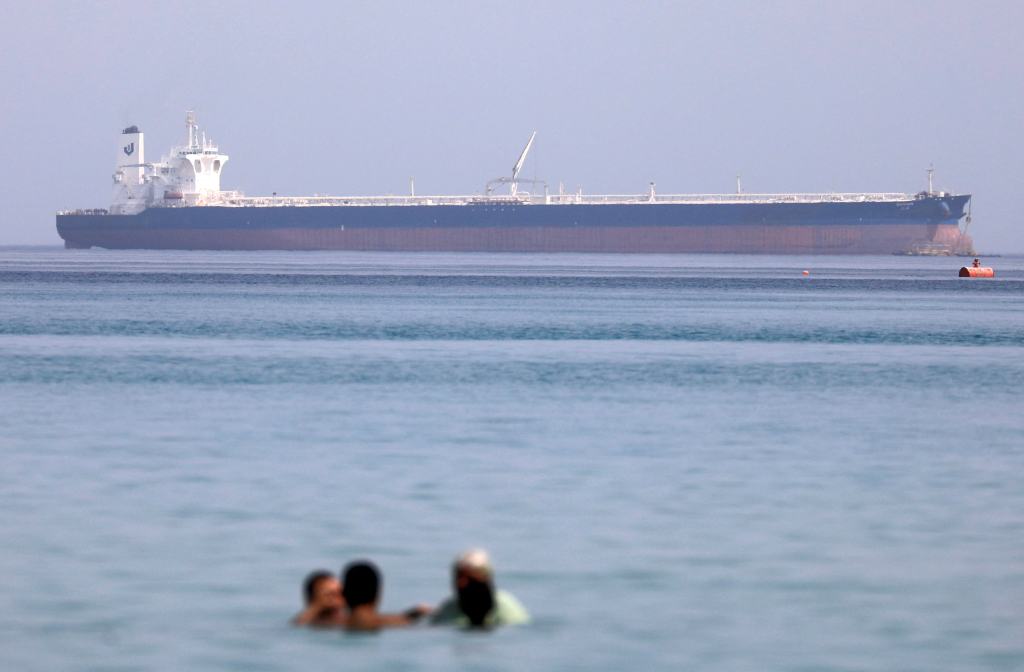
The Egyptian authorities officially announced on the 30th, local time, that two U.S.-owned liquefied natural gas (LNG) ships were targeted by drones at the Port of Damietta, close to the Suez Canal, the day before, and stated, “We will implement appropriate actions to safeguard national interests and security.” After Iran imposed a blockade on the Strait of Hormuz—where about 25% of worldwide oil shipments pass—following the start of the U.S.-Iran conflict in February, the Suez Canal area, which is near Saudi Arabia’s alternative export routes, has also faced risks, leading to significant instability in global energy markets.
Reuters reported on the 31st, “Concerns about the security of oil shipments through the Suez Canal are increasing because of drone attacks in Egypt,” stating, “Potential dangers to the Suez Canal, which has offered Saudi Arabia a safe export path, are heightening market worries.” The global shipping sector, especially, is worried that the Suez Canal—once used as an alternative after Iran blocked the Strait of Hormuz—might also be at risk. Reuters mentioned, “Ships traveling between Asia and other regions may have to take longer routes around the Cape of Good Hope in Africa.”
The Kingdom of Saudi Arabia, whose pathways for crude oil exports are currently at risk, has revealed intentions to form a “multinational naval coalition” comprising 14 nations to safeguard ships and energy transport lines in the Red Sea. As reported by Reuters and DPA, the coalition will consist of Saudi Arabia, Kuwait, Qatar, Bahrain, and other members of the Gulf Cooperation Council (GCC), along with Pakistan, Türkiye, Egypt, and Jordan.
Oman, a member of the Gulf Cooperation Council currently engaged in discussions with Iran regarding the control of the Strait of Hormuz, and the United Arab Emirates (UAE), which has been contesting Saudi Arabia’s influence in the Middle Eastern oil sector, chose not to participate in the coalition. Saudi Arabia is spearheading the coalition’s establishment and intends to serve as its host nation.
The Saudi Ministry of Defense convened a meeting in Riyadh on the same day, with participation from 43 nations and the European Union (EU), to address the formation of the coalition. According to Kuwait’s state news agency, General Khaled Al-Shuraian, Chief of Staff of the Kuwaiti Armed Forces, was present at the gathering. Saudi Arabia stated that the coalition’s objective is to improve maritime security, guarantee freedom of navigation, protect international trade routes and energy supply lines, and defend common maritime interests in the Bab el-Mandeb Strait and the Gulf of Aden.
The Saudi Ministry of Defense said, “Maritime security is a common duty that can be maintained by collaborative military actions, preparation, exercises, and exchange of intelligence,” and emphasized, “The coalition is strictly defensive and does not seek to attack any country or group.”




 jasdooit
Leave a comment