
The government has chosen to remove parking lot operations, warehouse operations, and other industries from the business succession tax deduction beginning next year, while increasing the required management period from 10 to 30 years. This change comes in response to continuous criticism that the business succession tax deduction has been misused as a tool for illegal inheritance. Furthermore, if major shareholders are found deliberately lowering stock prices to minimize inheritance or gift taxes—referred to as “stock price suppression”—the stock value will be raised by a minimum of 30% for tax calculations.
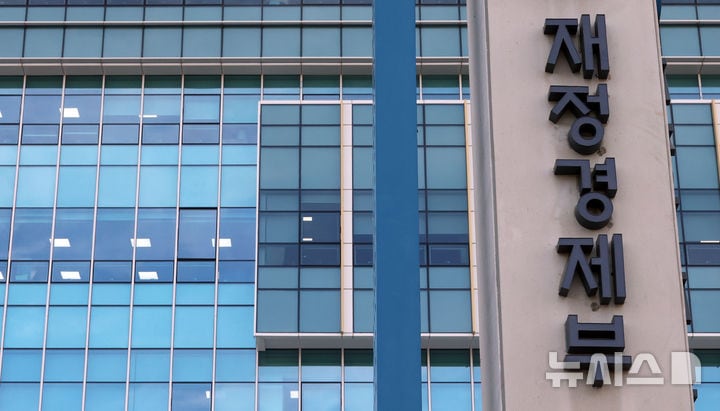
The Ministry of Finance and Economy unveiled the tax reform initiative on the third.
◇Enhanced Criteria for Tax Deduction in Business Succession… The Management Period Needs to Be 30 Years
The business succession tax exemption is a program that provides a reduction of up to 60 billion South Korean won in inheritance tax when taking over small and medium-sized companies that have been operated for more than 10 years. In this update, the government removed parking lot management, warehouse operations, hospitals, pharmacies, supermarkets, and bus/taxi transportation from the list of eligible sectors. For dining establishments, the exemption is available only if they prepare and cook food themselves. Large bakery cafes, which were previously criticized for “loophole inheritance” by selling pre-made bread, will now be eligible only if they bake their own products. However, businesses recognized as “Century Small Business Owners” or “Famous Long-standing Enterprises” will be considered to satisfy the industry criteria.
The requirement for the minimum management period has been increased. The deceased’s management period has been raised from the current 10 years to more than 30 years, and the heir’s post-inheritance management period has been extended from 5 to 10 years. The scope of land deductions has been narrowed. The current range of 3–7 times the building floor area will be reduced to 2–3 times. In the capital region, excluding areas with declining populations, the limit is 2 times, while other regions have a limit of 3 times. A new deduction limit per land area (10 million Korean won per square meter) has been implemented. The government stated, “More than 60% of assets eligible for deductions are currently land,” and added, “Our goal is to reduce incentives for evading inheritance taxes through excessive land holdings.”
To encourage business transition, a new framework has been established to offer tax incentives even when the business is inherited by someone outside the family. Sellers must be the primary shareholders or key contributors who are at least 60 years old and have operated a small or medium-sized enterprise in a qualifying industry for more than 20 years. These sellers will be eligible for a 20% decrease in capital gains tax on shares or business assets, with a maximum benefit of 50 million Korean won per year of operation. Buyers must be individuals, companies that have been active in the same industry for over 10 years, or employees who have worked at the acquired business for more than five years. They can benefit from a 10% reduction in income or corporate taxes, up to 500 million Korean won annually over a five-year period. This policy will be effective for transactions occurring after January 2028.
◇The stock value has risen by a minimum of 30% if stock price suppression is identified
The government also revised the evaluation standards for stocks that are publicly traded, aiming to stop major shareholders from deliberately lowering stock prices to minimize inheritance or gift taxes. If a company meets the government’s conditions indicating possible manipulation of stock prices—such as maintaining a price-to-book ratio (PBR) in the lowest 25% (for KOSPI) or 10% (for KOSDAQ) over the past six years—the National Tax Service will extend the period for valuing the stock from the current four months to a maximum of six years and six months. The stock value will be raised by at least 30%. As higher valuation leads to increased inheritance or gift taxes, this policy is designed to prevent efforts to pay less tax by intentionally keeping stock prices low.
Additional tax support initiatives for businesses were also revealed. The government plans to implement a “domestic production tax credit,” which lowers taxes depending on the level of domestic production and sales for six products that have weak local foundations or significant strategic value. These consist of solar energy, wind energy, secondary batteries, semiconductors, essential materials, and AI robot parts. Particular items and deduction values (eligible item production quantity × standard deduction rate) will be outlined in enforcement regulations. Products from facilities already benefiting from integrated investment tax credits will not be eligible for double benefits. To qualify, companies must fulfill domestic production and sales criteria, with local firms receiving enhanced support, featuring deduction amounts increased by 1.1–1.5 times. The application period spans from January 1, 2027, to December 31, 2036—totaling 10 years.
Furthermore, a three-year transitional period has been implemented to progressively eliminate special tax exemptions and content production cost tax credits for firms that exceed the small and medium-sized enterprise classification. This is intended to address the “Peter Pan syndrome,” in which companies refrain from expanding to maintain government assistance and tax advantages. A representative from the Ministry of Finance and Economy mentioned, “At present, small and medium-sized enterprise benefits cease immediately after a five-year grace period upon graduation. In the future, these benefits will be reduced gradually over three years before being fully discontinued.”



 jasdooit
Leave a comment