
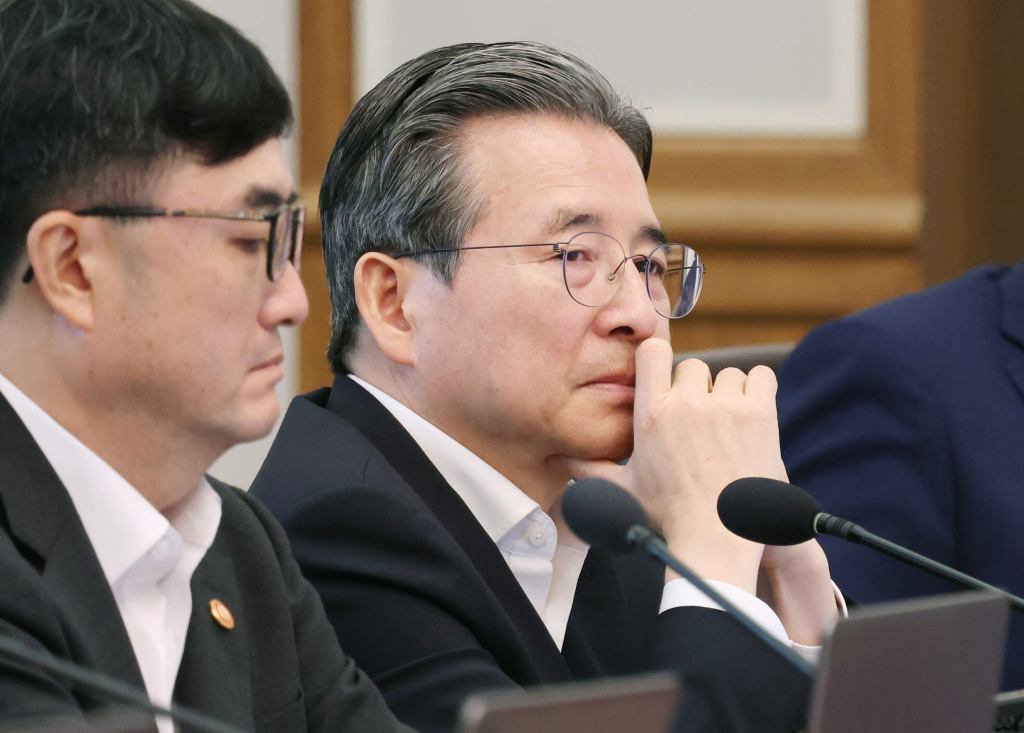
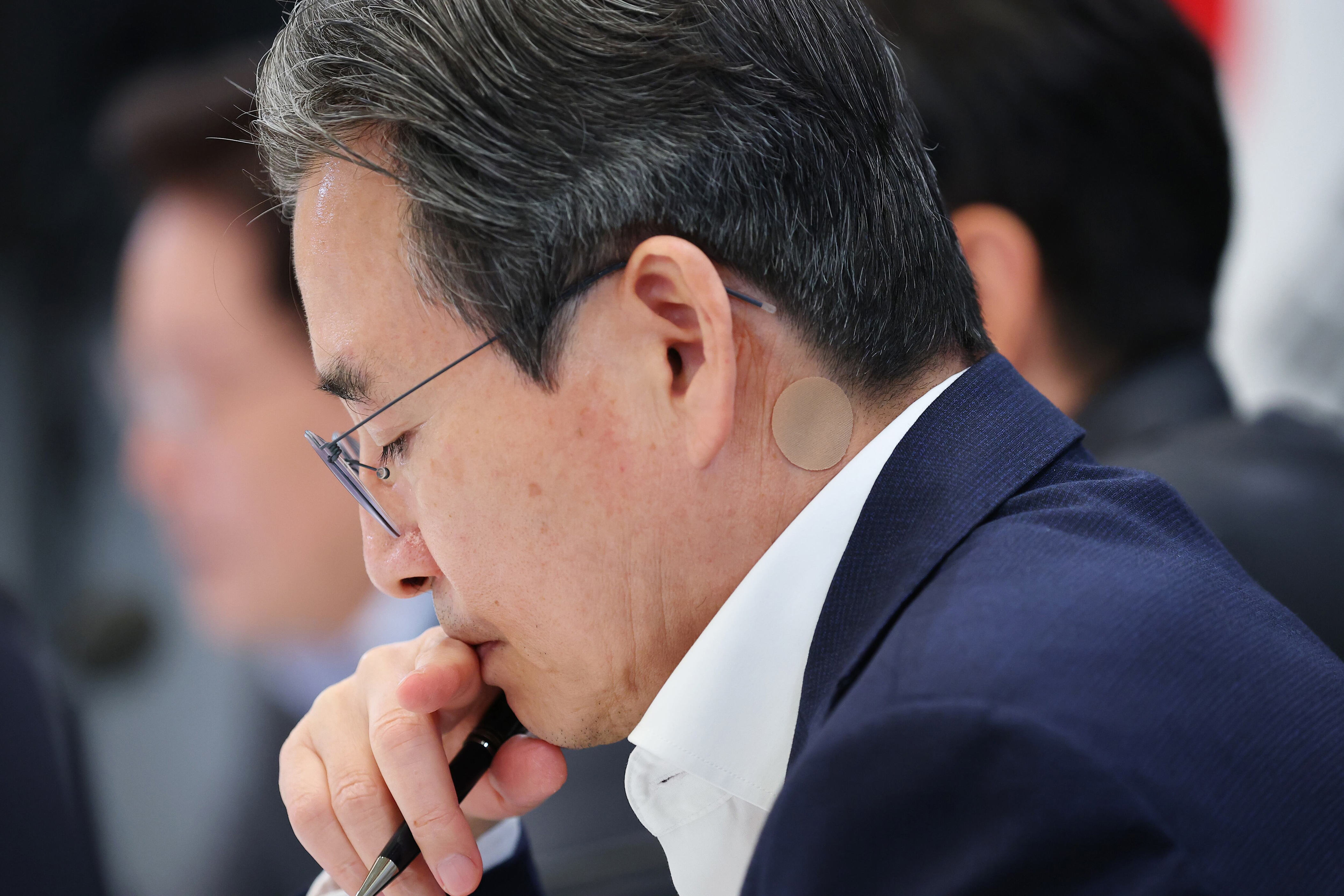
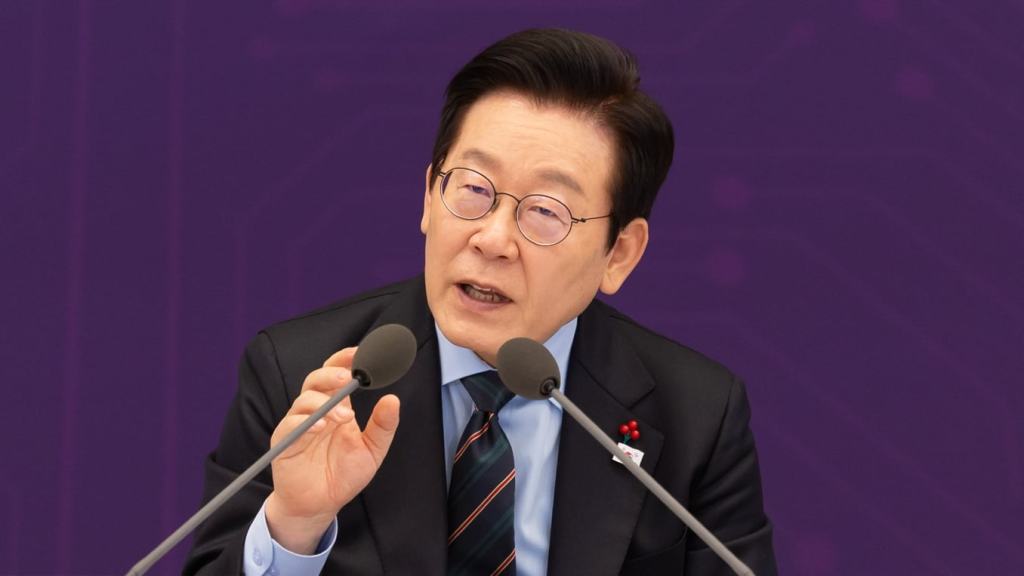
The Democratic Party of Korea, the People Power Party, and other political groups from across the spectrum have questioned Kim Yong-beom’s accountability as the presidential chief of staff for policy in relation to the introduction of single-stock leveraged exchange-traded funds (ETFs), which have been blamed for causing dramatic stock price swings. With growing concerns from international media about the South Korean stock market and worsening public sentiment due to substantial losses by fund investors, some voices inside Cheong Wa Dae have stated, “It’s time for Chief Kim to assume responsibility.” Nevertheless, President Lee Jae Myung did not specifically address the issue on the 5th, two days after returning from his trip to South America.
A former leader of the Rebuilding Korea Party, Cho Kuk, posted on Facebook that day, “The current crisis stems from a failure in state-controlled finance, which is the result of the government’s policy approach led by Chief Kim Yong-beom.” He continued, “As the ruling Democratic Party remains quiet, I will clearly express my views as part of the ‘red team’: accountability should be placed on Chief Kim, Yoon Chang-ryeol, the Minister of the Office for Government Policy Coordination, Lee Eog-weon, the Chairperson of the Financial Services Commission, and Lee Chan-jin, the Governor of the Financial Supervisory Service.”
According to official statements, the Democratic Party has taken a stance against calls for a parliamentary investigation, emphasizing, “Addressing the crisis is the top priority.” Nevertheless, within the party, significant frustration is being observed towards Cheong Wa Dae and the government’s approach, including that of Chief Kim. The party argues, “There was no prior discussion between the party and the government regarding the introduction of leveraged ETFs, and we were not adequately informed.”
Inside the ruling party’s National Policy Committee, certain legislators believe that Chief Kim’s resignation is essential to calm investors who are tired of frequent drastic fluctuations in stock prices. Several members of the Democratic Party’s National Policy Committee, who asked to remain anonymous, said to this newspaper, “Isn’t it public opinion that those accountable for this crisis should resign? It’s a scenario where someone needs to clearly take responsibility.”
Discussions about responsibility towards Chief Kim have also started inside Cheong Wa Dae. During a meeting in Brazil on July 28, Chief Kim, who traveled abroad with the president, remarked, “The high fluctuation in our stock market is related to the active investment behavior of individual investors.” At that moment, the People Power Party condemned this as an “informed comment transferring fault to individuals,” while staff members at Cheong Wa Dae who stayed in South Korea reportedly voiced worries that “policy leaders blaming the public might encounter resistance.”
Nevertheless, analysts generally believe that President Lee is unlikely to replace Chief Kim. A Cheong Wa Dae representative stated, “I am not aware of any conversation regarding Chief Kim’s role. This is the moment to implement and proactively address measures for both the stock market and real estate, rather than assigning fault.” Another representative noted, “If Chief Kim resigns, it would appear that Cheong Wa Dae is acknowledging responsibility for this crisis.”
Inside Cheong Wa Dae and the government, several people believe that criticism is excessively directed at Chief Kim. A member of the ruling party remarked, “When the single-stock leveraged ETF was introduced, there was a conflict in that leveraged products for local stocks were only available in foreign markets. The decision was made by collecting opinions from various government and external parties, so blaming Chief Kim alone is ‘scapegoating.’”
In reference to Lee Chan-jin’s comment in June, “I regret not stopping the leveraged ETFs even if I had to lie down and protest,” some inside Cheong Wa Dae view it as a “last-minute effort to avoid accountability.” People Power Party floor leader Jeong Jeom-sig repeated demands for a legislative investigation, stating, “This is not about political conflict but a measure to restore confidence in the market. Shouldn’t we bring together key individuals—Chief Kim, Deputy Prime Minister for Economic Affairs Koo Yun-cheol, and Chairperson Lee Eog-weon—and ask why single-stock leveraged ETFs were introduced so quickly and carelessly?”
On the same day, Chief Kim met with Seoul Mayor Oh Se-hoon for lunch to address real estate matters, including strategies for increasing housing supply. According to those present, Mayor Oh stated, “Through redevelopment initiatives, we can provide an additional 85,000 households by 2031. If we ignore redevelopment and reconstruction, there won’t be a solution. Please share this with the president.” Mayor Oh also proposed relaxing guidelines from the Ministry of Land, Infrastructure and Transport regarding the required ratio of industrial facilities in quasi-industrial areas to enhance housing availability, which Chief Kim reportedly acknowledged, asking, “Was that a guideline from the Ministry of Land, Infrastructure and Transport?” Earlier, Chief Kim had pointed out quasi-industrial zones in Yeongdeungpo and Guro, Seoul, as possible locations for housing development, saying, “We just need to build.”

 jasdooit
Leave a comment