
The Tam Anh Research Institute and the RNA Institute at the University of New South Wales (UNSW) in Australia are working together on biomedical research involving RNA, such as possible vaccines for lung cancer, colorectal cancer, and influenza.
Two organizations recently entered into a partnership agreement in Sydney, with the presence of Vietnam’s Consul General, during the official visit of Party General Secretary and State President To Lam to Australia from August 9 to 12.
 |
|
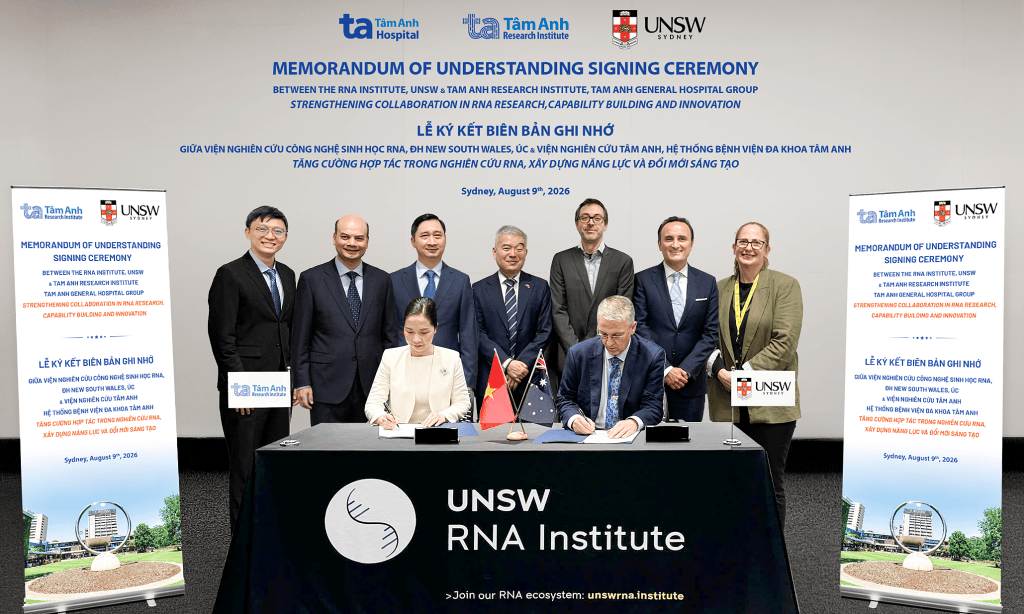
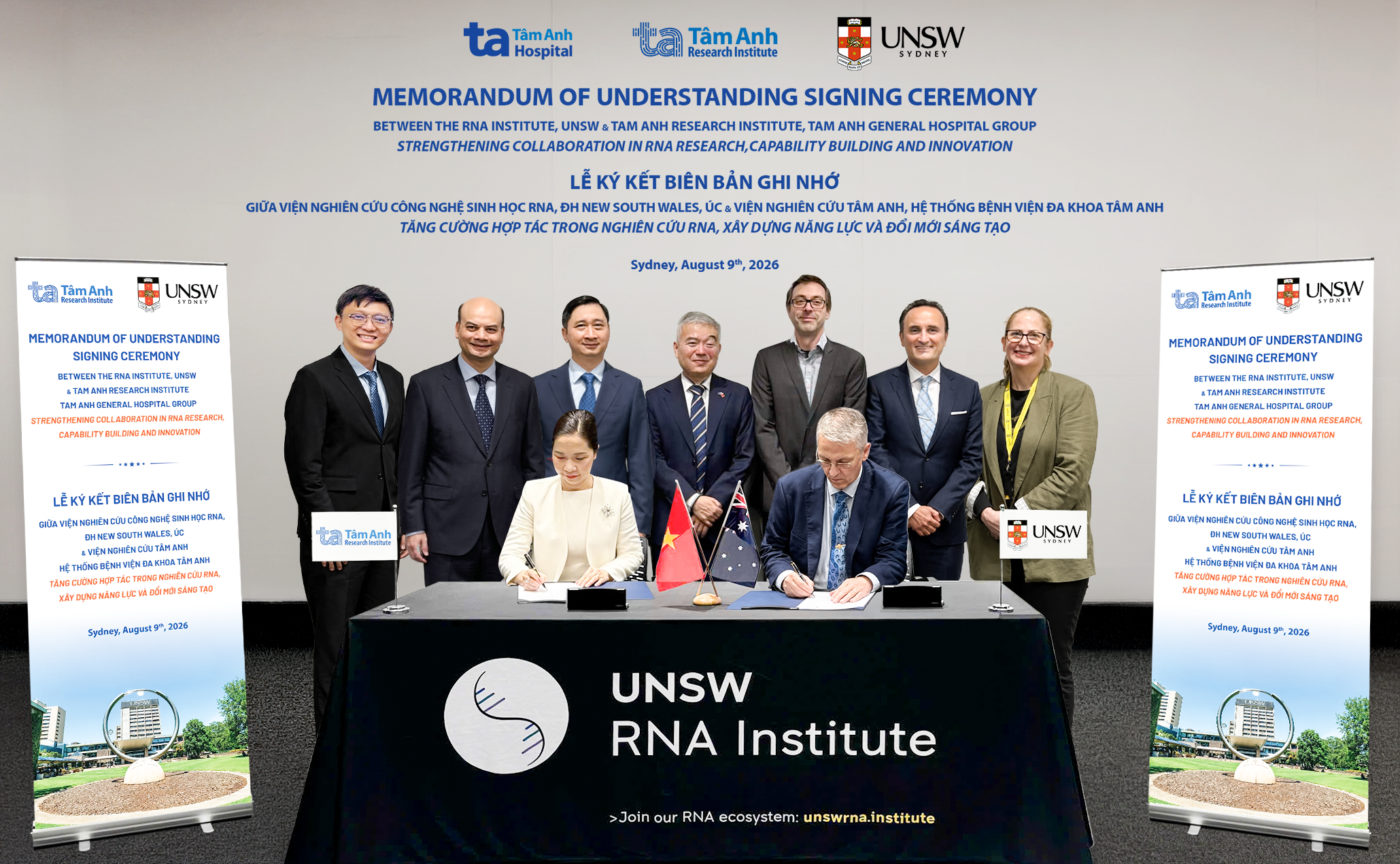
Attendees and representatives from both organizations during the signing event on August 9, 2026. Photo provided by Tam Anh Research Institute |
The collaboration centers around two initiatives: creating an mRNA flu vaccine and tailored cancer vaccines for individuals diagnosed with lung and colorectal cancer, which are significant health issues in Vietnam and the Asia-Pacific area. Tam Anh mentioned that this marks the first instance where a Vietnamese research institution has collaborated with a leading Australian university’s institute focused on RNA biomedical technologies, based on the principles of shared investment, joint research, and co-publication of products.
The two parties intend to carry out training sessions and share expertise, create research guidelines, and enhance skills in RNA design, production, purification, quality assurance, and delivery. They will subsequently investigate preclinical research and clinical testing of RNA-based therapies in Vietnam.
Professor Pall Thordarson, head of the UNSW RNA Institute, mentioned that the collaboration is intended to enhance Tam Anh’s expertise in RNA research, preclinical development, manufacturing, adherence to GMP (Good Manufacturing Practice) guidelines, and clinical trials.
He further mentioned that the significance of the collaboration extends beyond technology sharing, but also involves jointly creating data and solutions that are appropriate for the disease features found in both Vietnamese and Southeast Asian communities. The quantity of patients and the biological traits of diseases in Vietnam could help fill existing data gaps in international databases utilized for developing RNA-based treatments.
This research could bring immediate benefits to Vietnam while enhancing the RNA data and research capabilities of both parties within the Asia-Pacific region. The collaboration presents an opportunity for Vietnamese organizations to gradually gain expertise in RNA technology, a critical foundation for numerous advanced vaccines, biologics, and treatments. Through this initiative, Tam Anh Research Institute aims to become more deeply involved in the value chain of one of the fastest-expanding biotechnology sectors globally.
The collaboration aims to support Vietnamese scientists in building knowledge throughout the RNA technology spectrum, including research and development, clinical use, and possible local production.
“Vietnam should not limit itself to being just a destination for manufacturing; it is well-placed to emerge as a hub for designing and assessing diseases and population groups that the global research network has overlooked,” Professor Pall stated.
Nguyen Thanh Tung, the Consul General of Vietnam in Sydney, stated, “Enhancing local research and technological capabilities in emerging areas like RNA is crucial for scientific progress and also supports Vietnam in boosting its readiness and ability to handle upcoming public health issues.”
Dr. Phuong Le Tri, executive director of Tam Anh Research Institute, stated that the collaboration would provide Vietnam with a development framework encompassing fundamental research, technological advancement, preclinical testing, clinical trials, and possible local production.
RNA (ribonucleic acid) transmits genetic data and assists cells in creating proteins. Technologies based on RNA involve mRNA used in vaccines and certain treatments, siRNA for controlling genes associated with diseases, and guide RNA (gRNA) utilized in gene-editing processes.
These innovations are being explored for use in cancer treatment, genetic conditions, immune-related illnesses, rare ailments, and various fields within biomedical science.
Professor Pall mentioned that Vietnam has the potential to play a significant role in RNA research within the Asia-Pacific area. He highlighted the nation’s involvement in mRNA vaccine clinical trials and the World Health Organization’s acknowledgment of Vietnam’s vaccine regulatory framework at Maturity Level 3.
He also highlighted Tam Anh’s research facilities, which consist of 68 research locations affiliated with the Tam Anh General Hospital Group and almost 300 VNVC vaccination centers across the country. The institution collaborates on research with Stanford University and the University of Oxford and is involved in clinical trials, such as VISTA-1, which examines RBS2418, an oral immunotherapy for individuals with advanced colorectal cancer.
“We regard Tam Anh Research Institute“As a top contender for forming a collaboration that will have a long-term and significant effect on the advancement of RNA research and technology in the Asia-Pacific region,” Professor Pall stated.
The collaboration aims to enhance research capabilities within Vietnam’s biomedical field and foster local proficiency in RNA-based vaccines and treatments.
Vietnam and Australia began diplomatic relations in 1973 and elevated their relationship to a Comprehensive Strategic Partnership in March 2024. Bilateral trade amounted to approximately $14 billion in 2025, positioning Australia as Vietnam’s seventh-largest trading partner and Vietnam as Australia’s 10th-largest trading partner.




 jasdooit
Leave a comment