
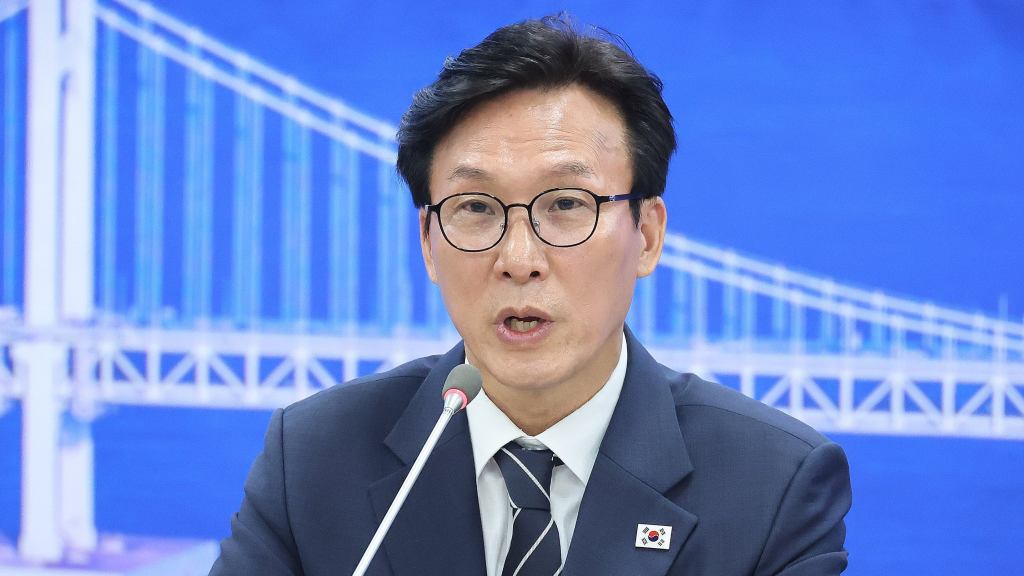
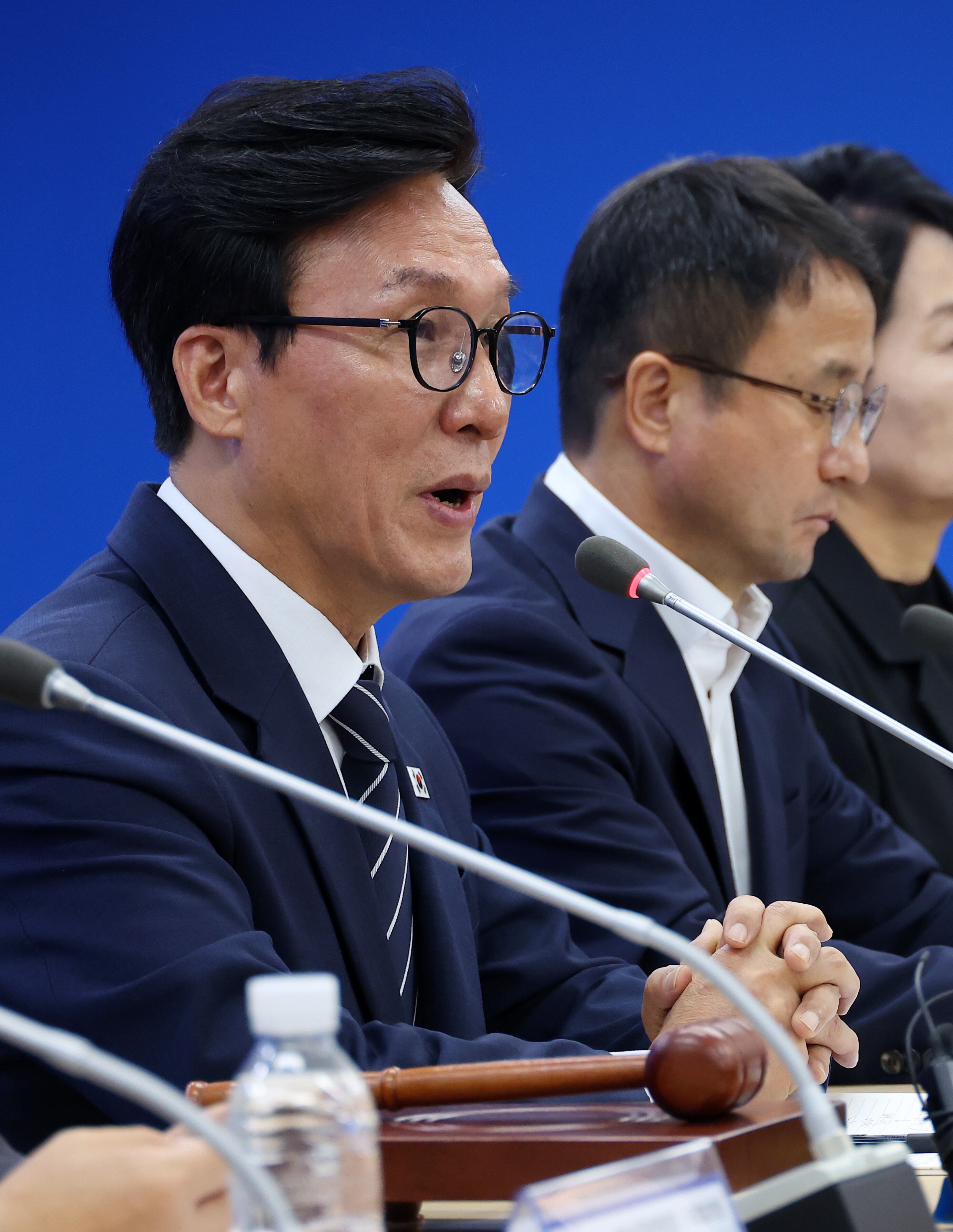
Leader of the Democratic Party of Korea, Kim Min-seok, on his visit to Busan on the 19th, criticized Chief Justice Jo Hee-de for submitting a written suggestion to appoint a new judge without first discussing it with President Lee Jae Myung. He described this as “the behavior of a misbehaving student asking to be expelled” and called for Jo’s immediate departure. Kim labeled Jo’s independent recommendation as “judicial interference” and warned of a party-wide initiative for “judicial reform.”
Previously, Chief Justice Jo suggested Son Bong-gi, who serves as the Presiding Judge of the Daegu District Court, and Kim Sung-soo, the Presiding Judge of the Seoul High Court, for judicial positions to the President, deviating from the traditional method of face-to-face discussions.
◇ Noting the consolidation of internal party support, taking the lead in political matters
At his initial Supreme Council gathering, Kim remarked, “Seeing the Chief Justice Jo Hee-de situation brought back memories of former Prime Minister Han Duck-soo,” and noted, “He has consistently breached legal protocols by intentionally postponing judicial appointments and now used an unlawful method.” Kim criticized Jo’s behavior as “unlawful judicial actions” that violated established traditions of customary dialogue with the President.
Kim stated, “The Democratic Party has completed prosecutorial reform. We will now move forward with judicial reform, beginning with Chief Justice Jo’s interference.” He added, “Jo needs to step down or issue an immediate apology. Otherwise, the entire judiciary should take action. The South Korean judiciary will not evade the powerful tide of reform.”
Sources in political circles suggest that Kim’s intense statements about the judiciary’s leadership may be intended to energize the party’s more conservative supporters. Some experts view this as a calculated effort to reinforce authority within the party, especially against the faction supporting Jung Chung-rae, which was involved in the party’s convention. Now that prosecutorial reform has been completed, focusing on the judiciary might help clarify the party’s ideological stance.
Kim claimed that Jo had “committed another legal violation to conceal previous judicial, political, and public misconduct,” likening him to “a troublemaking student smashing windows and pleading to be suspended.” He described Jo as “not a Chief Justice but a ‘Director of Legal Technology,’” accusing him of interfering with legal procedures to avoid responsibility.
Kim further remarked, “Chief Justice Jo did not maintain judicial power during the insurrection and demonstrated partiality in cases involving election interference. As the most incompetent Chief Justice since independence, Jo should resign.”
Although Kim referred to “impeachment” in relation to Chief Justice Jo, he did not specify whether the party would officially proceed with it. Rather, he encouraged judges to release a statement criticizing Jo and requested a judicial meeting to address his resignation.
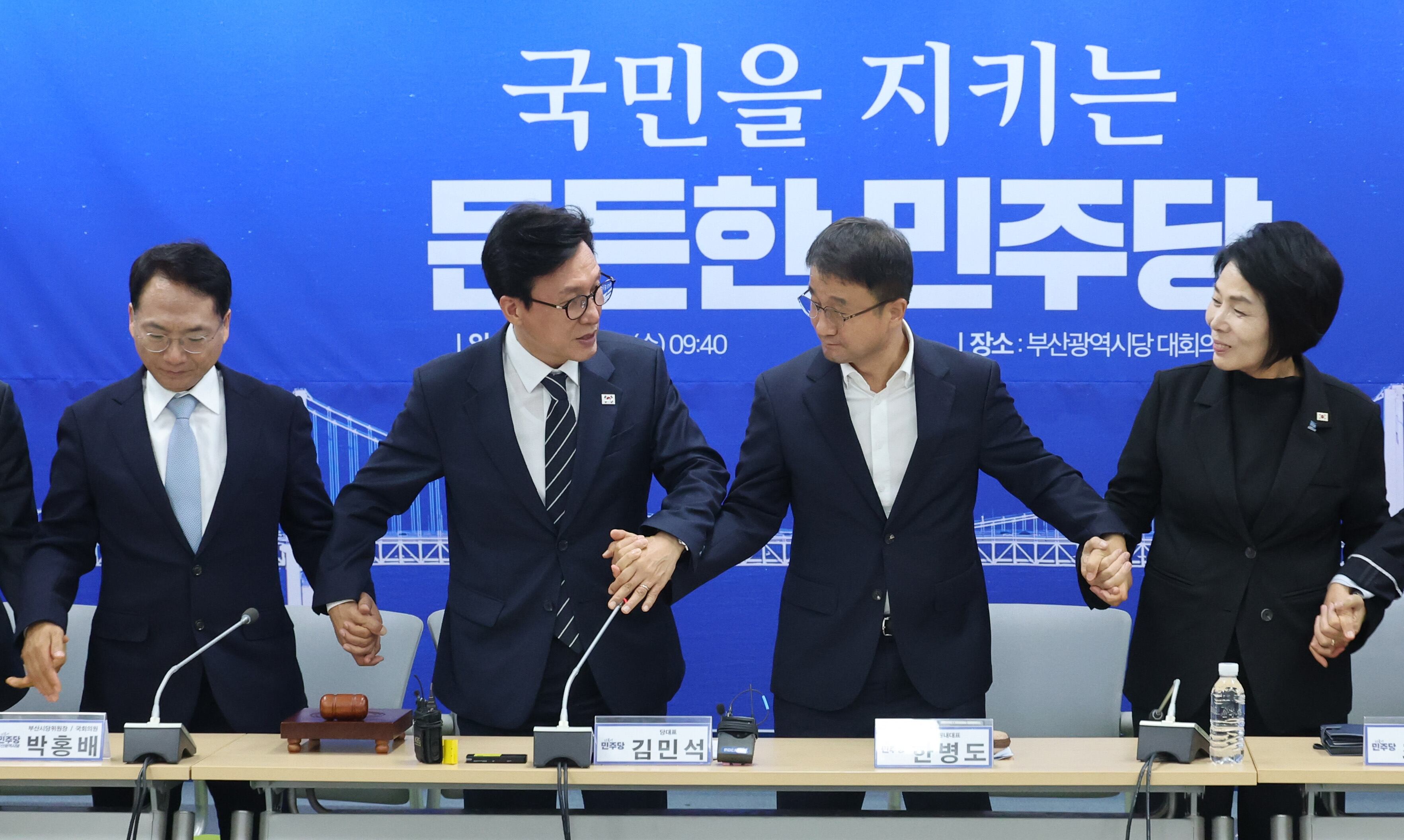
◇ The challenge of pursuing impeachment… A detour approach of urging resignation
Some members of the party see this as a practical strategy for the newly introduced “Kim Min-seok leadership.” While the Democratic Party has a majority and could approve an impeachment motion on its own, meeting the Constitutional Court’s requirements is still difficult. The party had previously attempted to impeach Han Duck-soo during the Yoon Suk-yeol administration, but the effort was rejected in March of last year.
A member of the ruling party stated, “If the new leadership pushes for impeachment and it is denied by the Constitutional Court, the consequences will be on them. Therefore, indirectly urging resignation appears to be a wise approach.”
Floor Leader Han Byung-do commented, “Chief Justice Jo delayed the appointment of judges for 209 days and, without consulting the President, sent a document to the Legislation and Judiciary Committee the day before their meeting.” He further stated, “The Supreme Court suddenly referred cases involving Kim Keon-hee, Han Duck-soo, and Lee Sang-min to the full court after long delays. While the case regarding the President’s Public Official Election Act was overturned in nine days after reviewing 70,000 pages, the insurrection trial remains inactive. What has happened to the standard of quick trials they previously urged the President to adopt?”
Han stated, “The Democratic Party will examine these matters in the interest of the public during the plenary session of the Legislation and Judiciary Committee. The National Assembly will not serve as a mere formality.”


 jasdooit
Leave a comment