
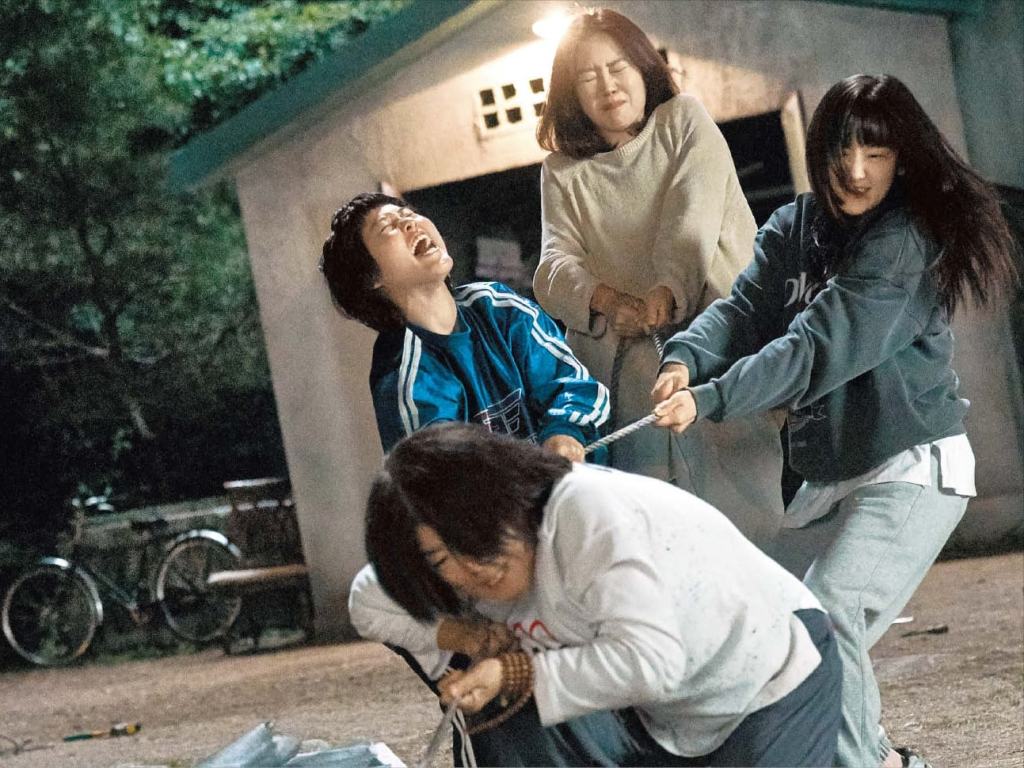
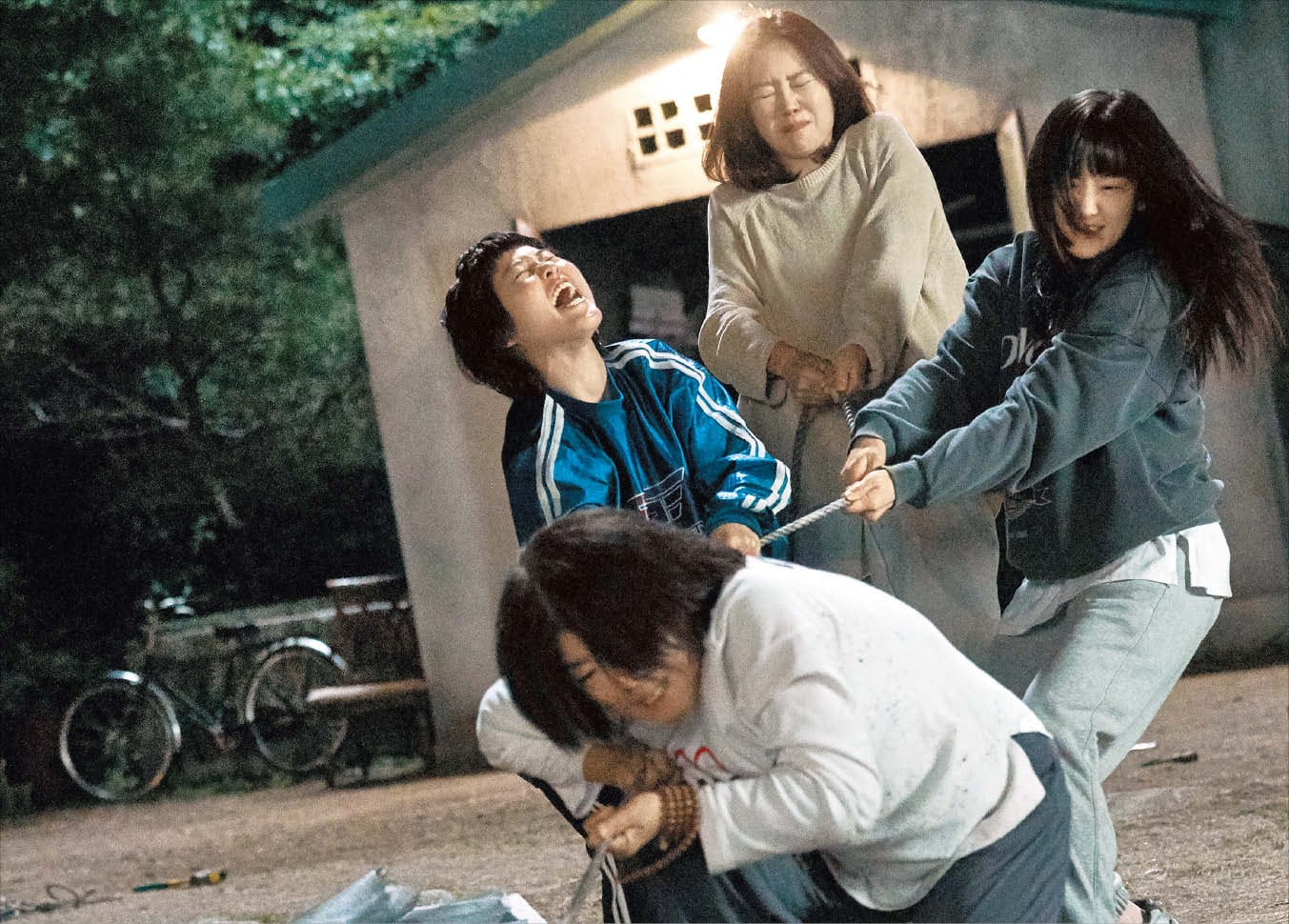
Ok-sil (Lee Jeong-eun), a woman who raised four daughters through her sewing skills, loads her three daughters—Jang-joo (Gong Hyo-jin), Young-joo (Park So-dam), and Dong-joo (Lee Yeon)—into a Bongo van and departs for Gyeongju, North Gyeongsang Province. Though framed as a trip, the journey is actually a cover for avenging their youngest sister, Kyung-joo, who was killed eight years ago by a serial killer, Byun Yo-han. Their plan to abduct the killer and bury him deep in Gyeongju unravels as unexpected variables emerge and long-hidden truths surface.
A harrowing tale of vengeance and a meticulous family drama, “The Journey to Gyeongju” has maintained a top position in the box office dominated by blockbuster foreign films and animations, a rare feat for a Korean feature. It is the second film by director Kim Mi-jo (37), whose debut “Gull” (2021) won the Grand Prize at the Korean Competition section of the Jeonju International Film Festival. The film has been praised for its uniformly strong performances, Kim’s screenplay delving into the darker side of vengeance that infiltrates family life, and its nuanced exploration of unresolved trauma. In a recent interview with the Chosun Ilbo, Kim remarked, “I’m drawn to people who keep pushing forward even when others tell them to stop,” adding, “This story is about characters who defy systems and cling to their own convictions.”

“The Journey to Gyeongju” incorporates autobiographical elements from Kim’s life. The youngest of four sisters, Kim conceived the film during a family trip to Gyeongju over a decade ago. The memory of her family donning matching blue raincoats bought for 2,000 Korean won at a convenience store to escape a rainstorm became the seed for the screenplay. Kim described Gyeongju, where tombs, tourists, death, and life coexist, as radiating a “grotesque yet mystical energy.”
The second sister’s law student background reflects Kim’s own brief aspiration to study law, while the third sister’s portrayal as a pro wrestler is vividly inspired by Kim’s eldest sister, five years her senior, who was a professional wrestler. It was this sister who encouraged Kim to pursue film after she struggled with her major at a teacher’s college. She also appeared as an actor in “Gull.” Kim studied film as a minor at Konkuk University and later majored in directing at Dankook University’s Graduate School of Film and Contents. “I thought only special people made films,” she said, “but the thrill of creation—even with worsening hair loss—was too addictive to resist.”
Casting the killer, a character devoid of sympathy, proved challenging. Actor Byun Yo-han, connected through producer Park Sun-hye, stepped in after initial struggles. Kim was initially taken aback by Byun’s striking appearance, which clashed with the antagonist’s ruthless persona. The production team used yellowed dental prosthetics and a wig to transform him. Through acting and makeup, Byun embodied a killer capable of senseless violence, crawling and sprinting through scenes.
Beneath its veneer of revenge, “The Journey to Gyeongju” explores the universal desire for happiness, though characters differ on its path. Ok-sil believes killing the killer will bring peace, while Jang-joo insists forgetting is the only way forward. Meanwhile, the killer himself finds fleeting joy in a free bowl of hangover soup, declaring, “Ah, happiness.” The film avoids melodrama, instead highlighting these contradictions with quiet power.
In the climax, Ok-sil confronts her greatest fear: not the killer, but her own wavering resolve. Whether her final choice is justified is left to the audience. Kim noted, “I have many stories I want to tell, but how to infuse them with philosophy or perspective remains to be seen,” adding, “I plan to keep pushing boundaries—no half-measures.”



 jasdooit
Leave a comment