
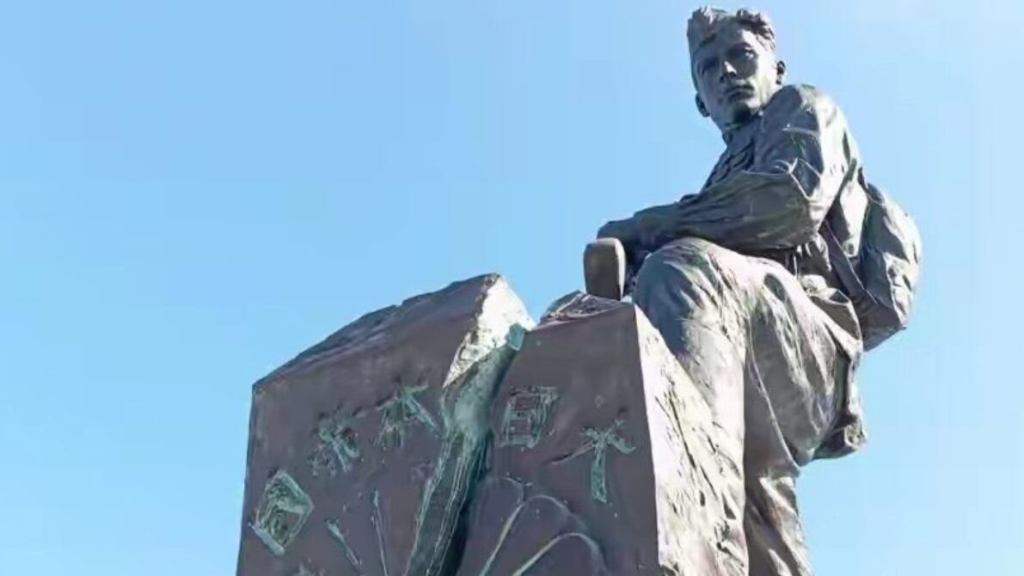
Russia and Japan’s conflict continues to escalate. Following Russian President Vladimir Putin’s surprise visit last month to Iturup Island (Japanese name: Etorofu Island, part of the Northern Territories) in the disputed Kuril Islands, relations have rapidly deteriorated. Now, Japan is strongly protesting after Russia erected a statue depicting the destruction of Japan’s chrysanthemum crest, a national symbol.
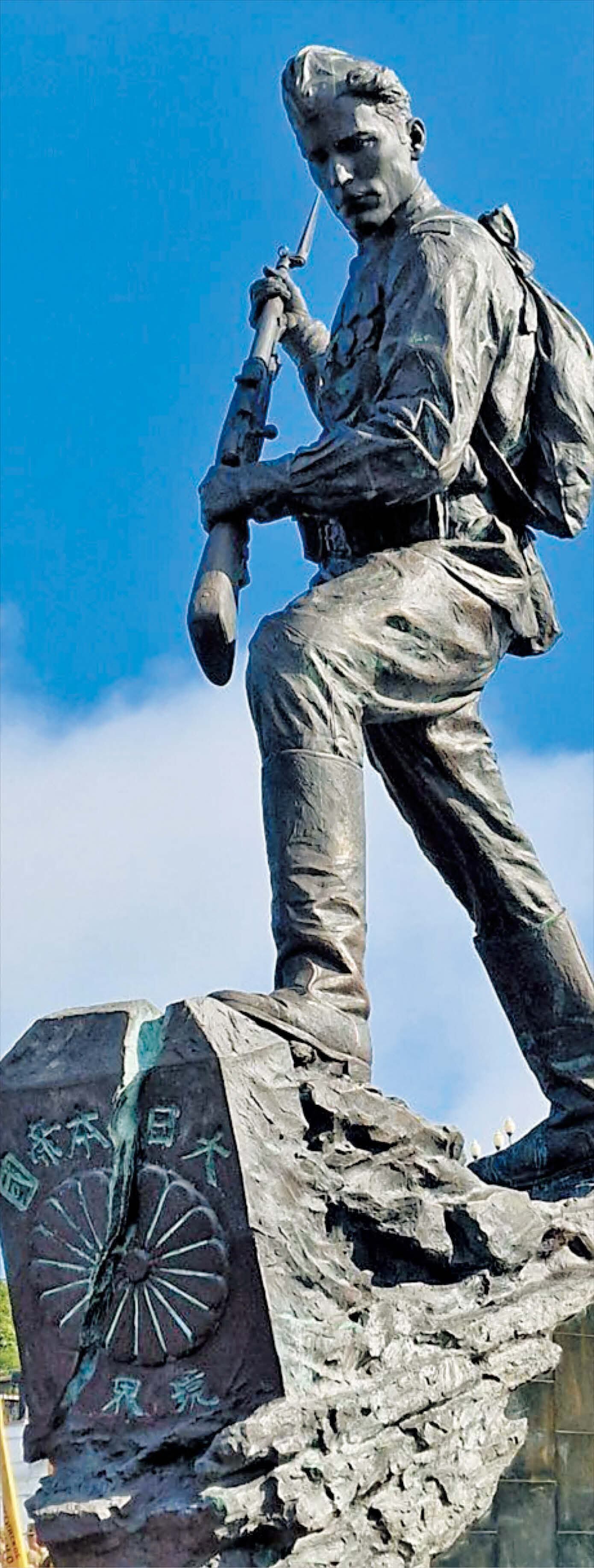
On August 4, the Khabarovsk Regional Government and the Russian Military History Association, acting on Putin’s orders, installed a large monument along the Amur River commemorating victory over Japan. The 15-meter-tall statue depicts a Soviet soldier smashing a boundary marker engraved with the chrysanthemum crest using the butt of his rifle. According to the Russian Military History Association, the marker, inscribed with the Chinese characters for “Empire of Japan Boundary,” replicates a historical Russo-Japanese border marker from Sakhalin Island. Russia claims the chrysanthemum crest symbolizes “militaristic Japan.”
The Japanese government, however, strongly rejects this, stating the crest remains in use by the imperial family. The Japanese Consulate General in Khabarovsk requested the removal of the chrysanthemum crest portion before the unveiling ceremony, but the request was denied. On August 5, Prime Minister Sanae Takaichi posted on X: “The chrysanthemum crest is widely recognized as a symbol of Japan, and a monument depicting its destruction is absolutely unacceptable.” She added, “This concerns the sentiments of the Japanese people. The government has strongly demanded its removal and will continue to do so.”
This latest Russo-Japanese conflict follows the “Kuril Islands clash” as a second round. Japan renounced claims to the Kuril Islands in 1951 after its defeat in World War II but asserts that the four islands northeast of Hokkaido are “inherent Japanese territory” not part of the Kurils. On the day of Putin’s unannounced visit to Iturup Island, Takaichi stated, “This has wounded the sentiments of the Japanese people and is absolutely intolerable. We strongly protest,” prompting Russia to summon the Japanese ambassador for a rebuttal.
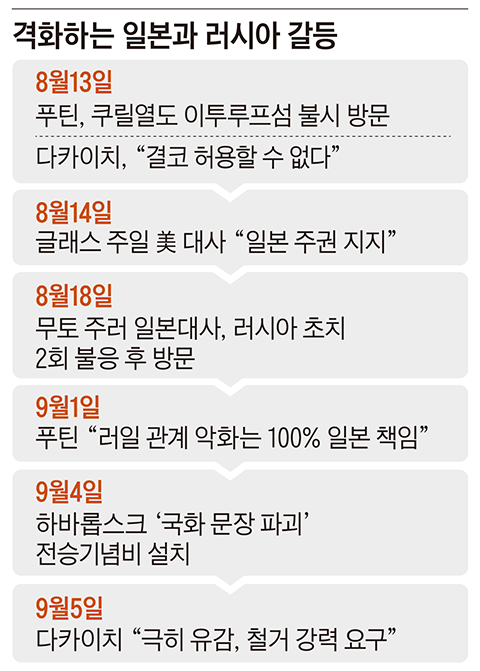
On August 1, Putin directly criticized Japan during a visit to Kyrgyzstan, stating, “Japan has unilaterally worsened relations without any provocation from our side. This is 100% their fault.” This remark targeted Japan’s participation in sanctions against Russia and its provision of non-lethal military equipment to Ukraine since Russia’s 2022 invasion. In response, Chief Cabinet Secretary Minoru Kihara countered, “The current severe Japan-Russia relations stem from Russia’s invasion of Ukraine. We cannot accept claims that Japan bears responsibility.”
Russia’s pressure on Japan appears coordinated with China. After Takaichi’s November 2024 remarks about potential Japanese military intervention in a Taiwan contingency, Japan-China relations hit historic lows. China recently labeled Japan’s military expansion as “neo-militarism” and has joined Russia and North Korea in criticizing Japan. In July, Chinese and Russian naval fleets conducted joint exercises and sailed around Japan’s territory, showcasing military cooperation. Analysts suggest Russia seeks Chinese industrial and political support to achieve its war aims in Ukraine.
Meanwhile, the U.S. has clearly stated its support for Japan. Last month, U.S. Ambassador to Japan George Glass responded to Putin’s visit to Iturup Island, saying, “The U.S. remains unwavering in its support for Japan, its most important ally, and its recognition of Japan’s sovereignty over the Northern Territories. We strongly oppose any actions that undermine regional peace and stability.” The territorial dispute between Russia and Japan has thus expanded into a broader geopolitical confrontation, pitting the Sino-Russian alliance against the U.S.-Japan alliance in Northeast Asia’s security landscape.



Leave a Reply