
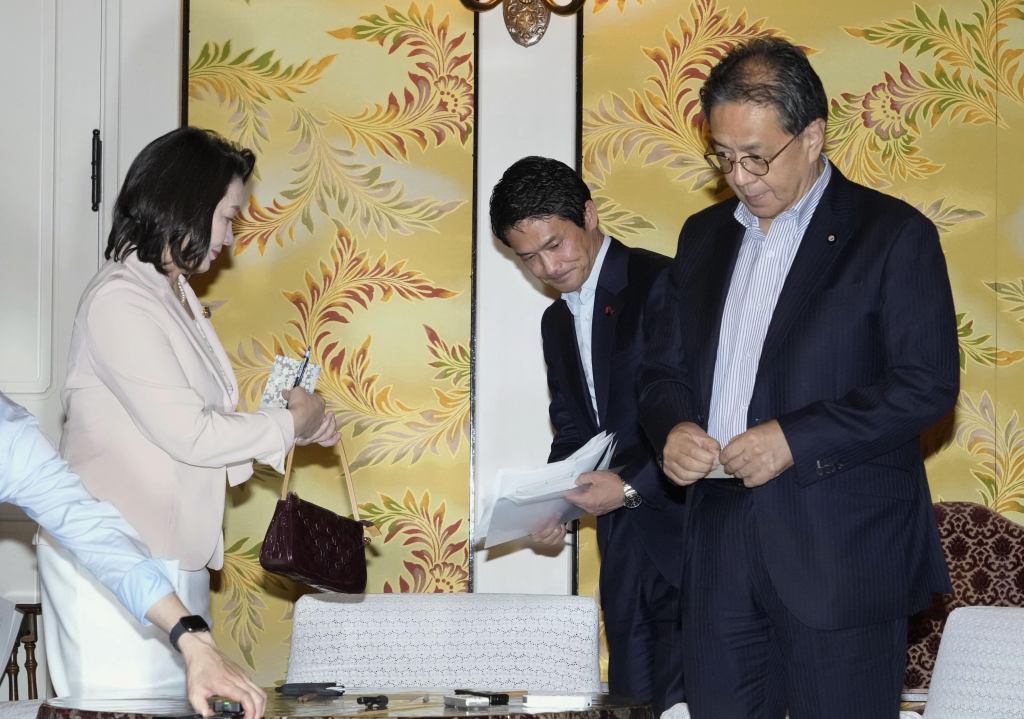
The Centrist Reform Alliance, hastily formed during Japan’s House of Representatives election last February, announced its dissolution after seven months due to internal strife. However, controversy has arisen as the party decided to retain one lawmaker to fully receive the 10 billion Korean won in state subsidies allocated to it, rather than completely disbanding. This mirrors criticism toward Yong Hye-in, a Basic Income Party lawmaker nominated as Minister of Gender Equality and Family, who faces backlash for refusing to resign from her parliamentary seat to maintain the party’s annual 1.1 billion Korean won state funding.
The Centrist Reform Alliance was created in early 2026 when Prime Minister Sanae Takaichi dissolved the House of Representatives, prompting the Constitutional Democratic Party of Japan and Komeito—then opposition parties—to hastily merge to counter the Liberal Democratic Party. However, the alliance faced criticism as a rushed election-focused party, especially since the House of Councillors remained split between the two original parties. It suffered a major defeat in the election, and lawmakers from each party failed to reconcile policy differences, leading to their formal split on September 9.
Instead of a formal “splintering” back into the Constitutional Democratic Party and Komeito, the alliance chose a “factional split,” allowing lawmakers to either form new parties or return to existing ones. Ogawa Junya, the alliance’s leader, remained in the party.
This approach was taken to secure the remaining state subsidies allocated for this fiscal year. The alliance was slated to receive approximately 2.3 billion Japanese yen, disbursed in April, July, October, and December. Around 1.2 billion Japanese yen remains unpaid. Ogawa argued, “While 2 billion Japanese yen of the 2.3 billion yen was spent on election costs, approximately 1 billion Japanese yen is still pending. It is our responsibility to settle the remaining debt.” He also stated that support for around 150 unsuccessful candidates—including activity subsidies—would continue. Japan’s state subsidies for political parties are not strictly limited in usage, so such support is tolerated as part of candidate development.
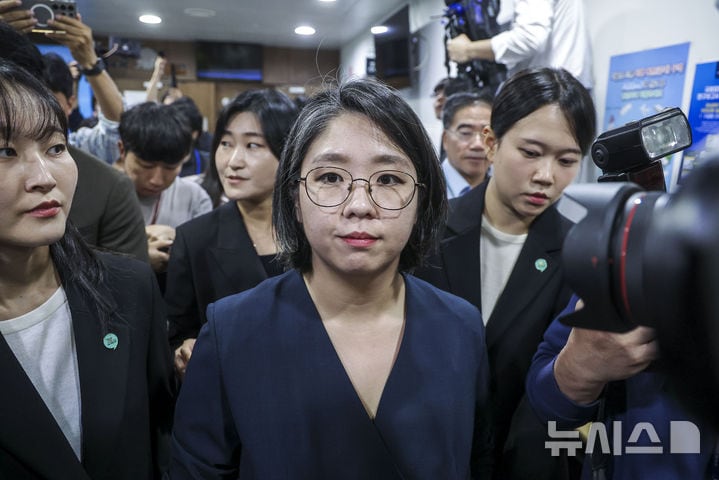
Meanwhile, Yong Hye-in, a Basic Income Party lawmaker nominated as Minister of Gender Equality and Family under President Lee Jae Myung’s reshuffle, faces criticism for refusing to resign from her parliamentary seat ahead of her confirmation hearing. If Yong resigns, the Basic Income Party—currently a one-member party—would lose its annual 1.1 billion Korean won state funding, as it would become an extra-parliamentary party ineligible for subsidies.

 jasdooit
Leave a comment