
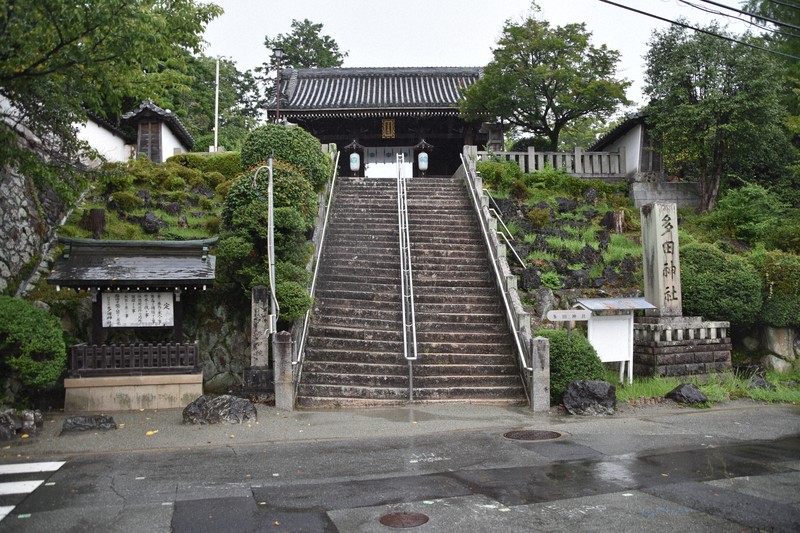
KAWANISHI, Hyogo — The religious corporation that operates Tada Shrine in this west Japan city, regarded as the birthplace of the Seiwa Genji branch of the Minamoto clan, has filed with the Kobe District Court for rehabilitation under the Civil Rehabilitation Act, sources familiar with the matter said on Sept. 9.
According to Teikoku Databank Ltd., this is only the third known insolvency case involving a shrine in Japan, following cases in 2003 and 2012. The total amount of debt is still being assessed.
Financial problems involving Tada Shrine began to surface around 2023. A revolving mortgage with a maximum secured amount of 1.6 billion yen (about $10.4 million) was placed on land within the shrine grounds, which are designated as a national historic site. After the shrine’s then chief priest died in 2024, the mortgaged land was seized.
“The shrine will continue to operate as usual,” a Tada Shrine representative said in response to a Mainichi Shimbun inquiry. “We will provide a further explanation at a later date.”
Tada Shrine is said to have been founded in 970 by Minamoto no Mitsunaka, a great-grandson of Emperor Seiwa. Five members of the clan, including Mitsunaka and his son Yorimitsu, are enshrined there.
The shrine is regarded as the birthplace of the Seiwa Genji lineage. Mitsunaka’s descendants included Minamoto no Yoritomo, who established the Kamakura shogunate, and Yoritomo’s younger brother, Yoshitsune.
The shrine’s main sanctuary, worship hall and Zuijinmon gate were built by the Tokugawa Shogun family in the mid-Edo period (1603-1867). They are designated as important cultural properties of Japan, along with the Tada Shrine documents, a collection of records detailing exchanges between successive shogunates and the shrine from the Kamakura period (1185-1333) through the Azuchi-Momoyama period (1574-1600).
(Japanese original by Kazuhiro Doi, Takarazuka Resident Bureau; and Yuna Maeda, Kobe Bureau)




 jasdooit
Leave a comment