
China’s intelligence agency has warned that deepfakes and automated comment brigades utilizing generative artificial intelligence (AI) could manipulate political public opinion and threaten systemic stability. This marks the first time the Chinese Ministry of State Security has publicly disclosed a comprehensive stance on AI risks.
The Financial Times, FT, reported on September 14, local time, that the Chinese Ministry of State Security publicly pointed out on September 13 the risks AI could pose to China’s political and social stability, cyber defense, sensitive information, and military systems.
◇Warning of ‘Cognitive Warfare’ via Deepfakes and AI Comment Brigades
Chen Yixin, head of the Chinese Ministry of State Security, claimed, “Hostile forces and individuals with ulterior motives are exploiting deepfake audio and video, AI-generated text and images, and intelligent comment brigades to fabricate political rumors, spread harmful information, and incite division.”
Chen defined these activities as a “public opinion attack and cognitive warfare” against China. He explained that they could directly threaten the country’s political, institutional, and ideological security.
Discussions on AI in China have thus far been led by the Cyberspace Administration of China, the internet regulatory body, with a focus on technological safety and service regulation. The Ministry of State Security’s direct warning is interpreted as a sign that China has begun to address AI as a matter of national security and systemic stability.
The Ministry of State Security also raised the possibility of sensitive information leaks during Chinese companies’ use of foreign AI tools. As state-owned enterprises and sensitive industries such as finance and healthcare already face restrictions on foreign technology use, there are indications that regulations on overseas AI models could be tightened.
◇Backlash Against U.S. ‘AI Speed Control’ Argument
China’s announcement coincided with calls in the U.S. AI industry to slow the development of cutting-edge models. Dario Amodei, CEO of Anthropic, proposed that major countries should adjust the pace, warning that AI models could advance faster than human capacity for control and oversight.
While both sides emphasize AI’s dangers, their focuses differ. The U.S. AI industry worries about humans losing control over technology, whereas the Chinese Ministry of State Security identifies foreign forces’ public opinion manipulation, cyberattacks, and sensitive information leaks as primary threats.
China also pushed back against Amodei’s claim that its leadership in AI could pose risks to the U.S. and the world. The Chinese Ministry of Foreign Affairs criticized this as “fearmongering and malicious competition,” while the state-run Global Times argued that the U.S. seeks to suppress Chinese technological advancement under the guise of AI safety.
While China remains vigilant about AI’s risks to its system and national security, it opposes U.S.-led development slowdowns. Analysis suggests that discussions on AI safety standards are intertwined with the U.S.-China technological competition.
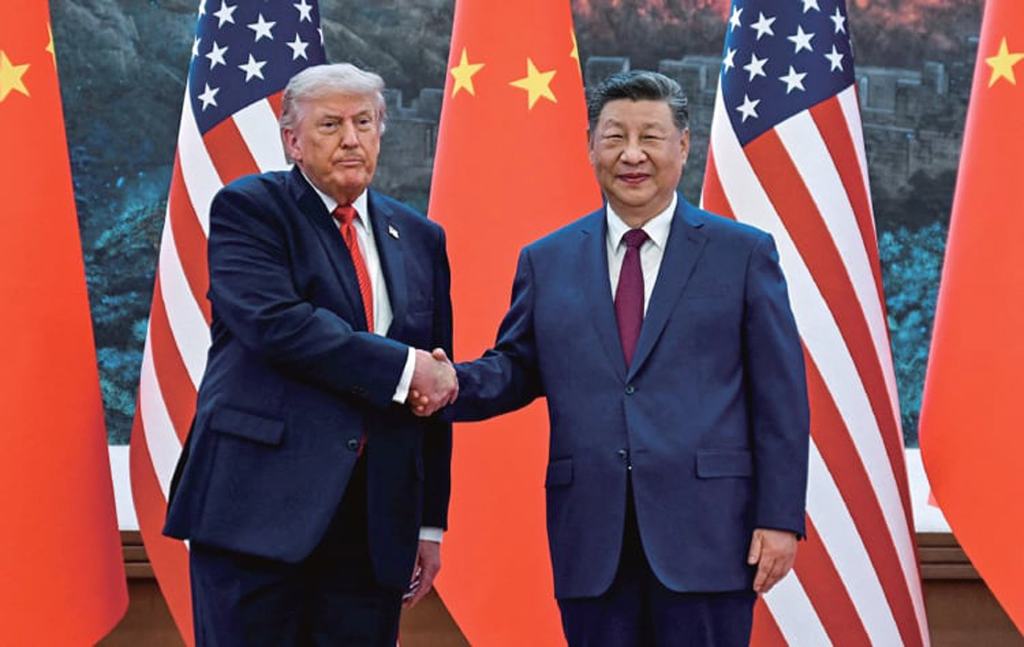
AI governance is expected to be on the agenda during the meeting between U.S. President Donald Trump and Chinese President Xi Jinping scheduled for later this month.


 jasdooit
Leave a comment