
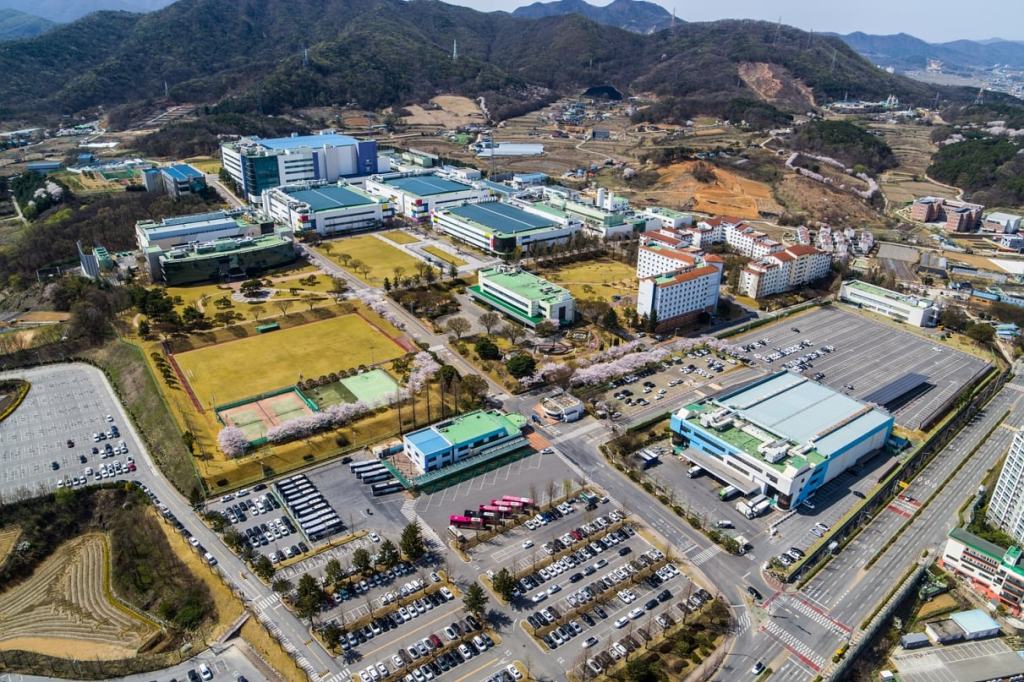
Asan City, Chungcheongnam-do, is gaining attention due to the government’s three mega projects and Samsung’s investment of 113 trillion Korean won. Notably, construction has begun in Baebang-eup, Asan City, marking the first project among the three mega projects, and the city is emerging as a new growth axis for South Korea.
On the 18th, according to sources familiar with the matter, Samsung Electronics will invest a total of 46 trillion Korean won in the Onyang Campus site (389,825 square meters) in Buksu-ri, Baebang-eup, Asan City. This is part of the company’s efforts to expand the production of high-performance AI semiconductors, including high-bandwidth memory (HBM), through the construction of a new factory.
Last month, Chungcheongnam-do deliberated and approved the agenda for the expansion of Samsung Electronics’ Onyang Campus, exceeding development scale limits, and Samsung Electronics has begun construction on the site.
This is the first project in Chungcheongnam-do to break ground among the government’s ‘Korea’s Great Leap Forward Three Mega Projects’. It is a key project solidifying the region’s position as a hub for advanced technology in the AI era.
Additionally, Samsung Display has pledged an investment of approximately 67 trillion Korean won in next-generation OLED production infrastructure at the Asan Display City 2 industrial complex. This investment concentrates the two pillars of national strategic industries—semiconductors and displays—in Asan.
A source from Chungcheongnam-do stated, “We anticipate a production-induced effect of approximately 2.6 trillion Korean won from Samsung’s investment this time,” adding, “The expansion of large-scale advanced industrial complexes will create high-quality jobs and establish a virtuous cycle of industry and housing that increases the population.”
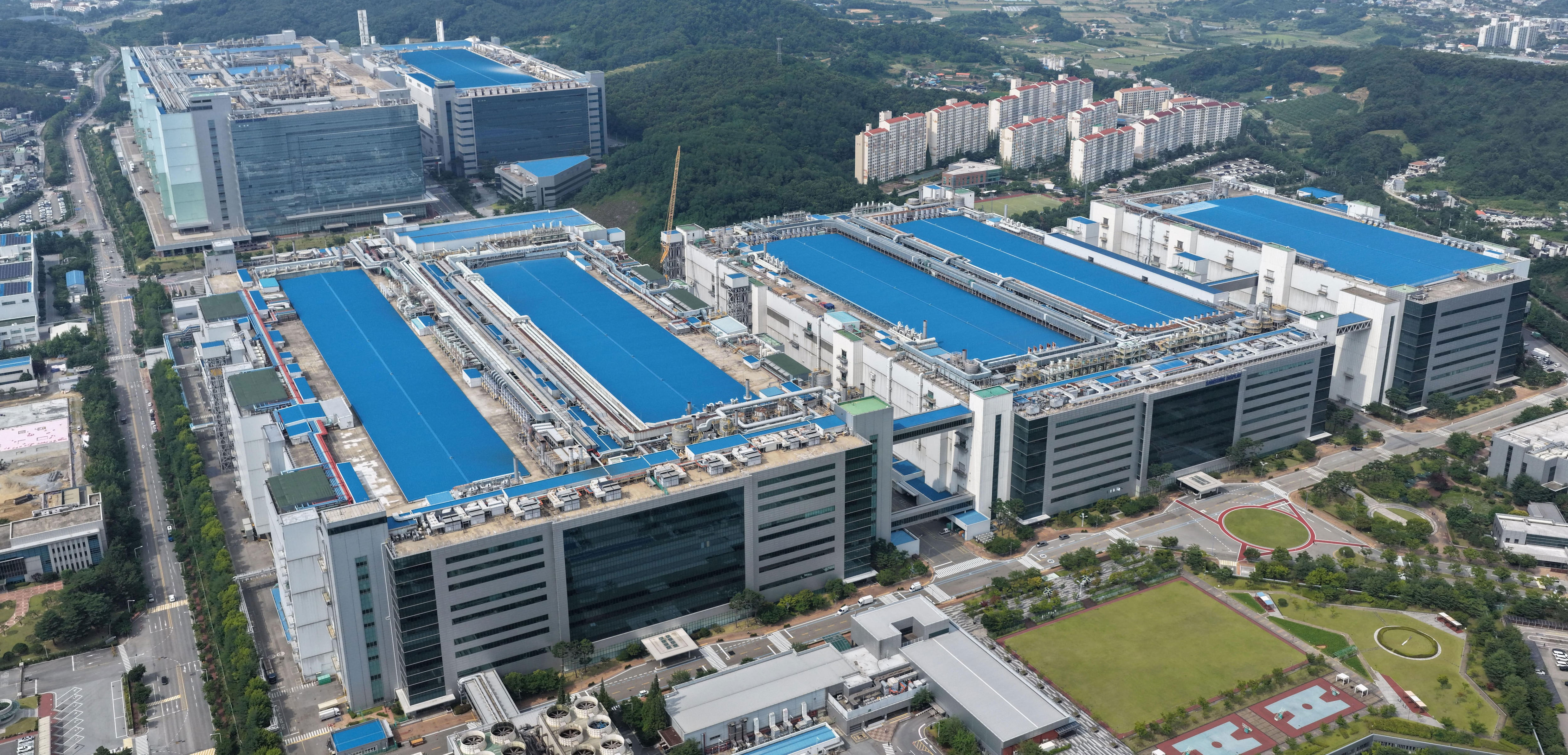
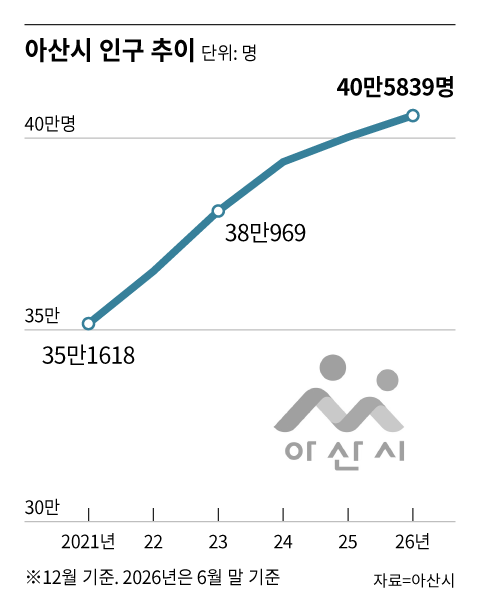
Asan City began transforming into an advanced industrial city in 1991 when Samsung Electronics’ Onyang site in Baebang-eup started operations. The semiconductor factory in Baebang-eup and the display complex in Tangjeong-myeon are key factors driving population growth in Asan City. The city’s total population, which was 351,618 people at the end of 2021, increased to 365,267 people in 2022, 380,969 people in 2023, and 393,766 people in 2024. Last year, it surpassed 400,000 people for the first time and currently stands at 405,839 people as of the end of June.
A source from Asan City remarked, “While local cities face the crisis of extinction due to low birth rates, Asan City is striving toward a goal of 500,000 people.”
Asan City is also promoting transportation network expansion projects with the goal of becoming a self-sufficient city of 500,000 people. Currently, the KTX·SRT Cheonan-Asan Station in Baebang-eup allows travel to Seoul Station in 40 minutes. The city expects improved accessibility to Seoul and the metropolitan area once the extension of the Metropolitan Express Railway for the Capital Area (GTX)-C line is fully underway.
Recently, the construction of the ‘Cheonan-Asan Station Metropolitan Complex Transfer Center’ has also been promoted. Approved by the Ministry of Land, Infrastructure and Transport in January, the project aims to complete construction by 2030 with an investment of 673.5 billion Korean won. Once completed, this three-dimensional metropolitan transportation hub—integrating railways, buses, and taxis—is expected to reduce travel time between the metropolitan area and nearby regional cities. Additionally, improved access to Cheonan, Pyeongtaek City in Gyeonggi Province, and Sejong City has been achieved through the construction of the Dangjin–Cheongju Expressway and maintenance of major arterial roads in the city.
A real estate industry insider stated, “Asan Baebang goes beyond mere apartment complex development, serving as a prime example of an ‘industry-residential golden cross’ where large-scale investments by major corporations, the growth engines of South Korea, are combined with three-dimensional transportation infrastructure,” adding, “Alongside the materialization of advanced industries led by Samsung, the urban status and residential value of Asan Baebang are expected to follow an upward trajectory for years to come.”




 jasdooit
Leave a comment