
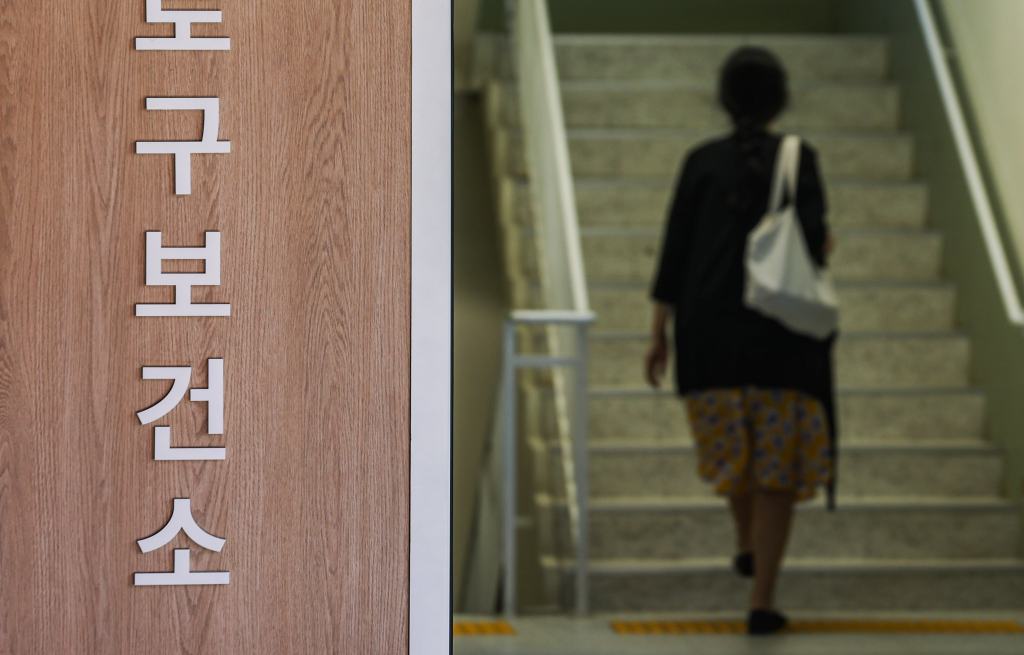
The Guro-gu Health Center in Seoul recently posted a recruitment notice for an “internist to serve as a two-year fixed-term public official (Grade 5)” and is accepting applications from the 21st to the 23rd. Despite five previous recruitment notices since February, all attempts have failed. This is the sixth recruitment effort. A source from the Guro-gu Health Center stated, “One of the two internists remains unfilled, forcing one person to handle the workload of two.” Seoul’s Mapo-gu has also issued six notices by June this year to hire a Grade 5 fixed-term doctor but has yet to secure a candidate. A health center official said, “We are preparing another notice due to the lack of applicants.”
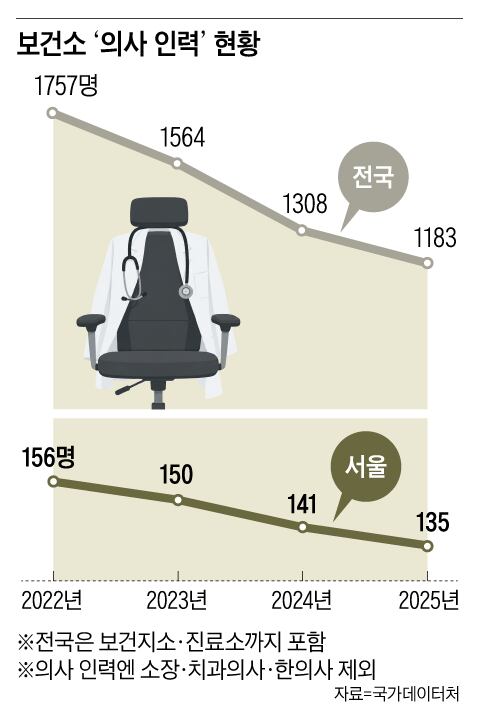
Not only rural and medically underserved areas but also Seoul’s health centers have repeatedly posted the same recruitment notices for over six months without success. As wage gaps between private and public medical institutions widen, even Seoul—where hospitals and doctors are concentrated—is finding it increasingly difficult to recruit doctors for health centers. In fact, the number of doctors (excluding health center directors) in Seoul’s health centers decreased by 13.5%, from 156 in 2022 to 135 last year.
Health centers are not merely simple medical clinics. Their responsibilities encompass a wide range of public health initiatives, including infectious disease prevention and management, health promotion for infants, women, the elderly, and people with disabilities, as well as home visit health care. They serve as frontline bases for public healthcare that private institutions often avoid due to low profitability. Lee Yong-kyun, an adjunct professor at Yonsei University’s Graduate School of Public Health, stated, “The role of health center doctors extends beyond treating vulnerable groups and chronic patients to include administrative areas like infectious disease and disaster response.” He added, “As medical demand grows but supply remains insufficient, the ‘weak link’ of public healthcare is collapsing first.”
The prolonged shortage of medical staff in health centers does more than overload remaining doctors. Given that health center services are heavily utilized by vulnerable groups such as seniors over 65 and basic livelihood security recipients, a prolonged doctor shortage could fracture the regional public healthcare safety net. A health center official said, “Even when remaining doctors complain about being overworked and unable to use their annual leave, there’s no solution.” They added, “We know the current pay system makes hiring difficult, but we have no choice but to keep posting the same notices.” Seoul’s Jongno-gu Health Center also attempted to hire a Grade 5 fixed-term doctor this year and finally secured a candidate after a ninth recruitment notice last month.
The primary cause of the difficulty in recruiting health center doctors is the wage gap with private medical institutions. Guro-gu’s offered annual salary is approximately 83.6 million Korean won, about 120% of the lower limit for Grade 5 fixed-term public officials (69.66 million Korean won). While salaries can be increased, exceeding 120% requires separate deliberation by the local government’s personnel committee and considerations of equity with other fixed-term public officials.
Some medically underserved areas, like Sinan-gun in Jeonnam-Gwangju, where private clinics are scarce and public health doctors have sharply declined, have increased salaries to 300–400 million Korean won by combining government “senior doctor recruitment support” with local budgets. However, Seoul’s situation differs: while living conditions are favorable, the abundance of higher-paying private medical institutions reduces the incentive to work at health centers offering around 80 million Korean won annually.
Some suggest hiring retired university hospital professors, but a problem arises if they are appointed as fixed-term public officials: their civil service or private school pensions received after retirement are fully suspended during their health center tenure.
Experts argue that instead of repeatedly posting similar recruitment notices by local governments, separate pay standards for health center doctors should be established. They emphasize the need for central government measures to secure personnel, such as expanding long-term service allowances. There are also calls to reassess the number of doctors required for essential regional health tasks and explore joint utilization of medical staff across municipalities. Jung Ki-suck, former head of the National Health Insurance Service and current head of Yongsan-gu Health Center, stated, “The current pay structure makes it structurally difficult to attract doctors to health centers.” He added, “As part of the government’s ongoing efforts to strengthen regional, essential, and public healthcare, partial subsidies for health center staff salaries and special exemptions to ease pension suspension rules for public healthcare workers could encourage senior doctors with good intentions to join.”
 jasdooit
Leave a comment