
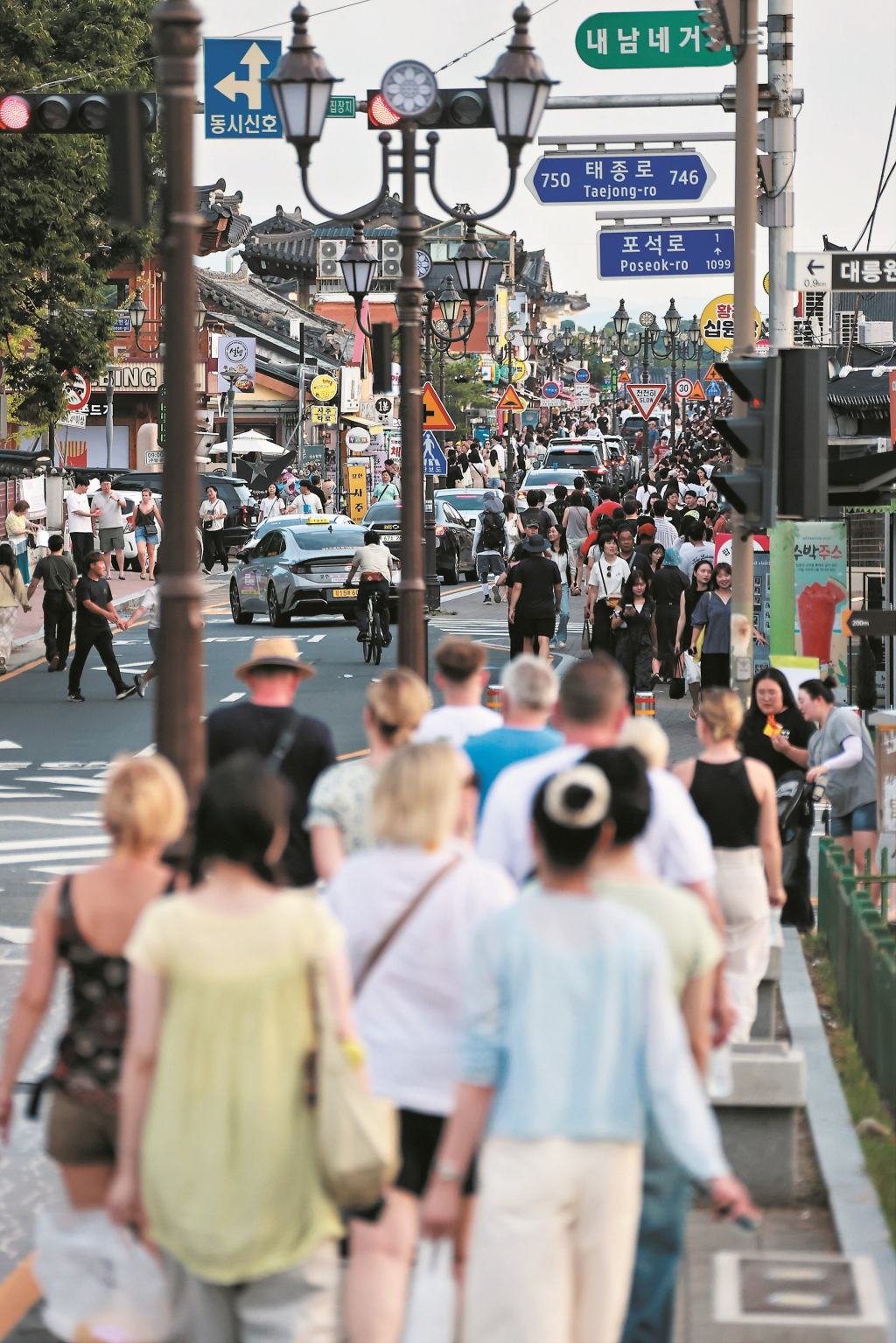
Gyeongju City, which successfully hosted the 2025 Asia-Pacific Economic Cooperation (APEC) Summit, is now leveraging its “post-APEC” momentum to pursue new growth. The city attributes the surge in international recognition and favorability to tourism, as evidenced by over 700,000 foreign visitors in the first half of this year. Gyeongju aims to expand these achievements across tourism, industry, and investment to elevate its urban competitiveness. The city’s goal is to integrate its millennia-old historical and cultural assets with future industries such as nuclear energy, future automobiles, and artificial intelligence (AI), while fostering youth settlement, improving citizens’ quality of life, and achieving balanced regional development.
◇“Hwangnidan-gil, Foreign Tourists Doubled Post-APEC”
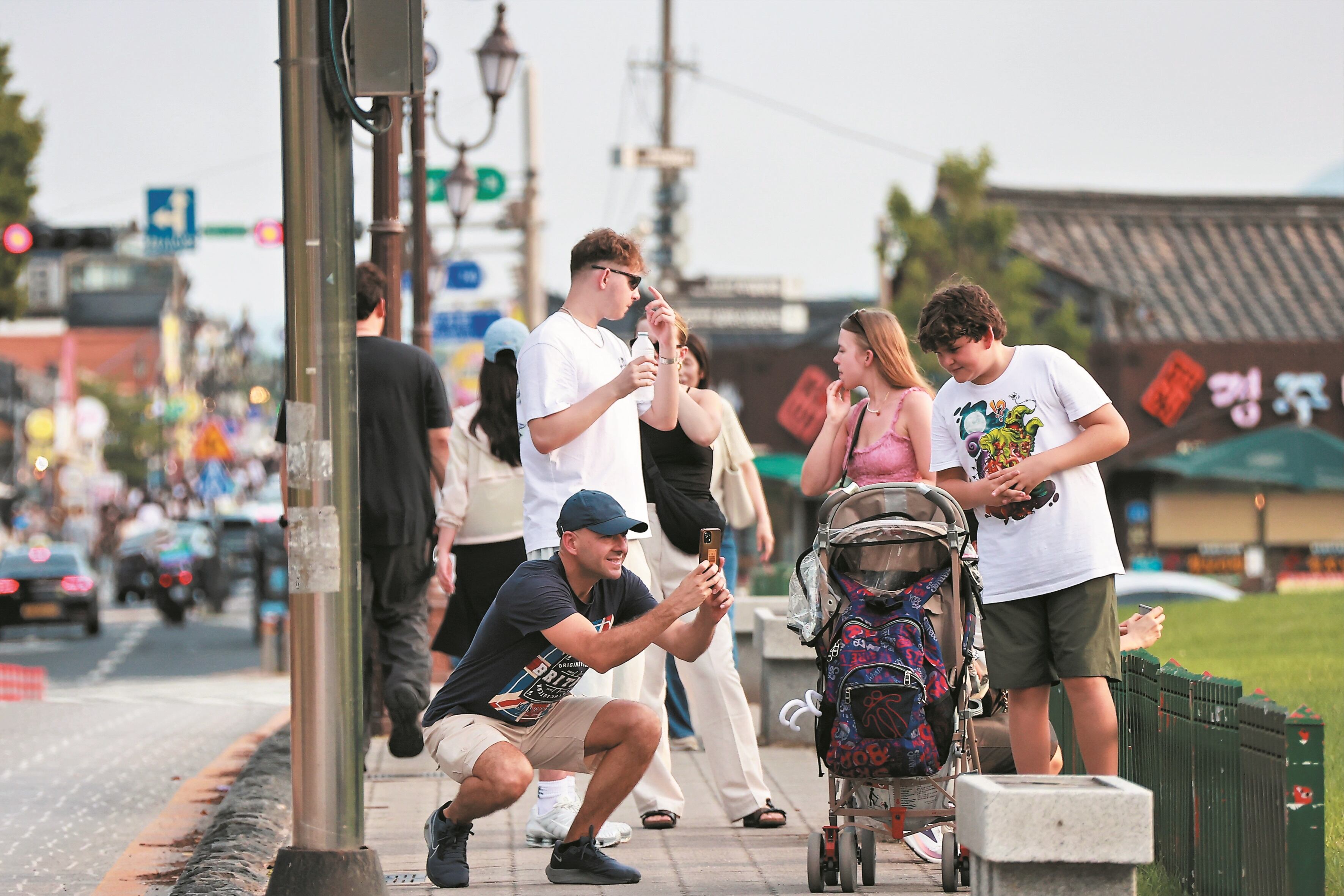
On the afternoon of the 15th, Hwangnidan-gil in Hwangnam-dong, Gyeongju, Gyeongsangbuk-do, was bustling with long lines in front of well-known shops, half of whom were foreign tourists. Blond-haired foreigners conversing in English while pushing strollers were also common. Lee Byeong-hee, head of the Hwangnidan-gil Commercial Union, said, “Foreign tourists have increased about twofold compared to before APEC. Thanks to APEC, Gyeongju has become more widely known, and we’ve seen more tourists from the U.S. and Europe.”
Since the successful 2025 APEC Summit, the number of foreign tourists visiting Gyeongju has significantly increased.
According to Gyeongju City on the 21st, 707,197 foreigners visited the city in the first half of this year, a 19.0% increase compared to the same period last year. The city attributes this growth to heightened global awareness and international stature from APEC. To sustain this momentum, Gyeongju plans to build an APEC Memorial Hall and National Symbol Forest, institutionalize the World Economic Forum, and continue the legacy of being an APEC host city. Additionally, the city will renovate the Bomun Tourist Complex, develop APEC Futures Square, and establish the Gyeongju APEC Diplomatic and Cultural Center to expand global exchange platforms. Having captured global attention through APEC, Gyeongju now aims to translate its elevated brand value into tangible outcomes in tourism, culture, and the economy.
A Gyeongju City official stated, “We will continue this trend by targeting overseas tourism markets and expanding stay-oriented tourism content.”
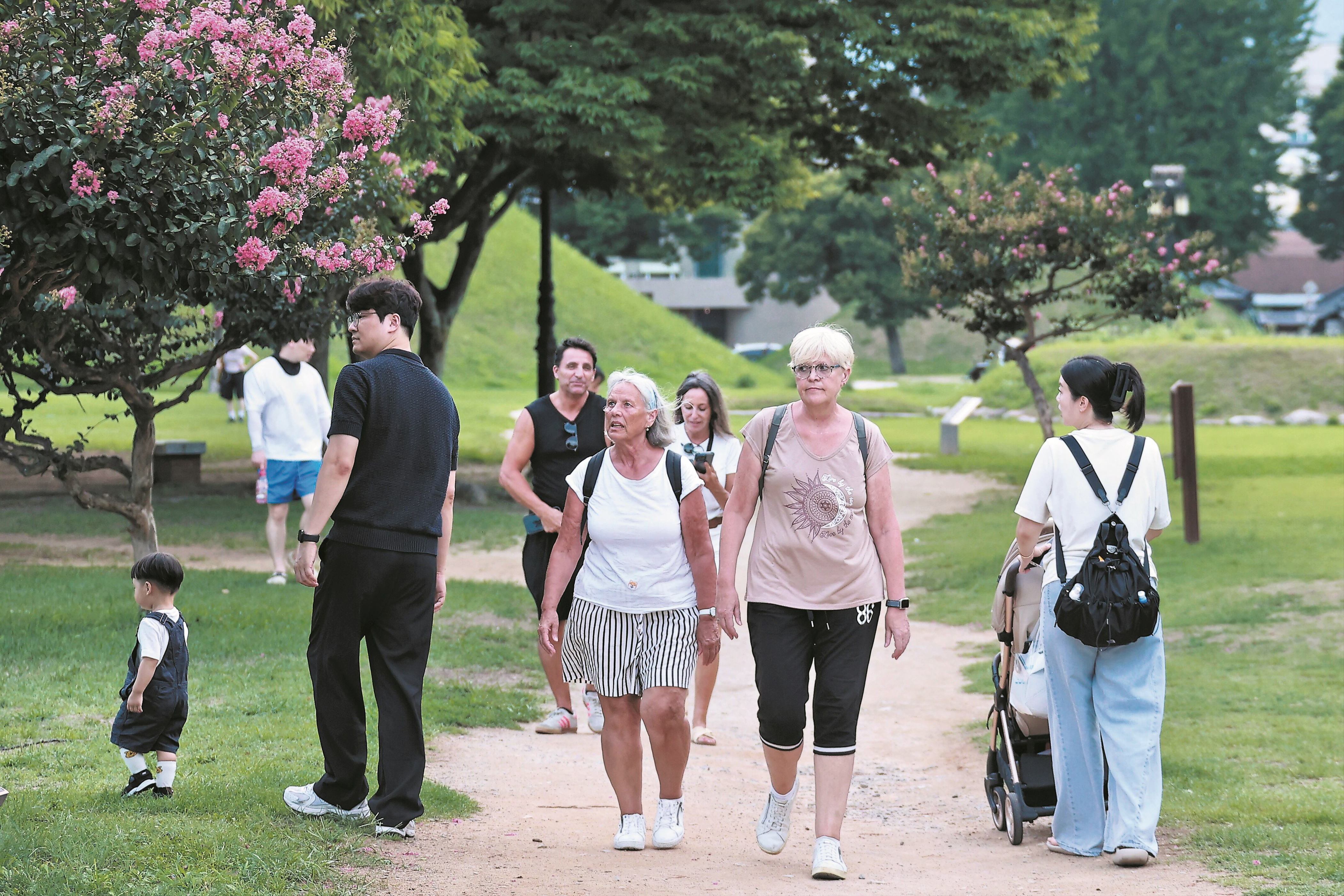
◇Utilizing 2,000-Year-Old Historical and Cultural Assets as Tourism Resources
Gyeongju plans to leap forward as a global tourism city by leveraging its 2,000-year-old historical and cultural heritage. Beyond preservation and restoration, the city aims to link these assets with tourism content to become one of the “World’s Top 10 Tourist Cities.” To this end, it will continue restoring and maintaining 14 key historical sites from the Silla Kingdom’s capital and Gyeongju Fortress, while pursuing designation as a special tourism city for historical and cultural tourism. Efforts will also focus on re-examining historical figures representing Gyeongju, such as the sanctification of King Munmu, restoration of the birthplace of Haewol Choi Si-hyung, and construction of a memorial hall for Go-un Choi Chi-won.
Additionally, tourism will expand beyond the city center and Bomun Tourist Complex to the East Sea coast. By developing the Gampo Marine Leisure Tourism Hub and the East Sea National Trail, Gyeongju aims to create a new tourism axis that combines historical culture with marine tourism. This shift will transform the city from a destination with high visitor numbers into a stay-oriented tourism city where visitors experience and linger longer. The goal is to grow from a domestic representative historical and cultural city into a global tourism destination.
◇From Nuclear Energy to AI… Cultivating Future Growth Engines
Gyeongju is accelerating its transformation into an advanced industrial city beyond its historical and cultural tourism identity. While leveraging its strengths in nuclear energy and automotive parts, the city plans to nurture future automobiles and AI as new growth engines. Central to this is the K-Nuclear Energy Industry. Gyeongju hosts key institutions like Korea Hydro & Nuclear Power headquarters, Wolsong Nuclear Power Plant, and Korea Radioactive Waste Agency. The city aims to build a full-cycle nuclear industry ecosystem—integrating research, development, industrialization, and workforce training—by linking the King Munmu Science Research Institute, Small Modular Reactor (SMR) National Industrial Complex, and Pressurized Water Reactor Decommissioning Technology Institute.
Additionally, Gyeongju will promote the RE100 e-mobility dedicated industrial complex in Angang and the future vehicle materials, parts, and equipment specialized complex in Oedong. By connecting future vehicle R&D infrastructure with regional university contract departments, the city plans to create a virtuous cycle of corporate growth and specialized workforce development. For emerging industries, AI is a focus. The city will attract an AI Data Center and promote youth AI education to foster industry foundations and talent.
◇Developing the Former Gyeongju Station Site as a Landmark
A key aspect of Gyeongju’s future vision is ensuring that growth in tourism and industry translates into tangible improvements in citizens’ lives. The city aims to make urban development benefits felt by residents and spread them evenly across the region. In rural areas, it will expand science and technology-based agriculture and smart farming and livestock industries, while improving living environments and settlement conditions through rural agreements and coastal revitalization projects.
Urban space transformations are also underway. According to Gyeongju City, the former Gyeongju Station site will be developed into a new town and landmark, with the Gyeongju Station area designated as an investment-leading district and a complex transit center to establish a new urban growth axis. Projects include restoring Hwangsong Park to its original state, building a complex cultural library, and a municipal art museum to increase cultural and recreational spaces for daily use. The city also plans to expand welfare services closely tied to citizens’ lives through AI-based health management systems and support for caregiving, childcare, and medical services.
To help youth take root in the region, policies linking housing, employment, and entrepreneurship—such as housing cost support, activation of startup special zones, resolving wage gaps in small and medium-sized enterprises, and AI education—will be promoted. The goal is to create a city where youth stay and are drawn to.
A Gyeongju City official explained, “Connecting the growth momentum from tourism and industry to citizens’ lives and ensuring these benefits are evenly distributed across urban and rural areas is the direction of the 9th municipal government’s policies.”
“A City Sought by Tourists, Businesses, and Talent…”
Mayor Joo Nak-young of Gyeongju
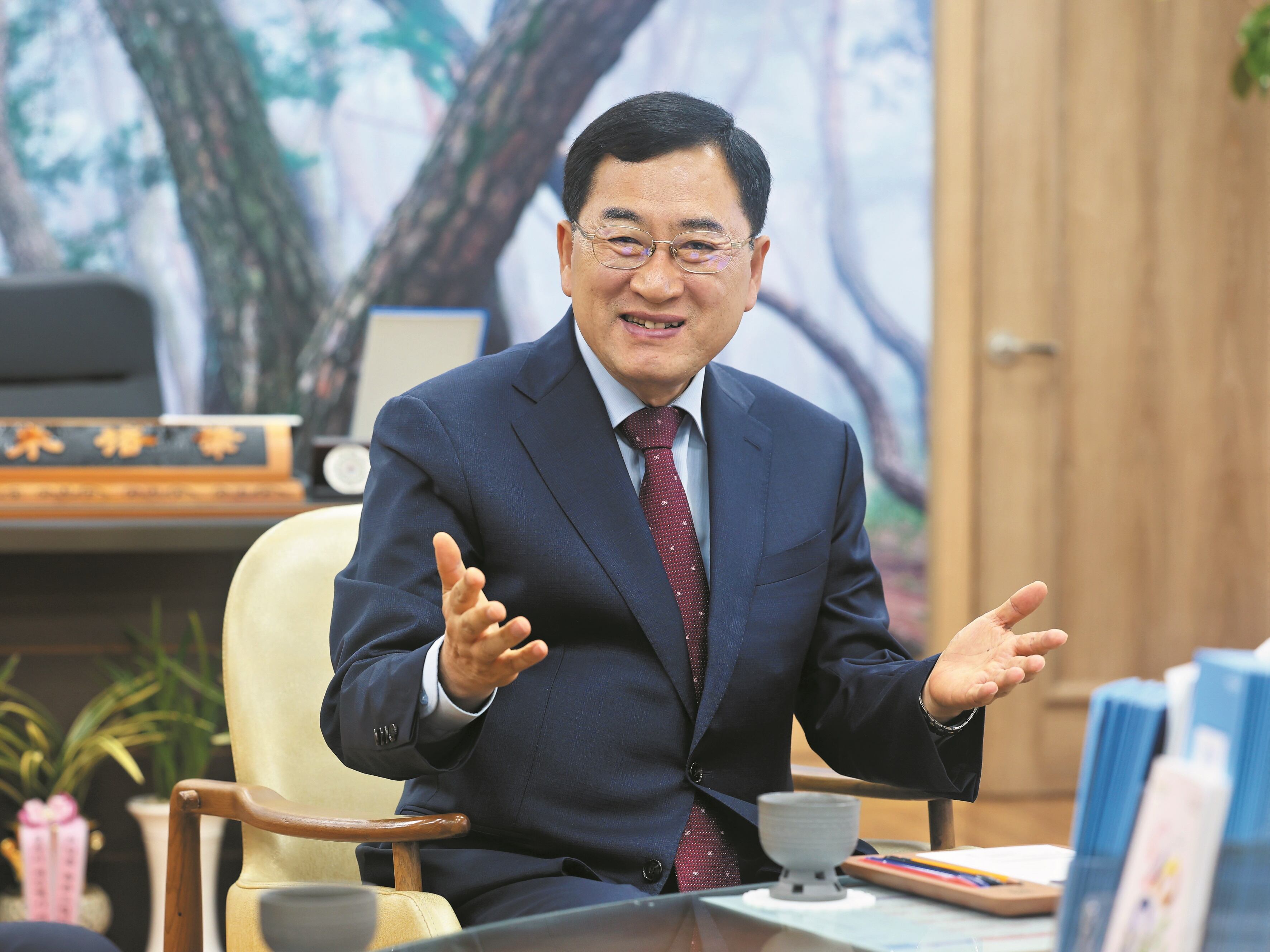
“‘A city embracing history, embracing the future—Gyeongju.’ I will do my utmost so that citizens can feel these changes firsthand.”
Mayor Joo Nak-young, the first three-term mayor of Gyeongju, stated this on the 21st regarding the direction of the 9th municipal government. He emphasized, “We will elevate Gyeongju from a city visited by tourists to one where businesses and talent gather, and from an APEC host city to an international city with sustained global exchange.”
According to Gyeongju City, during the 7th and 8th municipal governments, the city entered the 2 trillion Korean won fiscal era and attracted 6.8 trillion Korean won in private investment, broadening its growth foundation. The successful hosting of the 2025 APEC Summit is also credited with expanding Gyeongju’s city brand and stage from domestic to global.
Mayor Joo stated, “The 9th municipal government is preparing for a greater leap forward, building on the achievements of the 7th and 8th governments and the successful APEC hosting. We will nurture millennia-old historical and cultural assets into global tourism competitiveness, develop nuclear energy, future automobiles, and AI as new growth engines for the regional economy, and create an environment where youth, children, and the elderly can live together while ensuring balanced development between urban and rural areas.”
Emphasizing that “the millennial ancient capital of Gyeongju is now embarking on change toward a new millennium on the foundation of its long history and culture,” Mayor Joo added, “We will translate Gyeongju’s elevated status from APEC into tangible outcomes in tourism, industry, and investment. By further strengthening the historical and cultural competitiveness of the millennial ancient capital and actively fostering future industries, we will create a greater Gyeongju where citizens feel the changes and compete globally.”
 jasdooit
Leave a comment