

The Coalition has floated new ideas that could allow Australians to use their retirement savings to buy a home, reigniting debate about the role of superannuation in housing.
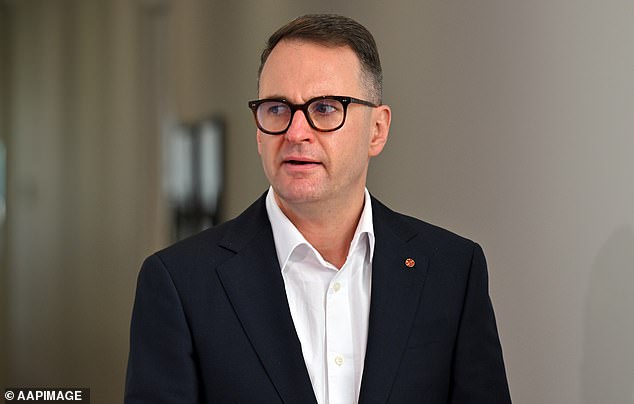
Opposition housing spokesman Andrew Bragg is due to argue in an address on Tuesday that the country must rethink the role superannuation could play in boosting home ownership as the number of retirees renting continues to rise.
While not official Coalition policy, he said the party wants to explore whether Australians should be given more freedom to use their own savings to secure housing earlier in life.
‘We want to have a country where more people are retired home owners,’ he told ABC News Radio on Tuesday morning.
‘One of the most worrying trends we have is the growth in retired renters.’
Ideas under consideration include allowing super balances to be used as collateral for a mortgage, offsetting home loans with retirement savings, or letting people withdraw funds to buy a first home or reduce existing mortgage debt.
‘There are a whole range of different ways you could do it,’ Bragg added.
‘You could keep the money in the system and it could operate as collateral or an offset. You could take it out to pay off a mortgage or to pull together a first-home loan.’
The Coalition previously proposed letting first-home buyers withdraw up to $50,000 from their super to purchase property, but abandoned the policy after the 2022 election loss.
Bragg insisted he is not backing a specific model, but wants to spark a wider discussion about how housing and retirement policy interact.
‘Today’s address is about setting out the rationale for having a more sophisticated debate,’ he said.
‘I’m not advocating any particular solutions today, but I think it’s important that we look to ensure that we do all we can to drive up home ownership rates.’
Bragg pointed to data showing many Australians already use superannuation to eliminate housing debt later in life.
According to Bragg, 32 per cent of lump-sum super withdrawals are used to pay off mortgages once people reach preservation age.
‘We now have 32 per cent of lump sums out of super being used to pay off mortgages at preservation age, which is 60,’ he said.
‘Surely it’s worth us looking at whether you could effectively calibrate that earlier.’
He argued that reducing mortgage debt sooner could save households significant interest charges and make it more likely people enter retirement as home owners.
Bragg also framed the issue as part of broader challenges set out in the Intergenerational Report, which highlights shifting demographics and renewed focus on retirement outcomes.
‘The important point here is that we believe that home ownership is the bedrock of your retirement,’ Bragg said.
‘In fact, it is the key determinant of your success in retirement.’
The idea has faced strong resistance from Labor and the super industry who argue early access to super undermines the system’s purpose and weakens compound returns.
Critics also warn such policies could drive up house prices by boosting borrowing power without addressing the housing shortage.
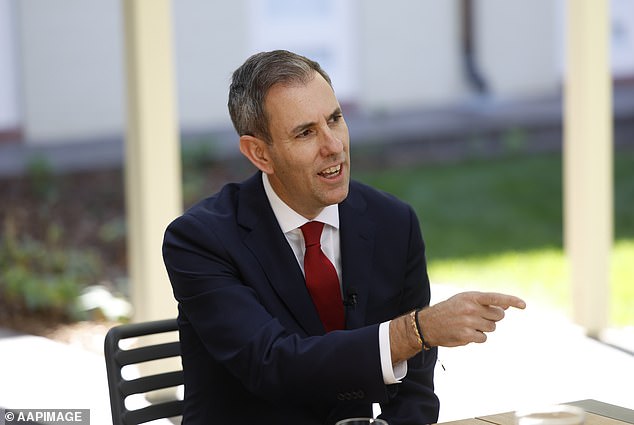
Treasurer Jim Chalmers dismissed the proposal, accusing the Coalition of once again targeting Australians’ retirement savings.
‘Well, they hate super. They always have, and they always will,’ Chalmers told ABC News Radio.

‘They’re coming after superannuation, and they put all of their time and effort into copying One Nation on superannuation; that would be devastating for people’s retirement incomes.’
Chalmers argued the government’s latest Intergenerational Report showed the need to protect super for retirement, not use it as a band-aid for housing affordability.
‘The intergenerational report makes it really clear just how important that is to the future of our country, the economy, retirement incomes, and budget pressures.’
The Coalition has previously accused Chalmers of seeking to steer Australians’ retirement savings towards government-backed priorities after Labor figures described the nation’s $4trillion-plus superannuation pool as a ‘national asset’.
Opposition figures have argued superannuation should be managed solely in members’ interests rather than directed towards government objectives, while also criticising the links between industry super funds and unions as major donors to the Labor Party.
The Coalition’s push follows a One Nation proposal that would allow renters and mortgage holders to redirect part of their compulsory super contributions into their take-home pay for up to three years.
Under the plan, 3 per cent of a worker’s super contribution would be paid directly to them instead of remaining in their retirement account.
Hanson said the policy would have a ‘neutral’ effect on inflation and give households extra ‘breathing room’.
‘For a working couple earning $168,000 between them, it is about $4,300 a year after tax, or $82 a week, back in the family budget,’ she said.
Business leaders have previously cautioned against greater government involvement in the sector.
In July, Westpac chief executive Anthony Miller urged Canberra to leave the system alone.
‘Don’t touch the super complex, don’t direct it, don’t tell it where to go,’ he said.




 jasdooit
Leave a comment