
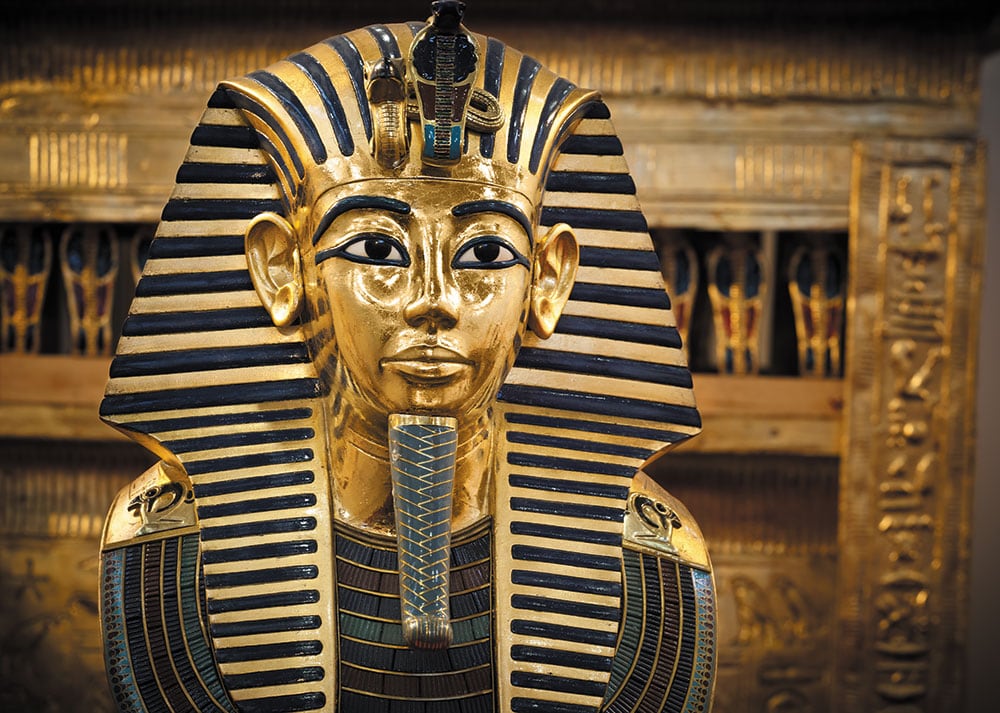
A recent survey has revealed the possibility of undiscovered corridors and chambers hidden behind the walls of the tomb of Tutankhamun, an ancient Egyptian pharaoh. There is also speculation that this space could be the tomb of Queen Nefertiti.
The findings were published in a recent non-periodic report by the “Amarna Royal Tomb Project,” led by Professor Mamdouh Eldamaty of Egypt’s Ain Shams University, British Egyptologist Nicholas Reeves, and others.
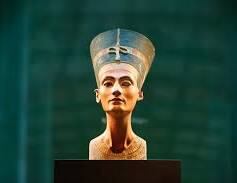
Tutankhamun ascended to the throne at around 9 years old and died at approximately 19, making his reign one of the shortest in history. However, he gained fame as a representative figure of ancient Egypt when British archaeologist Howard Carter discovered his nearly undisturbed tomb in 1922. Nefertiti, the queen of Pharaoh Akhenaten—believed to be Tutankhamun’s father—became one of Egypt’s iconic relics after her bust wearing a blue crown was discovered in 1912. Yet, her tomb remains unaccounted for.
Reeves proposed in 2015 that Tutankhamun’s tomb was originally built for Nefertiti and that her actual tomb might be hidden within. However, subsequent explorations failed to confirm the existence of hidden spaces or Nefertiti’s tomb.
In this latest investigation, researchers used ground-penetrating radar (GPR) to scan the tomb’s interior for structures beyond the walls. Outside the tomb, they conducted over 1,200 gravity measurements to detect subtle changes indicating empty spaces underground. These findings were cross-analyzed with past electrical resistivity measurements, tomb structure, and traces of wall paintings.
The radar survey detected signals suggesting a corridor approximately 2 meters wide extending behind the northern wall of Tutankhamun’s burial chamber. This corridor is estimated to be filled with debris like rocks and soil rather than being empty.
Gravity measurements around the tomb also revealed anomalies consistent with the presence of underground voids or structures. Based on this, the research team posits that there may be additional corridors and chambers behind the known tomb. This has reignited interest in the decade-old “Nefertiti tomb theory.”
However, confirming whether the space belongs to Nefertiti requires physically opening the area. Even if chambers are found, conclusive evidence—such as her mummy or inscriptions bearing her name—would be necessary to identify the tomb’s occupant.
The researchers plan to drill a small hole, 7–8 centimeters in diameter, from the ground and insert a miniature remote device equipped with a 360-degree camera to examine the interior, pending approval from Egypt’s Supreme Council of Antiquities. If approved, the exploration could begin as early as November.






Leave a comment