
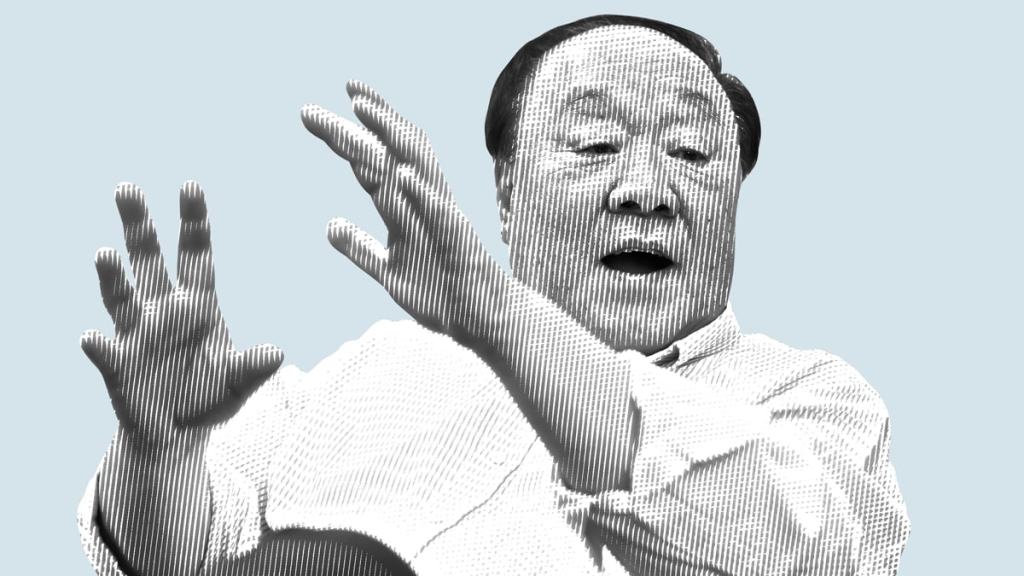
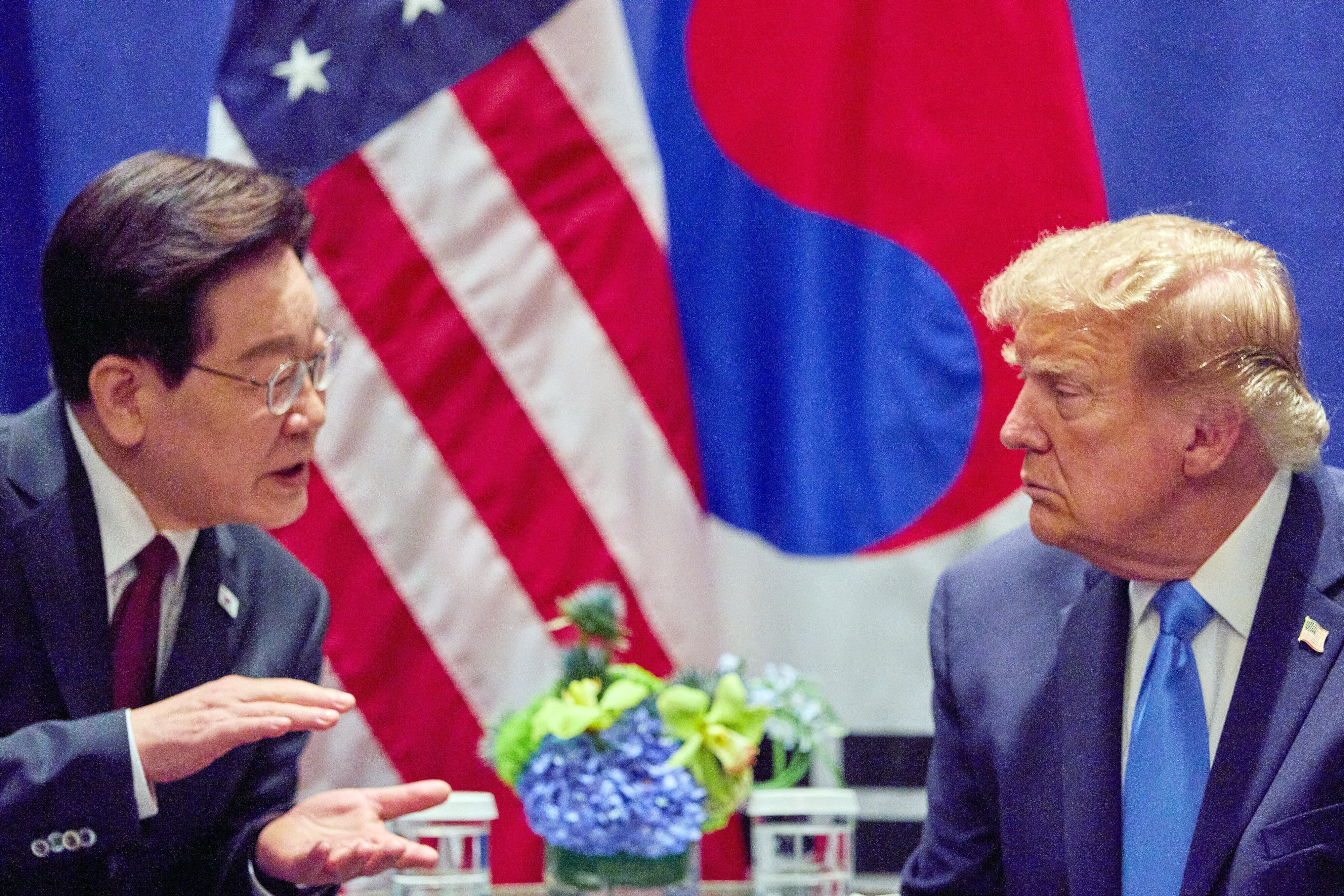
President Lee Jae Myung recently stated in an interview with the New York Times (NYT) and during talks with U.S. President Donald Trump that “exchanging North Korea sanctions, which are not very effective anyway, for a halt to Pyongyang’s additional nuclear weapons and intercontinental ballistic missile development holds significant value.” In other words, the proposal is to trade the suspension of North Korea’s additional nuclear programs for the lifting of sanctions. Here, the word “additional” is crucial. If the core of President Lee’s remarks is to acknowledge the nuclear weapons North Korea already possesses and, in exchange for halting further production, ease sanctions, this aligns with what North Korea wants and would be a catastrophic outcome for us.
Even if the entire world acknowledges that North Korea will never abandon its nuclear weapons, the president’s remarks could be seen as pragmatic. However, accepting reality and drawing a line are separate matters. The moment North Korea’s nuclear possession is openly acknowledged, it gains international legitimacy. For South Korea, this would mean losing a critical bargaining chip that must never be relinquished. Losing it would dash any hope of South Korea acquiring nuclear weapons or reprocessing nuclear material. President Lee also said, “If South Korea arms itself with nuclear weapons, would Japan and Taiwan remain passive? The entire world would become nuclear-armed.” But with North Korea’s nuclear threat right at our doorstep, are we in a position to worry about Japan and Taiwan’s nuclear armament? And why should North Korea, China, and Russia forming a powerful nuclear belt in East Asia be acceptable, while South Korea, Japan, and Taiwan must not nuclearize?
History shows that wars break out when both sides lay down their arms in pursuit of peace, not when military balances are maintained. Conquest occurs when there is an imbalance of power, not war. Genghis Khan’s conquest of Europe and the Ottoman Empire’s dominance over the Mediterranean were acts of invasion and destruction, not wars. As long as we maintain military tension, continue training, replace old equipment with new, and keep our spirits unbroken, war will not occur. Preparing for war to prevent it sustains peace. This is the justification for South Korea to possess nuclear weapons.
The anxiety we feel toward President Lee’s proposal is not limited to the North Korea nuclear issue. Recent security matters also raise concerns. First, the issue of U.S. troops. This administration frequently cites “self-reliance,” portraying South Korea as subordinate to the U.S., especially in recovering operational control, shortening training periods, and other contexts. No citizen would tolerate the U.S. government or military authorities ignoring South Korea’s sovereign status and acting as an occupying force. However, there is no evidence that the U.S. controls South Korean military personnel or interferes in every matter.
A military source admitted, “Our forces lack proper operational plans to fight enemies without U.S. troops, modern warfare weapon systems like drones, and surveillance, reconnaissance, and communication capabilities.” Some experts argue that South Korea’s ranking as a top-five global military power is merely an illusion. Without U.S. forces, we are unprepared for war. Yet, the president and ruling party politicians repeatedly emphasize “self-reliance,” as if our military is subordinate to the U.S.
Second, there is a series of low-posture actions toward North Korea, as if South Korea had wronged Pyongyang or is trying not to provoke its leadership. Regarding the repatriation of North Korean soldiers from Ukraine, our government and Ukraine’s created an unsightly scene over disclosing the facts. The left-wing government likely requested, “If we have no choice but to accept them, let’s proceed quietly without provoking North Korea,” but once publicized, we should have been more assertive in accepting the two soldiers.
The same applies to the second Mokham landmine incident. Why the haste to downplay it as “not a Mokham” or cover up the severity of injuries sustained by our soldiers? Efforts to avoid provoking North Korea are evident everywhere.
While the president boasts of a “top-five” military, why do we feel uneasy? The world’s strongest U.S. forces were humiliated in Iran, Russia’s Putin is faltering in Ukraine, Saudi Arabia is beaten by Houthi rebels, and even Israel struggles. Can we truly trust our military and the “command authority” leading it?



Leave a comment