
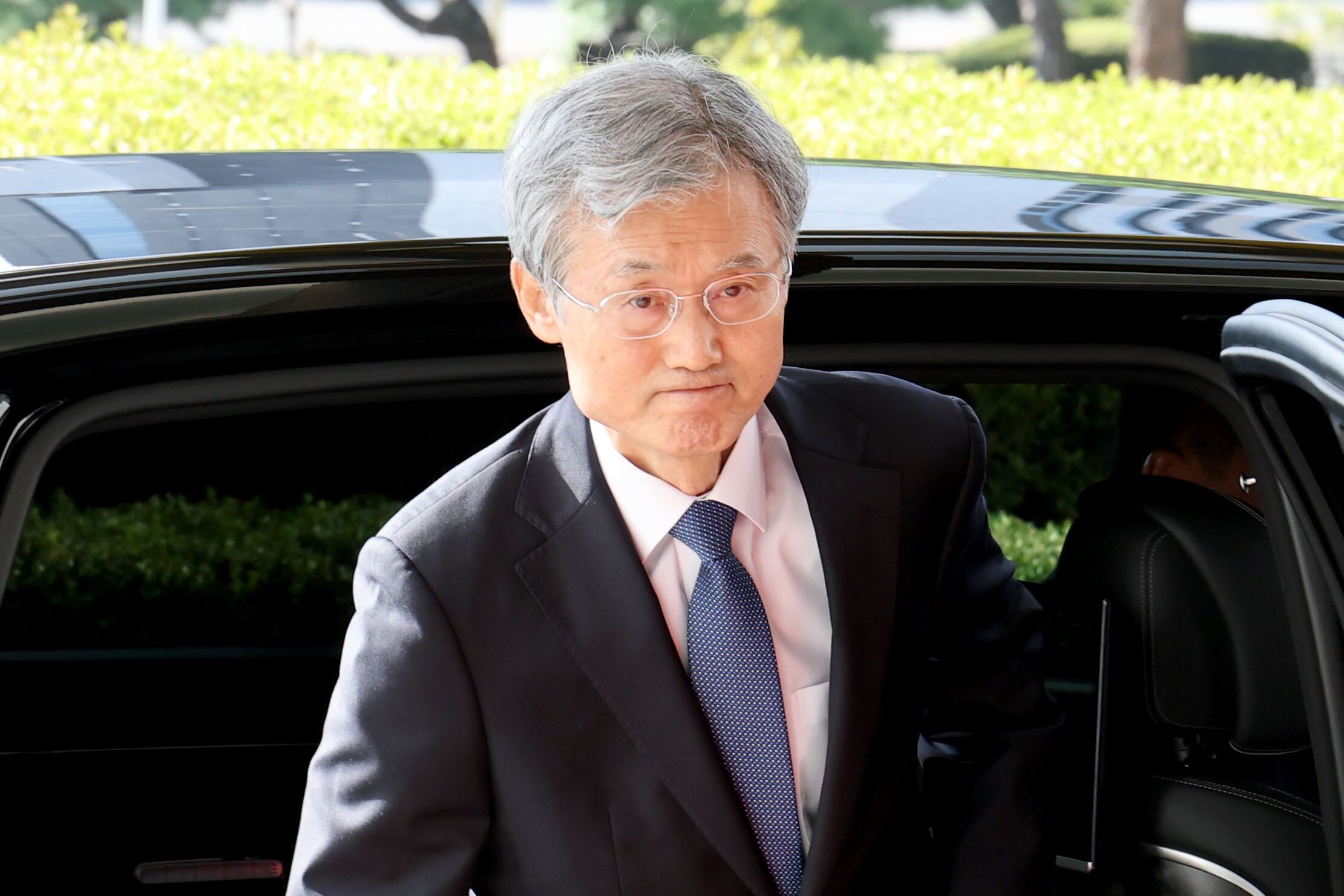
Chief Justice Jo Hee-de’s recent decision to break his long silence and declare a “no” stance on Cheong Wa Dae’s request for a re-nomination of a Supreme Court Justice has been interpreted by some as a resolute defense of judicial independence. However, within the court, it is assessed as a highly strategic legal response. It is suggested that Cheong Wa Dae has been “exposed” in its attempt to exploit a procedural loophole.
Chief Justice Jo’s first message, issued on September 22, stated, “The President’s state acts must be documented, yet the re-nomination request letter does not specify the reasons or grounds.” In response, Cheong Wa Dae issued a statement asserting, “The rejection reasons are well-known to the public, and it is difficult to fathom why only the Chief Justice claims, ‘The document lacks content, so we cannot know.’”
Certain legal acts require strict formalities to be valid—known as “formal acts” (要式行爲). For example, a promissory note loses legal effect if it omits mandatory details like maturity date or payment location. By citing Article 82 of the Constitution, which stipulates that the President’s state acts must be documented, Chief Justice Jo emphasized that the re-nomination request must also adhere to formal requirements. The official document should explicitly state whether Son Bong-kie, the nominee, is unqualified or if procedural flaws exist.
Cheong Wa Dae’s claim that “the public already knows the reasons” cannot substitute for a properly documented rationale. Chief Justice Jo further stated, “Only when the document clearly presents the grounds and reasons can its validity be undisputed, and the court can proceed according to the Constitution and laws.” Article 23 of the Administrative Procedure Act similarly mandates that administrative dispositions must include stated reasons. The public would not accept fines or demolition orders without justification, and the same principle applies to re-nomination requests.
Cheong Wa Dae later claimed in an additional statement that the re-nomination request letter referenced Article 104(2) of the Constitution and Article 41(2) of the Court Organization Act, stating that the President would not submit an appointment consent motion to the National Assembly. However, these articles merely stipulate that Justices are appointed by the President with the National Assembly’s consent upon the Chief Justice’s nomination. Cheong Wa Dae’s argument is a tautological repetition of its refusal to appoint, not an explanation for why a re-nomination is required.
Cheong Wa Dae also argued that individually contacting nominees to inquire about their resignation intentions constituted a major procedural flaw. However, this was not coercion but an attempt to gauge whether nominees would voluntarily withdraw, allowing the court to reconvene the nomination committee. Under the Court Organization Act, the committee dissolves once a nomination is made. Chief Justice Jo’s additional message noted, “The alleged ‘procedural flaws in the nomination process’ reported by the media lack constitutional or legal basis.” The claim that “no face-to-face discussions occurred” also lost credibility after President Kim Sung-soo, who was nominated in writing, was appointed.
What Cheong Wa Dae truly wanted to include in the re-nomination request was likely the name of its preferred Justice nominee. However, the President’s appointment power is constitutionally constrained by the Chief Justice’s nomination authority—a safeguard against “court-packing” to fill the Supreme Court with presidential allies. Cheong Wa Dae’s stated reasons for re-nomination fail to overcome Chief Justice Jo’s legal arguments. Under the current Constitution, Cheong Wa Dae can only decide whether to appoint a nominated candidate, not force a re-nomination. Mentioning Chief Justice Jo’s impeachment or a special investigation unit for the “insurrection” case is evidence of Cheong Wa Dae’s legal deadlock.
A current high-ranking judge remarked, “Even if impeachment or constitutional disputes proceed, there is no reason to concede.” The legal community is keenly watching the outcome of Chief Justice Jo’s legal countermeasures.






Leave a comment