
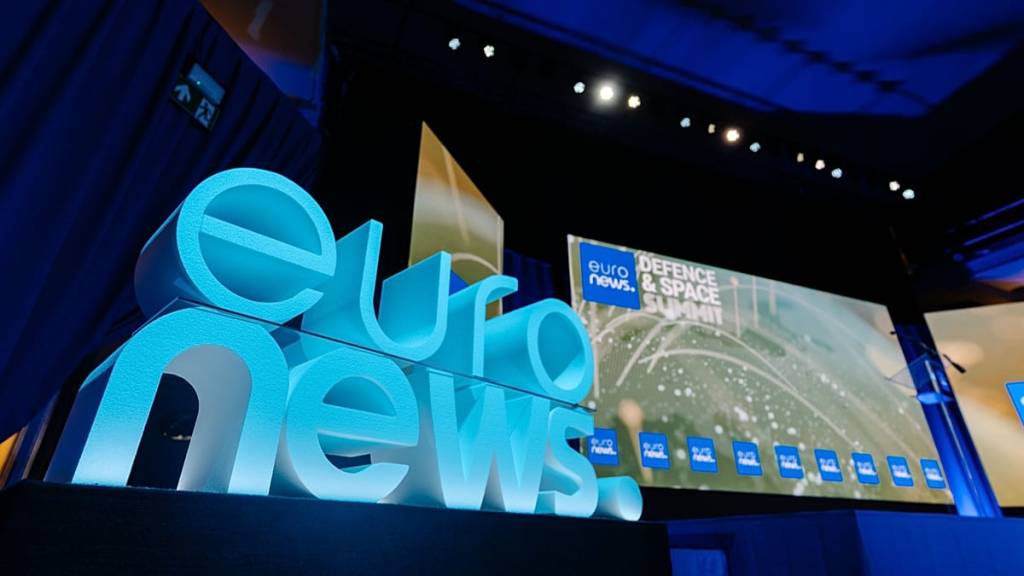
The push to embed “Made in Europe” provisions in rearmament initiatives risks alienating NATO allies and hampering collective security, Andrew Puzder, the US ambassador to the EU, warned at the inaugural Euronews’ Defence and Space Summit.
“When lives are on the line, capability and availability should determine the solution, not geography,” Puzder said in his address.
“We cannot afford to create internal impediments.”
Puzder pitched “Made in NATO” as an alternative approach that would allow greater access for US defence companies, which risk losing out on lucrative contracts under the more restrictive “Made in Europe” vision advocated by France.
“We’re stronger when we work together,” he said. “We must succeed together.”
Earlier, Belgian Defence Minister Theo Francken issued a stark warning to his European peers: Europe will face “a dark winter” with the multiplication of hybrid threats.
Francken also urged Europe that “everything needs to go faster” when it comes to scaling up air defences to protect the continent from Russia’s air attacks, including to fight jet-powered drones “that come at 600 kilometres per hour”.
“We need air defence, air defence, air defence,” Francken said, adding that Europe needed more stocks, more production, and a larger industrial base.
“Everything needs to go faster.”
These are among the speakers at the Euronews Defence & Space Summit, with guests gathering to discuss how the continent faces growing pressure to increase military readiness and strengthen Europe’s response to emerging threats.
NATO Secretary General Mark Rutte, European Commissioner for Defence and Space Andrius Kubilius, European Commission Executive Vice-President Henna Virkkunen and Bulgarian Prime Minister Rumen Radev are set to take the floor.
The event comes as European governments are stepping up defence spending and looking at ways to improve cooperation on procurement, military mobility and industrial production.
Recent incidents involving drones and other forms of suspected hybrid activity have also increased attention on the protection of critical infrastructure and Europe’s ability to respond to threats below the threshold of conventional armed conflict.
European Commission President Ursula von der Leyen has described such incidents as part of a “new era of European security”.


Leave a comment