
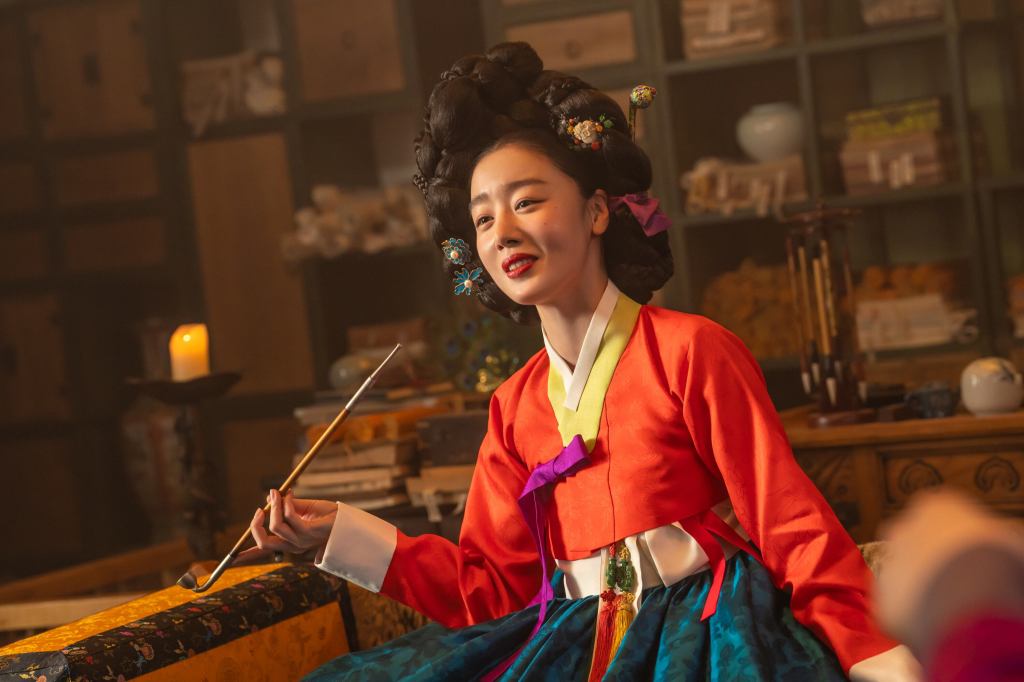
A luxurious wardrobe filled with colorful hanboks belonging to “Lady Cho” and the newly renovated tobacco shop of “Bunhee,” which appears freshly remodeled. Amid the glamorous and tidy Bukchon, protagonists with Western features engage in tormented love.
Netflix’s historical drama “The Scandal” (8 episodes), set in 18th-century Joseon’s Bukchon, failed to captivate domestic audiences despite promoting “Korean beauty.” Known as a remake of the French novel *Les Liaisons dangereuses* (the basis for the 2003 film *Untold Scandal*), it garnered significant attention but received mixed reactions. On the domestic review site KinoLights, it ranked among the lowest-scoring Netflix productions of the year. It also failed to gain traction overseas, falling outside the top 10 in FlixPatrol’s global streaming rankings (as of September 30) for both English and non-English series.
Set in the aristocratic social circles of Bukchon, the series explores seduction and intense romantic tensions between men and women. Netflix has previously succeeded with similar themes, such as *Bridgerton*, which reimagined 19th-century Regency-era British nobility and ran for four regular seasons. Expectations were high that “The Scandal” would become a modern, lively “Bukchon version of Bridgerton,” but the outcome differed. Some viewers even favored the older film *The Scandal*, granting it a “decisive victory” over the series.
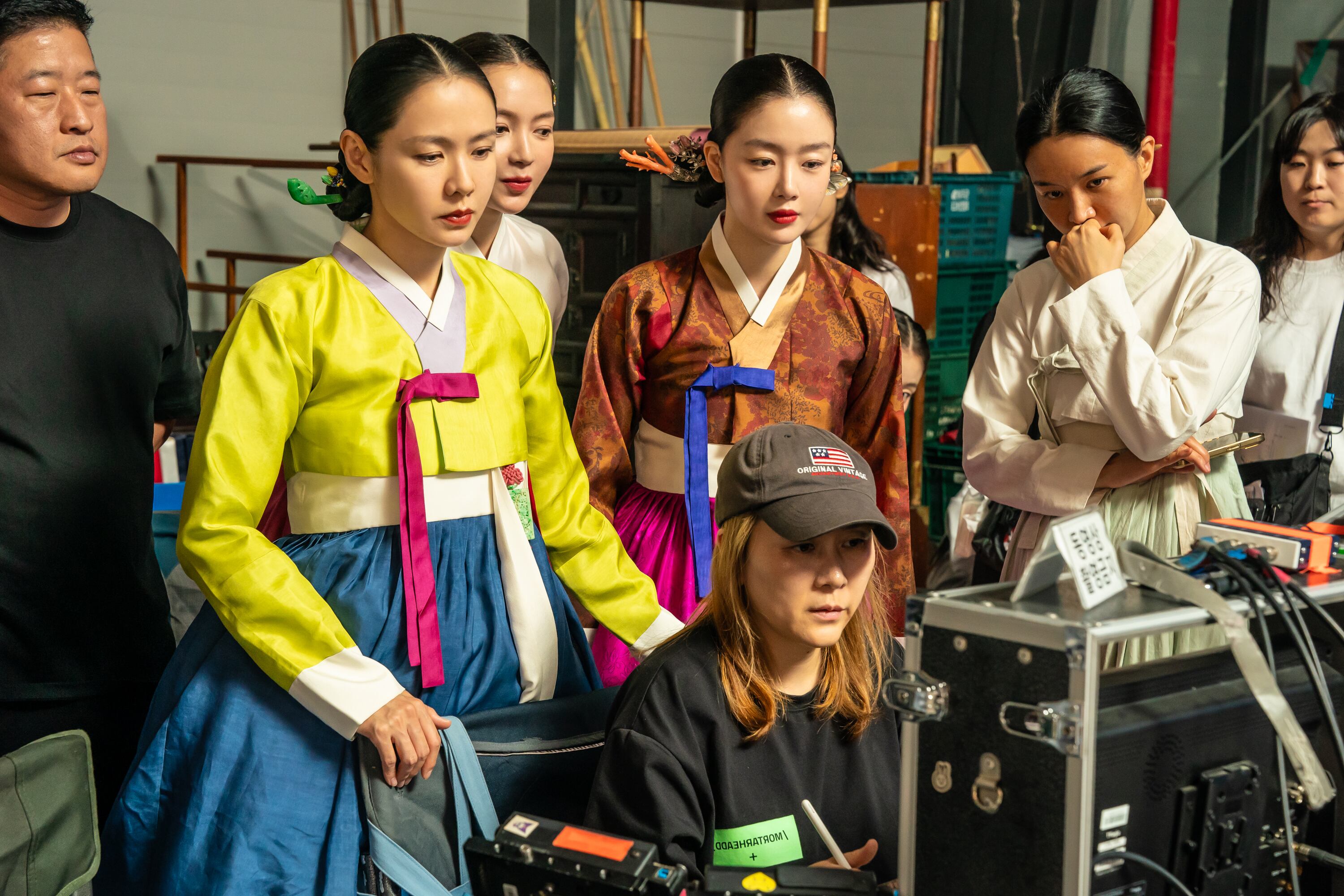
The series, with minimal changes from the film’s framework, merely swapped actors and sets, inviting direct comparisons. Unlike *Bridgerton*, which blended historical visuals with modern elements to create relatable narratives, “The Scandal” adhered closely to its 18th-century source material. The story follows Heeyeon, a woman striving to preserve her virtue; Jo Won, a man attempting to seduce her; and Lady Cho, who manipulates Jo Won. While the film’s tension and density were condensed into two hours, the series felt sluggish, and its unfamiliar portrayal of “Korean aesthetics” drew criticism. Casting choices were scrutinized for mismatching the historical setting, and some viewers found the film’s understated, restrained depiction of “Korean beauty” more appealing. Harsh reviews included comments like “Foreigners might like it” and “There’s not a shred of authenticity,” reflecting disappointment with its historical credibility.
The director, Jung Ji-woo (known for *Happy End*, *Silver Stallion*, and *Yoo Yeol’s Music Album*), expressed regret over comparisons to the film. He emphasized the story’s focus on Jo Won, a man trapped in despair by his relationship with Lady Cho—the dominant female figure from the original novel—and described it as a completely reimagined tale set in Joseon’s era of emerging modernity. Despite high sensuality in romantic scenes, he noted efforts to avoid exploiting sexual tension for shock value.
The series received praise for its delicate art direction and visual aesthetics. However, its failure to fully utilize the 8-episode format was a missed opportunity. The emotional arcs of the three protagonists, often unclear, stretched across the entire series. Episodes could have explored Lady Cho’s modern-like ambitions or illustrated the mechanics of Bukchon’s social hierarchy to add depth.




Leave a comment