
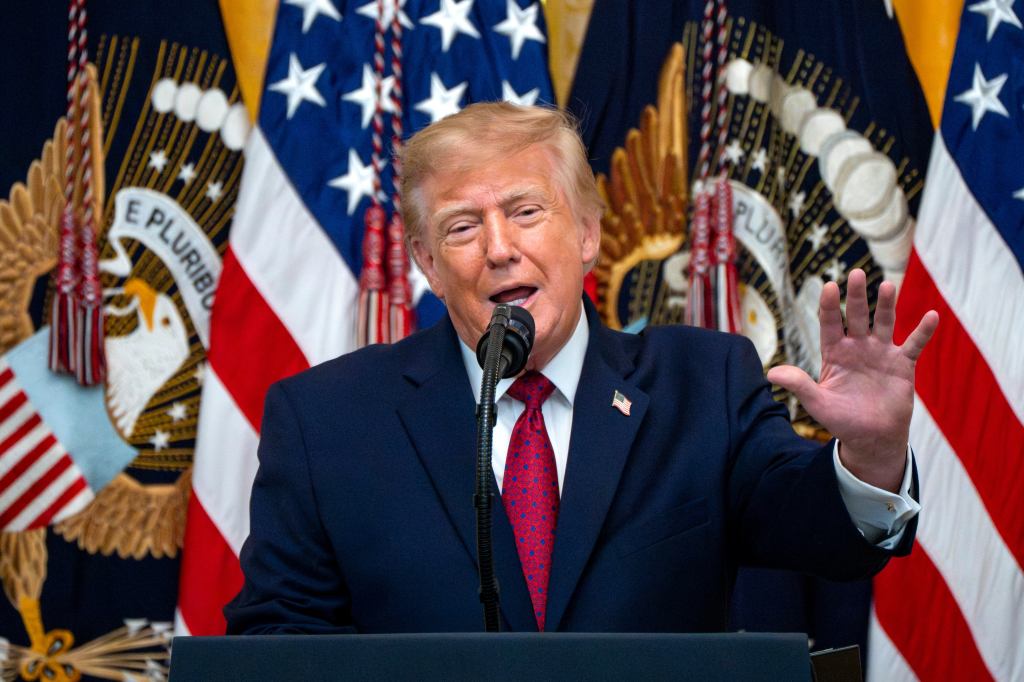
U.S. President Donald Trump officially announced on the 30th (local time) that he will push forward with the construction of the Alaska liquefied natural gas (LNG) pipeline, a project delayed for decades, utilizing South Korea’s investment funds in the U.S. Trump emphasized that this project “will be one of the largest energy projects in U.S. history,” highlighting its potential to create jobs in Alaska and reduce energy costs.
At the White House, Trump stated, “Today, we’re thrilled to announce one of the largest energy infrastructure investments in American history thanks to the agreements my administration has secured with the Republic of Korea,” adding that “they will invest up to$200 billion dollars.”
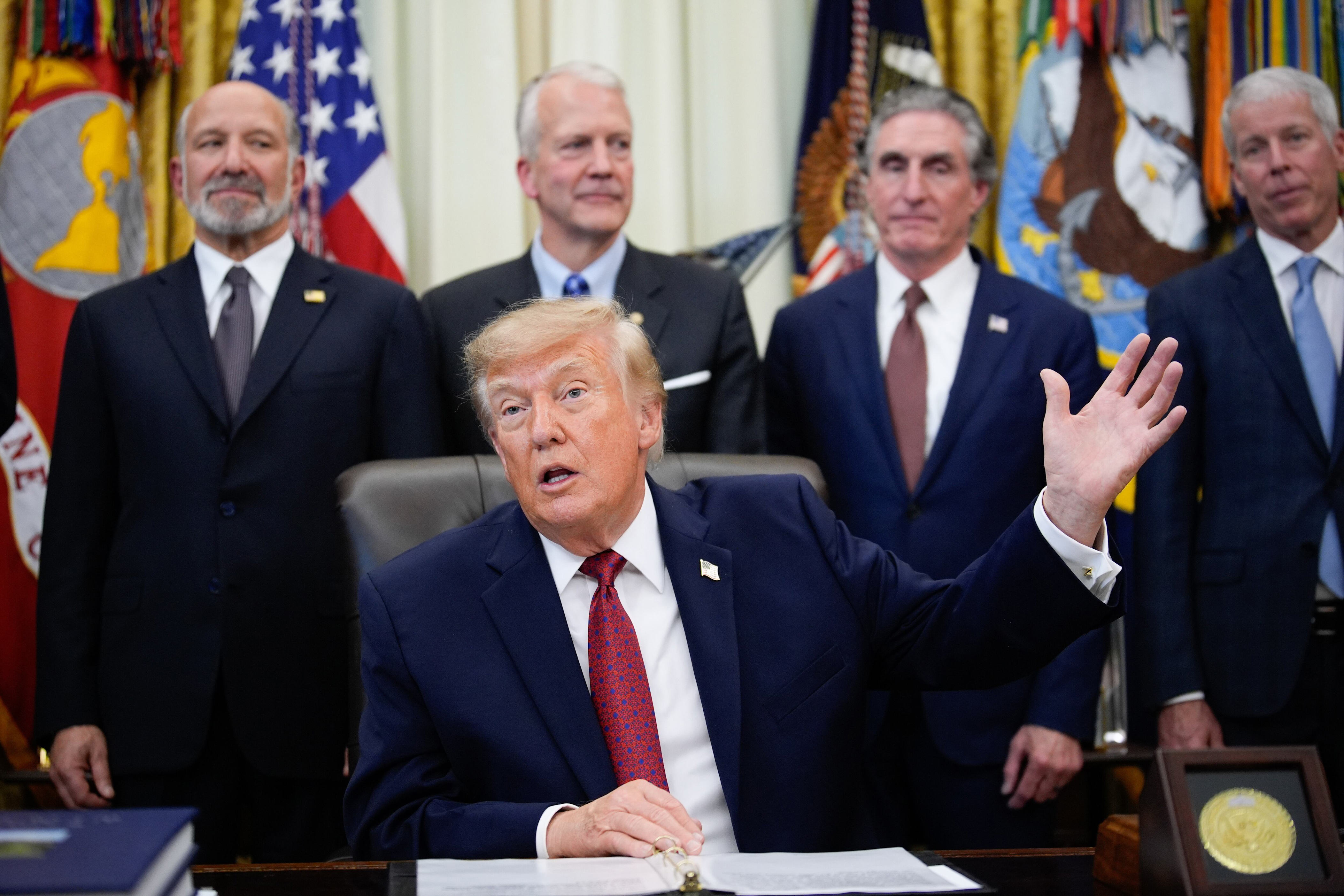
He listed the investment targets: a 6-gigawatt (GW) power facility in Texas, eight large-scale nuclear power plants in the U.S., and the Alaska LNG pipeline. Trump specifically highlighted the Alaska LNG project, saying, “At long last Alaska liquefied natural gas pipeline. That’s a big one.” U.S. Secretary of Commerce Howard Lutnick, who was present, revealed that “South Korea will invest over 50 billion dollars (68 trillion Korean won) in the Alaska LNG project.”
Trump clarified that South Korea’s investment funds would finance the Alaska LNG project and other energy initiatives. Referencing the South Korea-U.S. trade agreement, he claimed, “In our trade agreement with South Korea, they have to invest hundreds of billions of dollars. And for doing that, I reduced their tariffs to 15%,” adding, “They paid to get them reduced, and part of that money is going into this project.” He continued, “Otherwise, this project is so big probably, I don’t know, maybe the money wouldn’t be very easily available.”
Trump stated, “By building the Alaska LNG pipeline, we will deliver nearly 4 billion cubic feet of LNG per day, and that puts us at a level that is not comparable with anyone else.”
The Alaska LNG project involves transporting natural gas produced in northern Alaska through a 1,300-kilometer pipeline to the southern region, liquefying it, and exporting it to Asia. The project is estimated to cost between 44.5 billion and 54.5 billion dollars, approximately 60 trillion to 74 trillion Korean won.
Trump argued that the project would directly benefit Alaska’s economy, saying, “ It will create up to 12,000 construction jobs immediately and 1,000 operational jobs,” and that annual energy costs for Alaskan households could decrease by up to 1,500 dollars, or even 2,200 dollars in some cases.
He also emphasized that the Alaska LNG project had been proposed for decades but repeatedly stalled. “For five decades, politicians have talked about the Alaska pipeline,” Trump said. “I’ve been hearing about it from the time I was a little boy, ‘The Alaska pipeline’s going to be built someday,’ but we’re finally getting it all done.”
Trump actively credited Republican Senator Dan Sullivan of Alaska for the project’s success, stating, “Senator Sullivan has been working on the pipeline for almost 20 years” and calling him “totally responsible for this pipeline, for what we’re doing.” He repeatedly mentioned Sullivan’s candidacy in the upcoming November elections, publicly endorsing him.
The event was attended by U.S. Secretary of Commerce Howard Lutnick, Secretary of the Interior Doug Burgum, Energy Secretary Chris Wright, Senator Sullivan, Alaska Governor Mike Dunleavy, and Representative Nick Begich, along with executives from companies involved in the investment projects.
The White House explained that South Korea’s 200 billion dollar investment, approximately 271 trillion Korean won, falls under the strategic investment category of the 350 billion dollar, approximately 475 trillion Korean won, investment package promised in last year’s South Korea-U.S. trade agreement. Reuters reported, citing a source from the White House, that approximately 54 billion dollars, around 73 trillion Korean won, would be allocated to the Alaska LNG project.
However, the Alaska LNG project has faced challenges for decades, including high initial costs, potential construction cost overruns, and funding difficulties. Many of the secured LNG purchase agreements are non-binding, meaning the project’s commercial viability has not been fully verified. Observers suggest that Trump, ahead of the November midterm elections, is framing the Alaska LNG project as a confirmed investment achievement by South Korea to support Senator Sullivan’s re-election campaign.
The South Korean government has not yet finalized its investment in the Alaska LNG project. Unlike Trump’s declaration, investments under the South Korea-U.S. Strategic Investment Special Act must adhere to commercial rationality, undergo feasibility and legal reviews, and be reported to the National Assembly as part of domestic procedures.




Leave a comment