
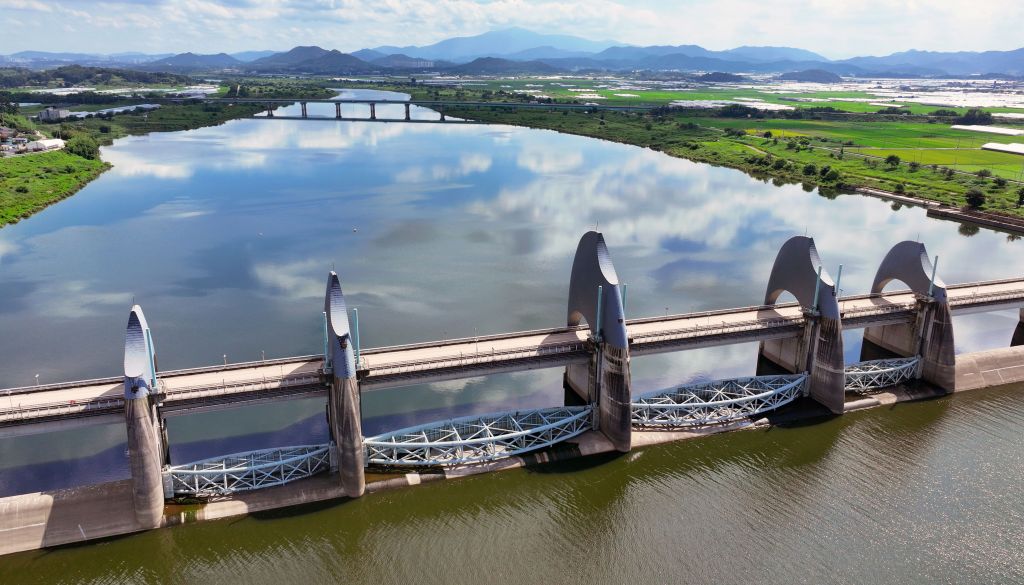
The government is set to announce a plan for handling 16 weirs on the four major rivers by the end of this year, with a related government-commissioned report found to have effectively concluded that dismantling or permanently opening the weirs is necessary. The report described ecological changes caused by the Four Major Rivers Project as a “disaster” and defined the weirs’ dismantling or permanent opening as the “only way” to suppress algal blooms. Critics argue the report heavily reflects environmental groups’ claims, prioritizing weir dismantling and permanent opening without sufficient verification of individual weirs’ effectiveness or economic feasibility.
This newspaper obtained a draft of the report titled *‘Study on Measures to Promote the Renaturalization of the Four Major Rivers’* through the office of People Power Party Rep. Kim Wi-sang. Commissioned by the Ministry of Climate, Energy and Environment from the Korean Society of Hydrological Engineering at a cost of approximately 50 million Korean won, the 126-page report—completed in February this year—details renaturalization goals, scope, processing timelines for the 16 weirs, as well as organizational and budget plans. It serves as a de facto comprehensive blueprint for the government’s renaturalization policy.
The issue lies in the report’s foundational assumption that dismantling or permanently opening the weirs is a given, with other policy alternatives inadequately reviewed. The report defines renaturalization’s basic principle as “permanently opening weir gates or dismantling and removing the structures themselves.” It also proposes a concrete timeline: finalizing handling plans for all 16 weirs this year and completing their dismantling or permanent opening by the first half of 2029.
The report includes emotionally charged and definitive language uncommon in government-commissioned studies. It claims the Four Major Rivers Project caused stagnant water, creating an “optimal environment for algal blooms.” It labels the project’s impact on rivers as a “disaster” and even uses the term “green laverte”—a phrase environmental groups have historically used to criticize the project—in a subheading about algal blooms. The conclusion frames renaturalization as restoring “democratic procedures and societal common sense” and asserts that dismantling or opening weirs is the “only way” to suppress algal blooms.
In its economic analysis, the report preemptively concludes that dismantling or opening weirs is justified. While the Moon Jae-in administration conducted economic feasibility analyses when deciding on weir handling for the Geum and Yeongsan Rivers, the Board of Audit and Inspection pointed out in 2023 that the methods and data used had limitations in validity and reliability. Despite this, the report states, “Even if reanalysis is performed, the clear benefits of improved water quality and ecosystems mean the cost-benefit (B/C) analysis would not change the conclusion that dismantling or opening weirs is justified.”
The report’s cited evidence is one-sided. It heavily references media articles, environmental group websites, and survey results critical of the Four Major Rivers Project, while ignoring contradictory analyses. A 2023 study by Seoul National University’s Professor Choi Ji-yong and the National Institute of Environmental Research compared water quality for 10 years before and after the project. It found that major water quality indicators at 16 weir sites had generally improved due to pollution reduction measures implemented alongside the project.
The report’s lead researcher, Professor Baek Kyung-oh of Hankyong National University, has previously advocated for dismantling the Four Major Rivers weirs. He currently serves as a member of the Presidential Committee on National Water Management. A figure who has publicly criticized the weirs led the government-commissioned study, and the report’s conclusions align with his existing stance.
The Ministry of Climate, Energy and Environment is separately analyzing the cost-benefit (B/C) of each weir. It plans to announce operational plans and dismantling decisions for each weir by year’s end, incorporating these analyses. However, criticism arises that the government is shaping its renaturalization plan based on a report heavily influenced by one-sided arguments.
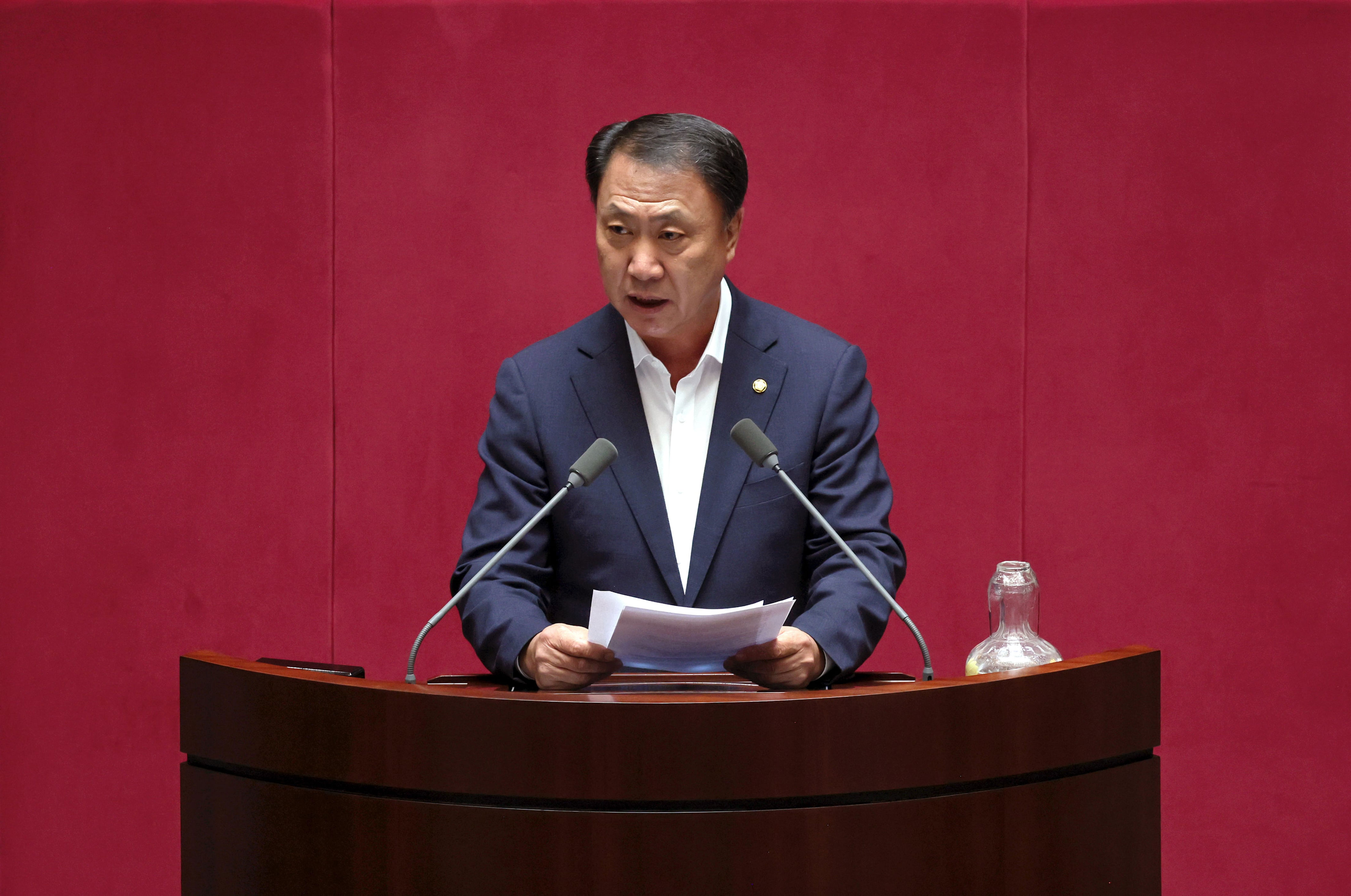
Rep. Kim Wi-sang stated, “National water policies must be grounded in science, and ideologically biased judgments could harm national interests. In an era of climate crises marked by extreme rainfall and droughts, major water policy changes like the Four Major Rivers renaturalization require caution.”





Leave a comment