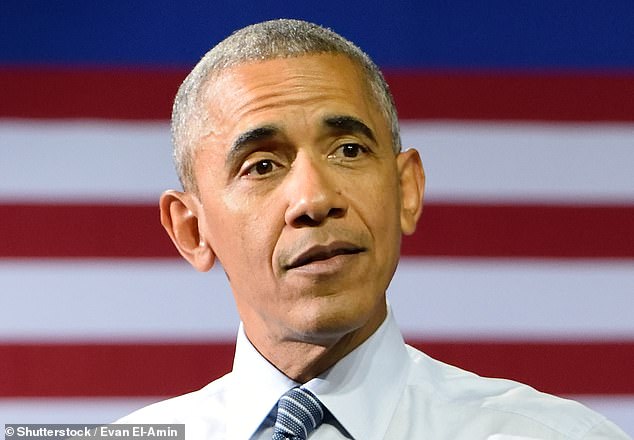
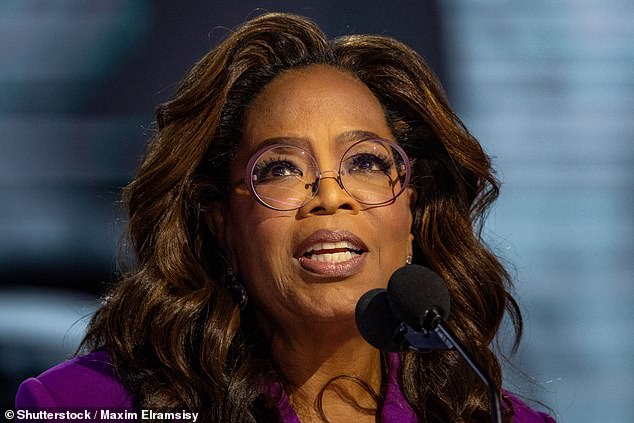
From Barack Obama to Oprah WinfreyMany public figures radiate self-assurance—sometimes even when speaking to vast audiences.
Now, researchers suggest they’ve uncovered the key behind their poise.
Scientists from the University ofGlasgowclaim that to project confidence, simply lift your eyebrows and blink at a relaxed pace.
On the other hand, drawing your brows together and squinting may signal insecurity, they note.
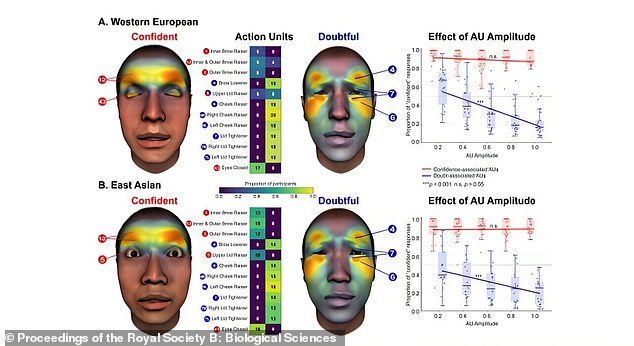
Across different cultures, raising the eyebrows and closing the eyes were linked to higher perceived confidence, while lowering the brows and tightening the eyes conveyed uncertainty,” said Rachael Jack, the study’s lead researcher.
These results build on earlier observations about facial expressions in dialogue by showing that these movements don’t just follow speech—they actively influence how messages are interpreted.
The research was detailed in a paper published inProceedings of the Royal Society B: Biological SciencesThe researchers aimed to investigate whether facial expressions affect how confident someone appears.
Linguistic cues like ‘uhm’ and ‘maybe,’ along with vocal traits such as elevated pitch, rising tone, and a slower speaking pace, are consistently linked to uncertainty,” the researchers noted.
Meanwhile, facial expressions have been largely overlooked in this area, even though it’s commonly observed that people make facial gestures—like a furrowed brow or a shrug—when responding to questions.
To explore this further, the team recruited 44 individuals—22 White British native English speakers and 22 Chinese native Mandarin speakers.
Participants viewed videos featuring computer-generated speakers from two distinct cultural backgrounds, giving ‘yes’ or ‘no’ responses.
In each video, the researchers manipulated the speakers’ facial expressions around the eyes and eyebrows, while maintaining identical speech content and vocal tone.
Following each video, participants were asked to assess the level of confidence they perceived in the speaker’s response.
Across different cultures, the findings showed that raising the eyebrows and closing the eyes were linked to higher levels of perceived self-assurance.
Conversely, lowering the brows and tightening the eyes conveyed uncertainty.
Dr Jonas Nölle, the study’s lead researcher, stated: ‘Listeners rely on more than just spoken words and vocal tone when understanding speech.’
‘By systematically altering facial expressions while keeping the verbal message unchanged, our research demonstrates that even with identical words and voice cues, shifting a speaker’s facial movements can change whether their statements seem confident or hesitant.’
The study was published shortly after scientists challenged the idea thatassuming a ‘power pose’ actually enhances perceived confidence.
The expansive stance—feet apart, chest out—popularized by figures like Beyoncé, Cristiano Ronaldo, and Theresa May—gained widespread attention in 2010.
Yet, in 2019, a US researcher reviewed the existing body of work on power posing and concluded that most studies lacked solid methodology or failed to show any significant impact.
Absolutely no research has ever shown that a power pose produces any beneficial outcomes when compared to a standard, neutral posture,” stated Professor Marcus Credé from Iowa State University.
I’m genuinely amazed by how a multi-million-dollar industry has emerged based on the concept of power posing.
What exactly is the Power Pose?
The ‘Tory Power Pose’ was a stance adopted by several Members of Parliament during the 2015 UK Conservative Party Conference.
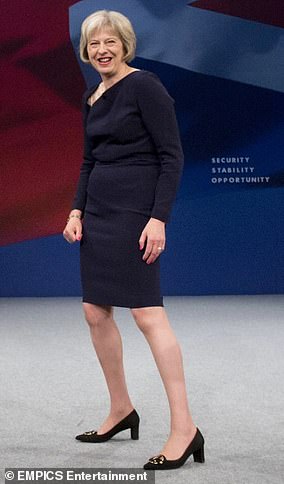
Those who used the pose stood with their legs apart, hands resting at their sides, and their upper body in a relaxed position.
The posture has also been referred to as ‘the Beyoncé,’ named after the singer who frequently strikes similar stances during her live shows.
At its peak popularity, the pose was said to enhance confidence, increase testosterone levels, and reduce stress.
However, recent studies have concluded that there is no actual evidence backing any of these claimed advantages.
Prominent politicians who have been observed employing the now-discredited method include David Cameron, Sajid Javid, Theresa May, and George Osborne.




Leave a Reply