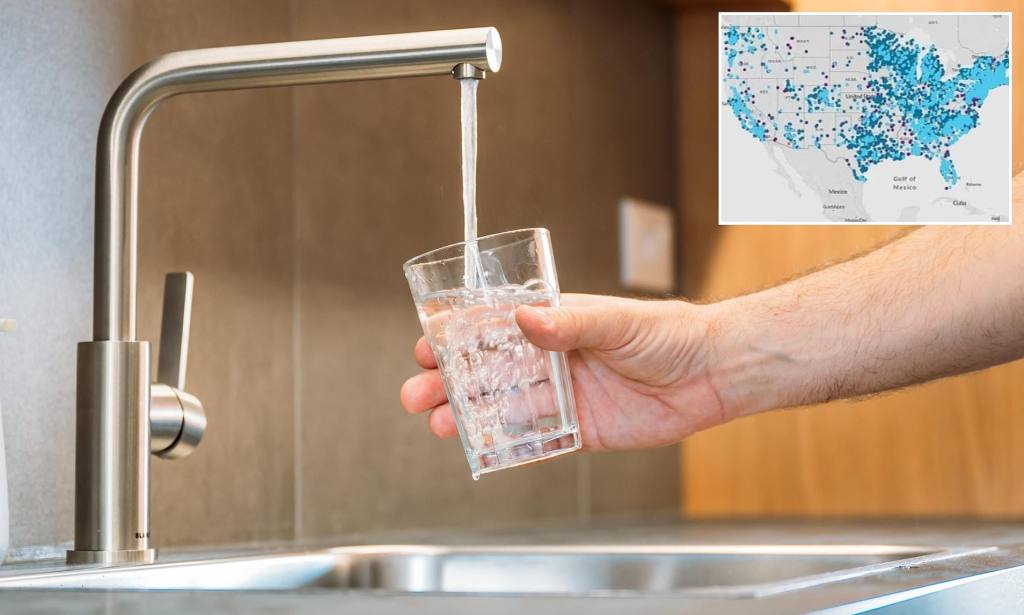
A recent study indicates that the level of persistent chemicals in tap water across the United States could be double what was previously estimated.
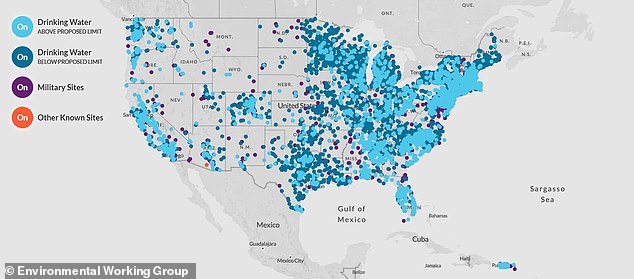
Scientists analyzed over 1.8 million records from the Environmental Protection Agency (EPA) detailing the presence of per- and polyfluoroalkyl substances (PFAS)—commonly known as forever chemicals—in public drinking water supplies nationwide.
By treating PFAS levels below the detection limit as zero, current EPA reporting methods account for only approximately 44 percent of the actual average concentration of these chemicals in public water systems.
This suggests that the true extent of contamination by forever chemicals in these systems may be significantly higher than official figures imply. PFAS are known toremain in the environment for extended durationsand are increasingly associated with fertility problems, liver toxicity,cancerand delayed development in children.
According to EPA data, at least 176 million Americans rely on water sources where at least one type of PFAS has been identified, yet more than half of the test results fall below the agency’s minimum reporting threshold and are recorded as zero.
The team identified the largest projected discrepancies inCalifornia, with Texas andFloridaranking next, based on PFAS concentrations and the number of individuals dependent on these water sources.
Gehendra Kharel, lead researcher and associate professor atTexasChristian University, stated: ‘When chemical levels fall below our detection limit, they’re frequently recorded as zero during assessments of how widespread contamination is.
‘Our aim was to examine how assuming those undetected values as zero affects the overall understanding of PFAS presence in drinking water.’

As per the Safe Drinking Water Act, the EPA mandates public water systems to test for 29 distinct types of PFAS in tap water.
The EPA’s lowest reporting threshold for PFAS in drinking water stands at four parts per trillion (ppt).
The scientists involved in the recent study, detailed inCell Reports Sustainability, observe that the majority of individual PFAS test results in EWG’s dataset are below this threshold, resulting in the EPA recording them as zero.
Kharel points out that although this doesn’t mean the water is entirely free of PFAS, it frequently gets treated as zero when agencies and researchers report average PFAS levels in drinking water.
In the current study, researchers examined water data for 25 PFAS types that had at least one detection across the nation.
They applied this data to calculate the discrepancy between reported PFAS concentrations and those derived from their own analysis.
Overall, the team discovered that while conventional estimates place the national average PFAS concentration in drinking water at approximately 2.6 nanograms per liter, their model estimates a higher average of around 5.2 nanograms per liter.
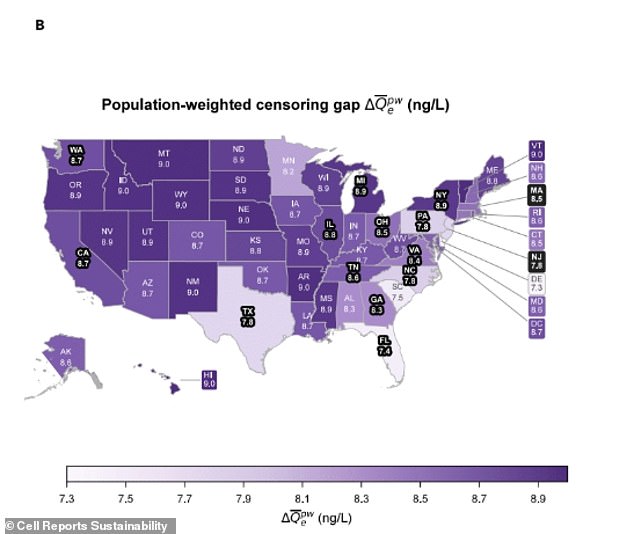

The researchers also contrasted state-level PFAS concentration estimates based on traditional methods with those generated by their model, which incorporates measurements below standard reporting limits.
Scientific investigation continues to reveal the health risks associated with PFAS and the precise amounts that may contribute to long-term harm. The EPA emphasizes that even minute quantities of PFAS can build up in the body over time, as these substances do not degrade, potentially causing conditions such as elevated cholesterol, reproductive problems, developmental delays, liver damage, and specific cancers.
The EPA advises consuming filtered water to reduce exposure.
Kharel warns that the results should not immediately trigger alarm. He explained that the study merely estimates how PFAS levels are reported and does not confirm that values below the detection limit present a health hazard.
Nevertheless, he points out that these findings may offer a more comprehensive view of PFAS concentrations in tap water.
He stated: ‘When a water quality report states “not detected,” it indicates the level is below the reporting threshold, not that it is absent.’
‘Our approach enables water providers and utilities to acknowledge this distinction, helping identify where additional testing is needed and improving transparency about their knowledge gaps.’





Leave a Reply