
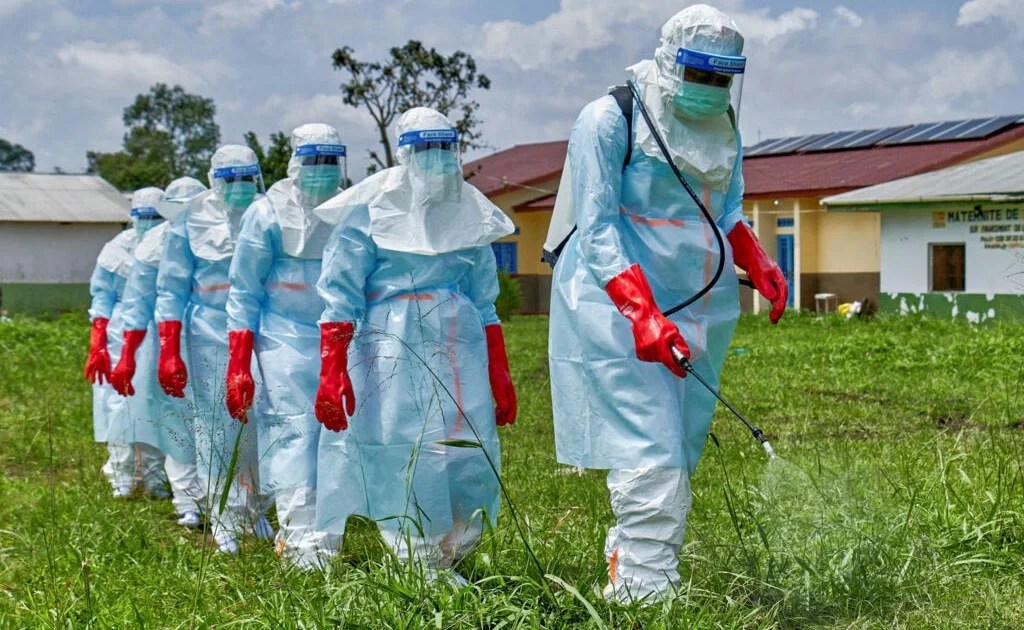
RenownedVirologists have called on the government, medical professionals, and the general population to prioritize readiness and reinforce preventive actions after the country confirmed a case of Bundibugyo Ebola virus disease, cautioning that the current strain lacks an approved vaccine or targeted therapy.
Top virology experts emphasized the importance of early identification, rapid isolation of suspected cases, thorough contact tracing, rigorous infection control protocols, and ensuring healthcare workers have sufficient personal protective equipment to curb the spread.
In exclusive conversations with PUNCH Healthwise, these specialists urged Nigerians to avoid downplaying the outbreak due to political motives or succumbing to fear, recommending strict adherence to public health guidelines and immediate medical consultation if symptoms such as sudden fever, intense headache, sore throat, muscle pain, or diarrhea emerge—particularly following recent travel or contact with affected regions.
The virologists clarified that Ebola spreads through direct contact with the blood or bodily fluids of infected individuals or deceased persons, underlining regular handwashing as a critical step in minimizing transmission risks.
They advocated for enhanced monitoring systems, widespread public education, and stronger support for frontline healthcare workers to prevent uncontrolled spread of the virus.
PUNCH Healthwise reports that Nigeria has recorded one imported case of Ebola Bundibugyo virus disease in the Federal Capital Territory, marking it as the fifth nation to identify the virus since the outbreak was declared in the Democratic Republic of the Congo on May 15, 2026.
The Nigeria Centre for Disease Control and Prevention has activated its incident management system to oversee the response, while the Federal Government has quarantined high-risk contacts in designated facilities and is actively tracking potential exposures.
The World Health Organisation characterizes Bundibugyo virus disease as a serious and frequently lethal form of Ebola caused by the Bundibugyo virus.
The World Health Organization reported that the average fatality rate for Ebola virus disease stands at 50%, with past figures varying between 25% and 90%, influenced by the specific virus variant, the patient’s overall health, and the availability of medical treatment. It highlighted that the Bundibugyo ebolavirus carries a fatality rate of around 32.8%.
In offering expert guidance on containment strategies, Professor Oyewale Tomori, a virologist and former President of the Nigerian Academy of Science, advocated for focused surveillance and targeted support for healthcare facilities in regions with confirmed or suspected cases, opposing broad, nationwide restrictions.
He emphasized that readiness must involve safeguarding frontline healthcare workers, who are especially vulnerable when managing suspected or confirmed Ebola cases.
“Healthcare workers are the first to be exposed. Therefore, we must protect them—ensure they have proper PPE and remain vigilant, especially now,” Tomori stated.
The distinguished virologist added that no licensed treatment or vaccine currently exists for the strain under consideration.
As the former Regional Virologist for WHO Africa Region, Tomori urged Nigerians to treat the outbreak with seriousness and adhere to public health directives, rather than rejecting official announcements due to political motives.
He called on the public to prioritize safety, warning that neglecting preventive actions could lead to dire outcomes.
“I believe the key message should be: trust what the government says for your own protection and take all necessary precautions. If you dismiss it as political and then contract Ebola, you won’t be alive to vote. No one who dies from Ebola can participate in elections,” he remarked.
Tomori, a former President of the Nigerian Academy of Science, stated that Ebola spreads primarily through direct contact with an infected individual, underscoring the importance of identifying and tracking contacts to prevent further spread.
He emphasized that contact tracing must include anyone who had close interaction with a confirmed case, such as those exposed during hospitalization.
Nevertheless, the disease control specialist advised Nigerians against fear, highlighting that the success of contact tracing would be key in assessing how widely the virus might have spread.
“There’s no reason to panic. The government is taking strong measures to control it. Let’s remain hopeful while awaiting the outcomes of contact tracing,” he remarked.
Additionally, Prof. Sunday Omilabu, Director of the Centre for Human and Zoonotic Virology at Lagos University Teaching Hospital, explained that while a vaccine exists for the Zaire strain responsible for the 2014 outbreak, no approved vaccine is yet available for the Bundibugyo strain.
He added that scientists are actively working on a vaccine for the Bundibugyo strain, and current supplies of the Zaire vaccine are being given to healthcare workers treating patients.
The distinguished virologist also pointed out that there is currently no specific treatment for this strain, and patients infected with the Bundibugyo virus are being treated symptomatically, with care focused on managing complications like diarrhea and sore throat.
He noted that prompt medical intervention and effective symptom management could significantly increase the likelihood of recovery.
“The approach to treatment is symptom-driven. They manage each symptom individually. For instance, if someone has diarrhoea, there’s a specific protocol for that. Similarly, those with a sore throat receive targeted care. Currently, treatment is guided solely by the symptoms present,” he explained.
Citing Nigeria’s response during the 2014 Ebola outbreak, Omilabu noted that early medical intervention played a key role in saving some patients’ lives.
Regarding the potential for transmission among individuals who had contact with an infected person but were not yet symptomatic, the virologist stressed that such contacts should closely monitor their health and seek immediate medical help if symptoms appear.
He added that healthcare workers must trace the interactions of suspected cases from the onset of symptoms onward, as part of broader efforts to identify additional contacts and curb further spread.
Omilabu underscored the critical need for laboratory testing and timely medical evaluation for anyone showing symptoms after a potential exposure.
The virologist emphasized that suspected cases must be evaluated and tested, highlighting that definitive diagnosis requires laboratory confirmation.
“Laboratory confirmation of viral material in a sample is essential before declaring someone positive,” Omilabu stated.
He recommended that individuals feeling unwell and suspecting prior exposure should contact a hospital without delay, enabling healthcare providers to assess both their symptoms and exposure history.
The well-known virologist, with more than three decades of experience, also emphasized the importance of maintaining fundamental hygiene measures, particularly frequent handwashing, as a key step in minimizing infection risks.
“Now that we’ve confirmed a case, it’s essential to return to our routine of handwashing. Always wash your hands after handling money, touching surfaces, or being outside. Do so before eating or touching your face. The virus spreads through contact and can contaminate objects like doors, doorknobs, tables, and even hospital bed linens. Therefore, we must re-establish the habit of regular handwashing. The more often we wash, the better we remove potential threats. We’ve seen this work in Nigeria before, and it’s proven effective,” he stated.
The virologist expressed additional worry over the inadequate number of healthcare workers in the nation, warning that the ongoing outbreak would intensify pressure on an already overstretched medical workforce.
He advocated for financial and other incentives to motivate healthcare professionals to serve in treatment and isolation facilities.
“They must support healthcare providers. Just as Lagos State did, by offering special allowances to encourage staff to work at centers managing cases. These extra payments would draw more individuals to take on frontline roles,” Omilabu said.
Provided by SyndiGate Media Inc.Syndigate.info).





Leave a Reply