
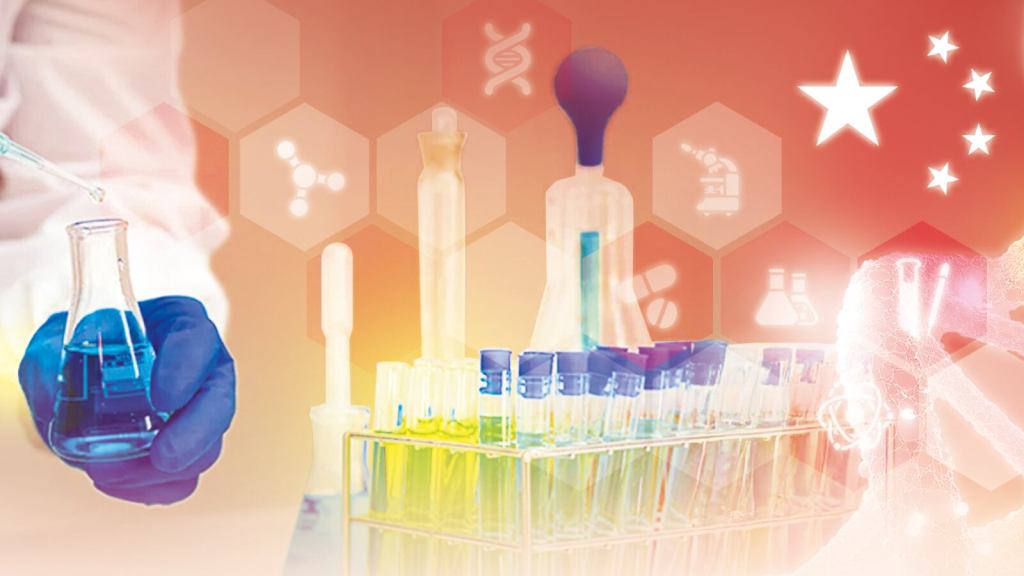
Chinese pharmaceutical and biotech firms are approaching technology export deals worth 200 trillion Korean won this year, having already outpaced last year’s full-year figures and nearing tenfold South Korea’s overall contract value. With increasing contract sizes and higher upfront payments, their footprint in the global pharmaceutical sector continues to expand.
As reported by Reuters and other outlets on the 25th, Chinese pharmaceutical companies’ technology export contracts this year reached $139 billion (about 184 trillion Korean won), exceeding last year’s entire annual total of $135.7 billion (around 179 trillion Korean won). This figure is roughly 9.5 times greater than South Korea’s total contract value of $14.7 billion (approximately 19.5 trillion Korean won) for domestic firms this year, according to data from the Korea Pharmaceutical and Bio-Pharma Manufacturers Association.
The scale of individual deals is also rising significantly. Global pharmaceutical analytics firm PharmCube noted that the average contract value for Chinese pharma and biotech companies this year stands at about $700 million—over ten times the 2018 average. For example, Henrui Pharmaceutical entered a 2024 agreement with U.S.-based Kailera Therapeutics (formerly Hercules), transferring rights to three GLP-1 class obesity treatment candidates. The deal includes upfront payments and milestone-driven royalties, with a potential maximum value of $6 billion (about 8 trillion Korean won), along with Henrui securing a 20% stake in Kailera.
Upfront payments received during the first three quarters of this year totaled $8 billion (approximately 10.5 trillion Korean won), surpassing last year’s full-year total of $7.2 billion. Both the overall contract values—encompassing future development and commercialization payments—and initial income have seen substantial growth.
According to KoreaBio’s analysis of a Deloitte China report, Chinese firms accounted for eight of the top ten global pharmaceutical transactions in the first half of this year. The biggest transaction was the $18.5 billion (about 25.5 trillion Korean won) deal between Chinese CSPC Group and British AstraZeneca, signed in January.
AstraZeneca acquired rights to a drug delivery system enabling sustained release of active ingredients, as well as an AI-powered peptide discovery platform. Peptides—short chains of amino acids—are increasingly vital in the development of novel therapeutics.




Leave a Reply