
Bulgaria, once a Soviet-aligned state during the Cold War and now a member of both the European Union and NATO, is witnessing a rise in influence among its pro-Russian political factions. Predictions suggest the nation may emulate Hungary’s path, where prolonged rule by pro-Russian forces has undermined cohesion within EU and NATO frameworks. Situated at the crossroads of the Balkans—a region historically prone to conflict—and along the Black Sea coastline, Bulgaria occupies a strategically sensitive position.
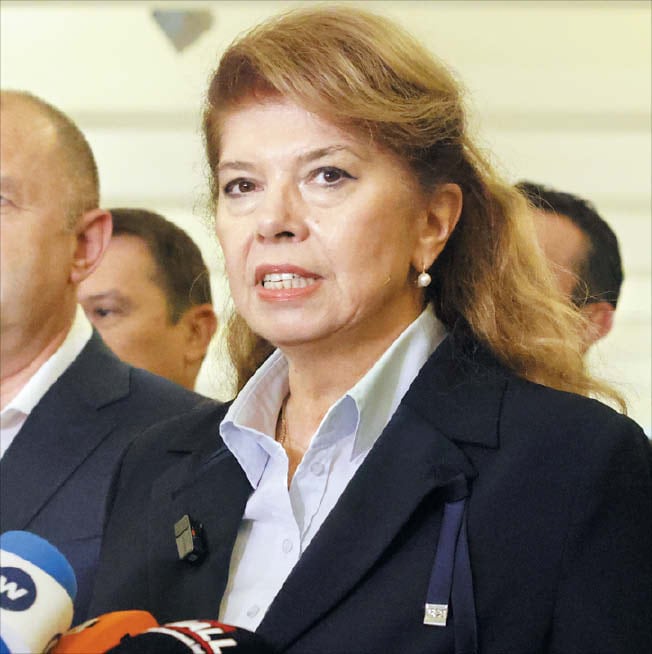
In the presidential runoff on November 1, Ilyana Yotova, the sitting president with pro-Russian inclinations, won 58% of the vote, decisively defeating former Prime Minister Andrey Kuyrov, who champions pro-Western policies and received 39%. Although Bulgaria functions under a parliamentary system where the prime minister holds executive authority, the president maintains key powers including military command, vetoing legislation, and appointing ambassadors and ratifying diplomatic agreements. Yotova, previously vice president, assumed the presidency in January after Rumen Radev stepped down to run for prime minister. Her electoral triumph cemented her role as the country’s unchallenged head of state. Radev led his Progressive Bulgaria Party to a sweeping victory in the April general election, capturing 131 of 240 parliamentary seats.
With the ruling party already holding a parliamentary majority, Yotova’s formal consolidation of power is expected to deepen Bulgaria’s alignment with pro-Russian policies. Though Bulgaria was part of the Soviet-led Warsaw Pact during the Cold War, it joined NATO in 2004 and the EU in 2007. Despite years of pro-Western leadership, the country remains the EU’s least economically developed member and has endured persistent political and economic turmoil, including eight snap elections since 2021.
Since Russia’s 2022 invasion of Ukraine, security threats near Bulgaria’s Black Sea coast have escalated, including increased drone activity and military incidents, heightening regional concerns. Exploiting this atmosphere, pro-Russian groups opposing Western-oriented policies have gained traction. Historical ties also contribute: having been under Ottoman rule for nearly five centuries, Bulgaria achieved liberation in 1878 through the Treaty of San Stefano, a consequence of the Russo-Turkish War. This legacy has cultivated relatively positive attitudes toward Russia compared to other former Eastern Bloc nations.
Radev has called for easing Western sanctions against Russia, opposed supplying arms to Ukraine, and advocated for stabilizing energy costs. Before the war, Bulgaria depended heavily on Russian fossil fuels, and a 2024 survey revealed that 62% of Bulgarians were against arming Ukraine. While the country seeks to strengthen relations with Russia, it continues to uphold its memberships in NATO and the EU. Given its dependence on EU financial support and NATO’s collective defense guarantees, a complete reversal in foreign policy remains improbable.



Leave a Reply