
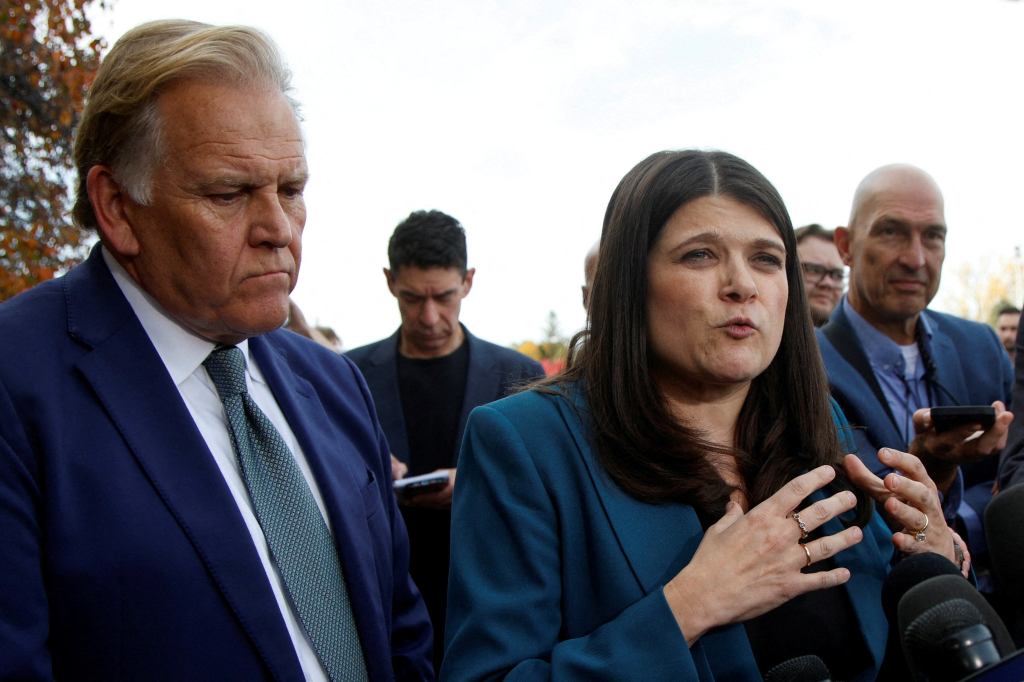
A sudden development has unfolded in Michigan, a crucial state in the U.S. midterm elections. Abdul El-Sayed, a former Wayne County health director and member of the Democratic Party, is locked in a fiercely contested race against Mike Rogers, a former Republican congressman, for one U.S. Senate seat—both candidates are within the margin of error. However, on November 1, Congresswoman Haley Stevens, a Democrat representing Michigan, publicly endorsed Rogers, the Republican contender.
This move has triggered concern within the Democratic Party, which is striving to regain control of the Senate and may deepen existing internal divisions. Stevens, a four-term female lawmaker with moderate and centrist views, narrowly lost the August primary to El-Sayed, a third-generation Egyptian American and member of the Democratic Socialists of America (DSA), a progressive faction. The DSA includes prominent left-wing figures such as Alexandria Ocasio-Cortez, a U.S. congresswoman, and Zohran Mamdani, the mayor of New York City.
In a video shared on X, Stevens announced she was stepping back from supporting El-Sayed, saying, “Abdul doesn’t want my involvement in his campaign, so I’ll stay out.” She continued, “I don’t agree with Hassan Fathy, and as a proud Democrat, I’m backing Rogers in the Senate race.” El-Sayed has been outspoken in criticizing Israel’s military actions against Hamas, a Palestinian Islamist militant organization. Hassan Fathy, another far-left commentator, has strongly denounced Israel’s position in the Middle East conflict and called for ending U.S. military aid. Stevens, who supports Israel despite not being Jewish, accused both men of anti-Semitism and made the controversial choice to back the opposing candidate.
Following the video release, Stevens joined Rogers at a church event and repeatedly attacked El-Sayed, declaring, “We can’t stand with hate.” Although she initially accepted her primary loss and promised support for El-Sayed, tensions over Israel intensified. The rift came to a head after a left-wing group aired an ad linking U.S. support for Israel to rising food prices. A planned unity event in Detroit, where Stevens and El-Sayed were to appear together at a church, ended in chaos.
Democratic leadership is now fractured. Even Chuck Schumer, the Senate Majority Leader and a moderate who backed Stevens during the primary, labeled her action a “vile betrayal.” While El-Sayed remained composed, analysts warn the party faces a critical crisis in a race it cannot afford to lose. Michigan is a pivotal swing state that often shapes election results. Incumbent Democratic Senator Gary Peters has announced he will retire, leaving the seat vacant.
If Democrats lose Michigan, it would severely undermine their efforts to reverse the current Senate imbalance (47-53). President Donald Trump responded with enthusiasm, calling it “a tremendous development” and commending Michigan voters for showing “unprecedented loyalty.” Some political observers see this conflict as a harbinger of the widening divide between the party’s moderate and progressive wings ahead of the 2028 presidential election.




Leave a Reply