
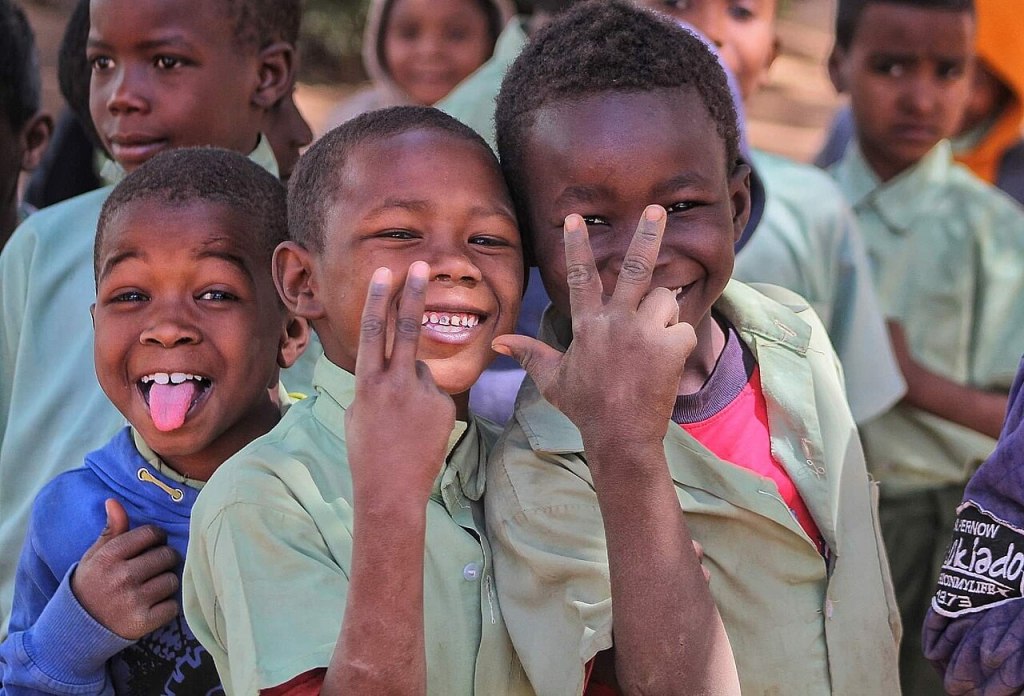
November 14, 2026 (KHARTOUM) – Fourteen-year-old Mujahid never thought he’d have to grow up before his childhood had even ended.
Likewise, 13-year-old Nemat never envisioned becoming a young mother responsible for her younger brothers and sisters.
Yet the ongoing conflict in Sudan has thrust the nation’s young into a brutal new reality.
In countless Sudanese households, childhood is no longer defined by games or education.
Instead, it has turned into a time of premature duty, where aspirations are sacrificed for the relentless effort to stay alive.
Under the weight of deepening economic crisis and sweeping societal upheaval driven by war and mass displacement, children are being forced into roles far beyond their years.
Some are compelled to work just to keep their families fed, others must look after younger siblings, and millions have left school behind altogether.
Responsibilities beyond their ageIn a residential area of Khartoum North, Mujahid’s day starts before the sun rises.
He manages the home duties, then ventures out in search of employment to support his family.
At day’s end, he comes back drained, his thoughts burdened by the constant pressure of financial demands.
“I used to dream, like every child, of becoming an engineer and spending time with friends, but life’s challenges forced me to focus on how I could assist my family,” Mujahid shared with Sudan Tribune.
A young mother
At just 13 years old, Nemat took on growing responsibilities at home after her mother became the sole provider.
“I rise early to prepare my siblings and assist with chores, and often there’s no time left to study,” Nemat explained.
She expressed a longing to go back to her previous life, one where she could play freely without the weight of household duties.
What she misses most is the companionship of friends, and she dreams of going back to school to continue her studies.
Nemat’s story reflects a wider reality across the country, where childhood is being delayed for many young girls who are disproportionately shouldering domestic work and unpaid caregiving.
These duties can significantly hinder their academic progress, mental health, and typical growth.
Dreams halted by displacementAt 15, Ali’s life took a sudden turn.
He was a student who cherished school and aspired to keep studying.
Yet, forced displacement and the upheaval in his family’s life made going back to school almost unattainable.
Ali shared that the most difficult aspect of the war is being separated from his school and his friends.
His thoughts are now consumed by finding shelter, food, and meeting basic survival needs, not by planning his future studies.
As his family struggles to adjust to a new setting, Ali confronts an unpredictable journey where dreams of education are pushed aside by the demands of everyday survival.
His experience illustrates how displacement goes beyond losing a home, creating lasting educational and social gaps that are challenging to close without focused support.
Childhood in hospitalsTwelve-year-old Maryam is grappling with a unique set of difficulties.
She dedicates most of her days to tending to her ill mother, handling household responsibilities, and looking after her younger brothers and sisters.
Maryam expressed her deep affection for her mother and explained that she feels unable to leave her side, though she frequently feels exhausted and wishes she could simply play and go to school like other kids her age.
“I wish my mother gets better so we can go back to how things used to be,” she shared.
Millions at riskAbdel Qader Abu, secretary-general of the National Council for Child Welfare, stated that roughly 71% of children in Sudan are living in perilous conditions as a result of the war’s humanitarian and security consequences.
According to Abu, only 11 or 12 states in Sudan are considered safe, with safety levels surpassing 85%.
Yet he emphasized that assaults by the Rapid Support Forces (RSF) and their allied militias have destroyed many schools and worsened poverty across Sudanese households.
The council’s demographic data reveals that between 60% and 65% of children of school age are currently not attending school, Abu added.
A significant number of these children are currently employed as helpers on public transit buses, in small-scale gold mining operations, or in local markets and eateries.
He further stated that the council is collaborating with national civil society groups and United Nations agencies in secure regions to transform rough estimates into accurate on-the-ground information.
The objective is to create a comprehensive overview of children’s fundamental requirements nationwide, with emphasis on nutrition, schooling, and caregiving.
Provided by SyndiGate Media Inc.Syndigate.info).





Leave a Reply