
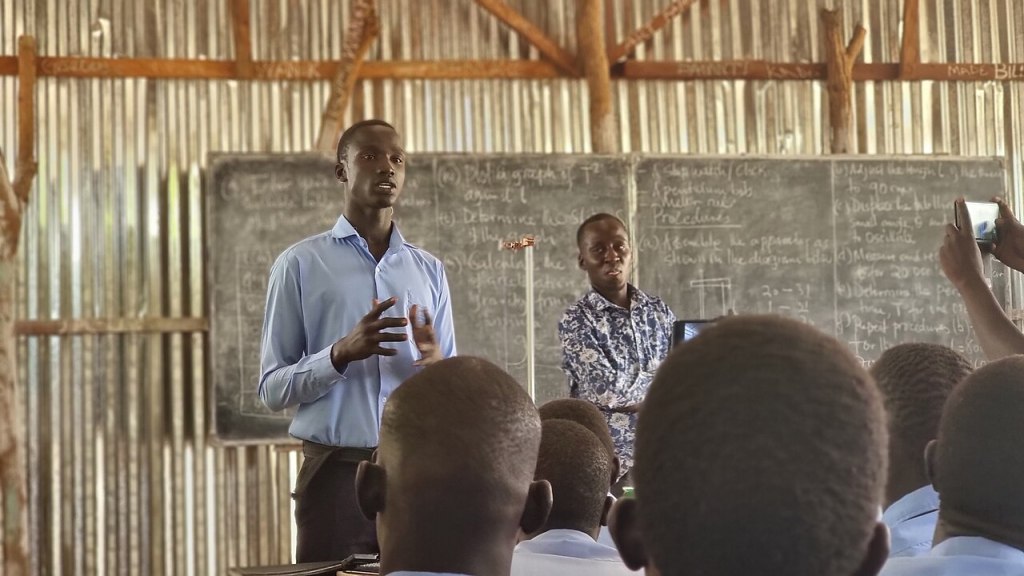
November 13, 2026 (KHARTOUM) – The Sudanese Teachers’ Committee issued a warning on Friday about the accelerating collapse of public education, as numerous schools shut down and both student and teacher populations continue to shrink.
The committee stated that the persistent conflict has deepened regional disparities in education, while the growing presence of private schools poses a serious threat to the sustainability of the public education system.
Families are increasingly compelled to pursue private schooling or move their children to safer regions, underscoring stark inequalities in access due to financial constraints.
Sami Al-Baqir, the committee’s spokesperson, informed Sudan Tribune that several areas have combined public schools to cope with a critical shortage of operational facilities.
He explained that in certain instances, multiple schools have been merged into one building following the closure of their original premises.
Based on field reports, Al-Baqir noted that the number of operational public secondary schools in Khartoum State’s Ombada locality fell from 48 to fewer than 20.
Current functioning schools are experiencing a sharp decline in attendance, with some classrooms now hosting only a handful of students due to widespread absenteeism, increasing dropouts, and falling enrollment rates.
The trend of school closures and consolidations is not limited to Ombada but also affects Karari, Khartoum, and East Nile localities.
Educational officials are working to consolidate impacted schools in an effort to maintain educational services amid ongoing security, economic, and administrative hurdles.
Al-Baqir criticized the government for enabling the growth of private schools while public institutions continue to decline, highlighting a recent increase in private school openings in Khartoum North.
According to reports from the Higher Committee for Teachers’ Strikes on Thursday, multiple public schools experienced disruptions due to falling student attendance, ongoing strike actions, and unstable management.
The issuance of private school licenses has expanded across different education levels and neighborhoods, whereas public education bodies lack the basic resources needed to ensure sustainable operations.
Teachers and education administrators are also grappling with deteriorating financial and living conditions.
Professional councils and union groups are reassessing the effectiveness of conventional strike methods, pointing to authorities’ persistent failure to address teachers’ demands.
Although strikes have historically been instrumental in advancing teachers’ rights, Al-Baqir stated that their influence has diminished as no government has responded meaningfully to them.
He alleged that certain unnamed actors are exploiting strikes to claim that public education is collapsing and are unfairly placing blame on teachers, instead of confronting the underlying structural, administrative, and economic issues.
Al-Baqir urged that unified efforts and media campaigns focus on revealing policies designed to undermine public education and erode its foundational structures.
He cautioned that ongoing decline would widen the educational divide and jeopardize millions of students’ ability to access consistent, quality schooling.
Provided by SyndiGate Media Inc.Syndigate.info).





Leave a Reply