
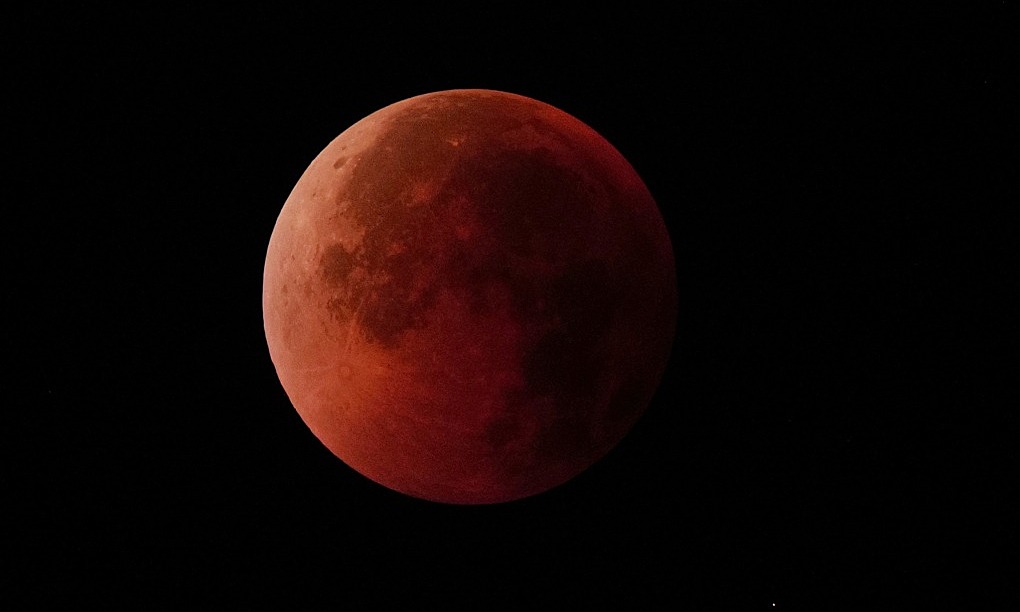
A crimson-colored moon will soon appear in the sky during a total lunar eclipse, with the next one not expected until late 2028.
The event will be observable on Tuesday morning across North America, Central America, and the western regions of South America. Australia and eastern Asia, such as Vietnam, will be able to view it on Tuesday evening.
Eclipses that show the moon with small portions missing can be observed from Central Asia and large parts of South America. However, Africa and Europe will not have a view.
Dang Vu Tuan Son, head of the Vietnam Astronomy and Cosmology Association, mentioned that the full eclipse, which will occur between 6:04 p.m. and 7:02 p.m. (Hanoi time), can be seen in most areas of Vietnam.
He mentioned that the eclipse is visible across the country, but the optimal viewing spots will be places with an unobstructed eastern horizon, such as coastal regions or elevated areas like hills and skyscrapers.
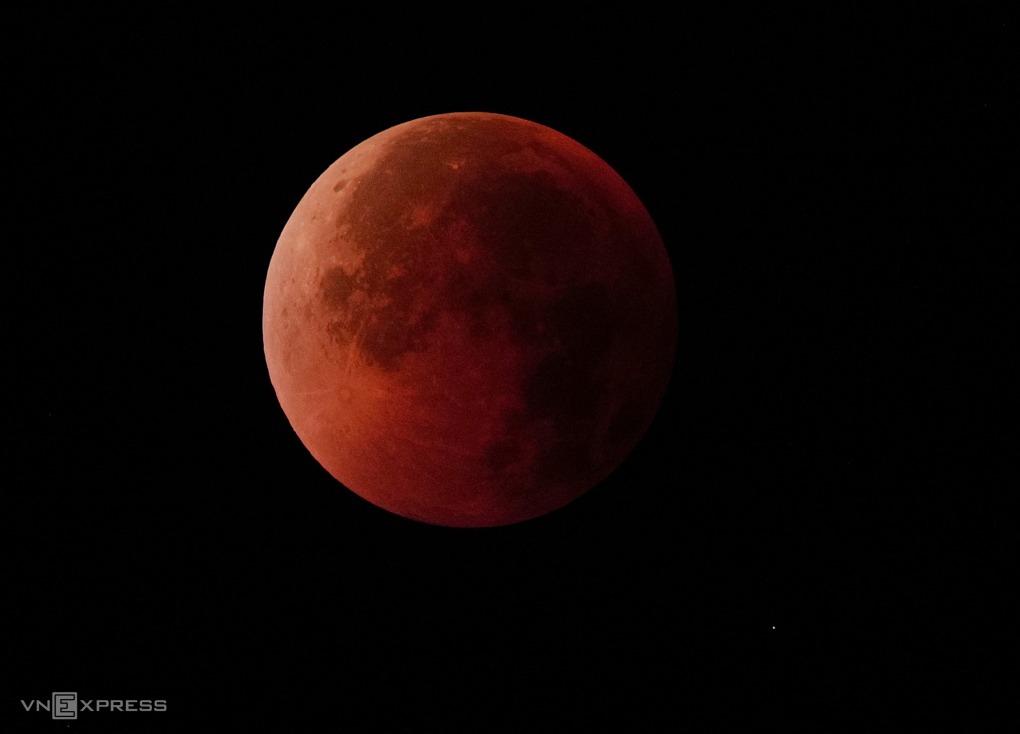 |
|
A complete lunar eclipse, referred to as a blood moon, will be visible in Hanoi at 1 a.m. on September 8, 2025. Photo by VnExpress/Ngoc Thanh |
Solar and lunar eclipses occur because of a specific alignment between the sun, moon, and Earth. NASA states that there are typically between four and seven each year.
Eclipses often occur in sequence, benefiting from the optimal alignment of celestial bodies. The total lunar eclipse on Tuesday follows a ‘ring of fire’ solar eclipse that occurred two weeks earlier, captivating both people and penguins in Antarctica.
During a complete lunar eclipse, the Earth is positioned between the sun and the full moon, creating a shadow that obscures the moon. The so-called blood moon appears red due to scattered rays of sunlight passing through Earth’s atmosphere.
The program spans multiple hours, with the peak occurring for roughly an hour.
In contrast to a solar eclipse, “the lunar eclipse occurs at a more leisurely pace,” noted Catherine Miller from the Mittelman Observatory at Middlebury College.
For individuals following the route, there’s no requirement for any specific gear to watch — simply a clear, cloud-free view of the heavens.
Use a prediction app or an online astronomical calendar to find the precise schedule for your location. Go outside several times to observe Earth’s shadow covering the moon, ultimately showing the reddish-orange shape.
“You don’t need to be present all the time to observe the shadows shifting,” remarked astronomer Bennett Maruca from the University of Delaware.
A partial lunar eclipse is scheduled for August, observable in the Americas, Europe, Africa, and western Asia.




 jasdooit
Leave a comment